Created by Laszlo Barath
Senior Creative Engineer | Full-Stack Software Architect Web-Based CAD, Parametric Systems & Logic-Driven UI
I design and build complex, logic-driven web systems where engineering precision meets creative execution.
My work focuses on parametric thinking, scalable system architecture, and interactive user experiences.
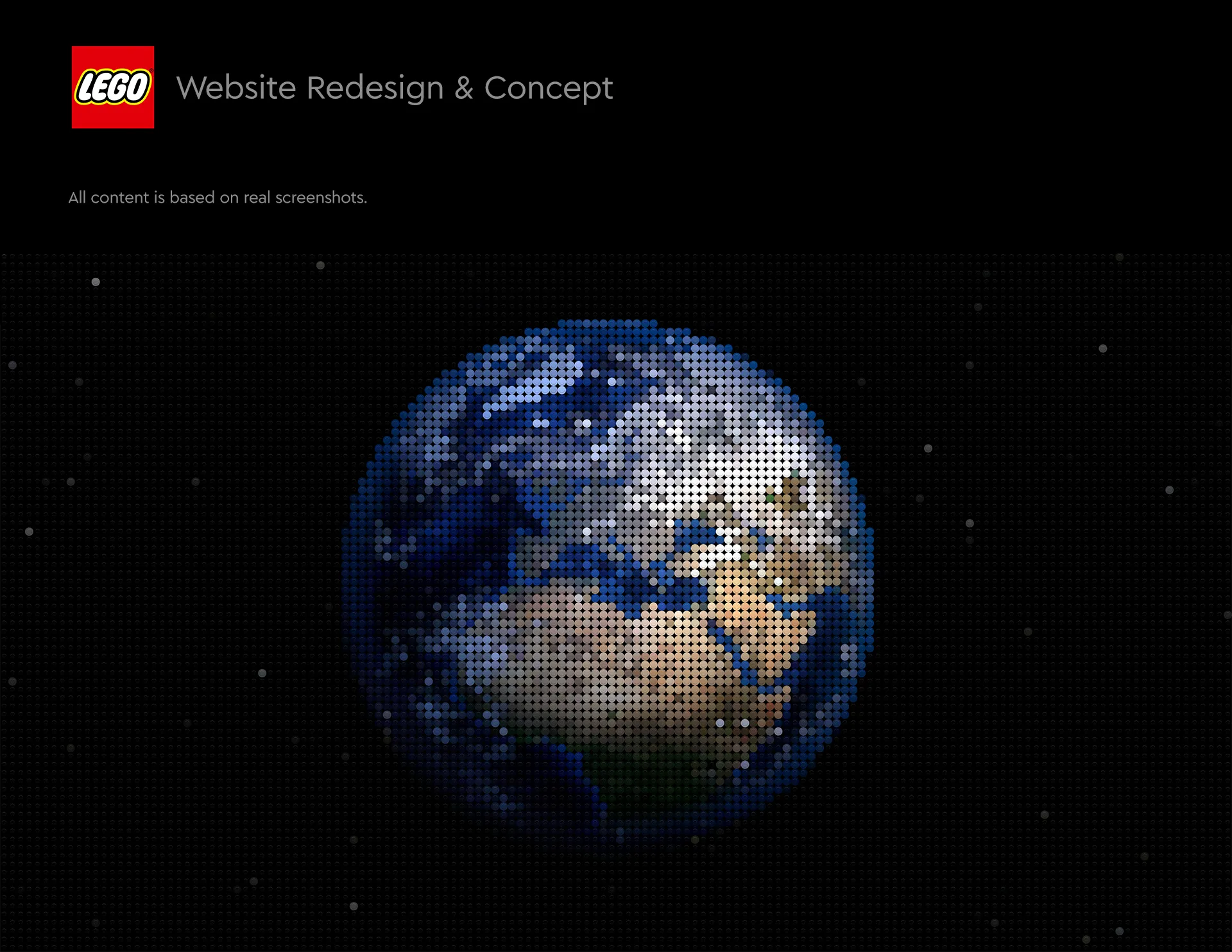
LEGO® Website Redesign & Concept – UI/UX Case Study
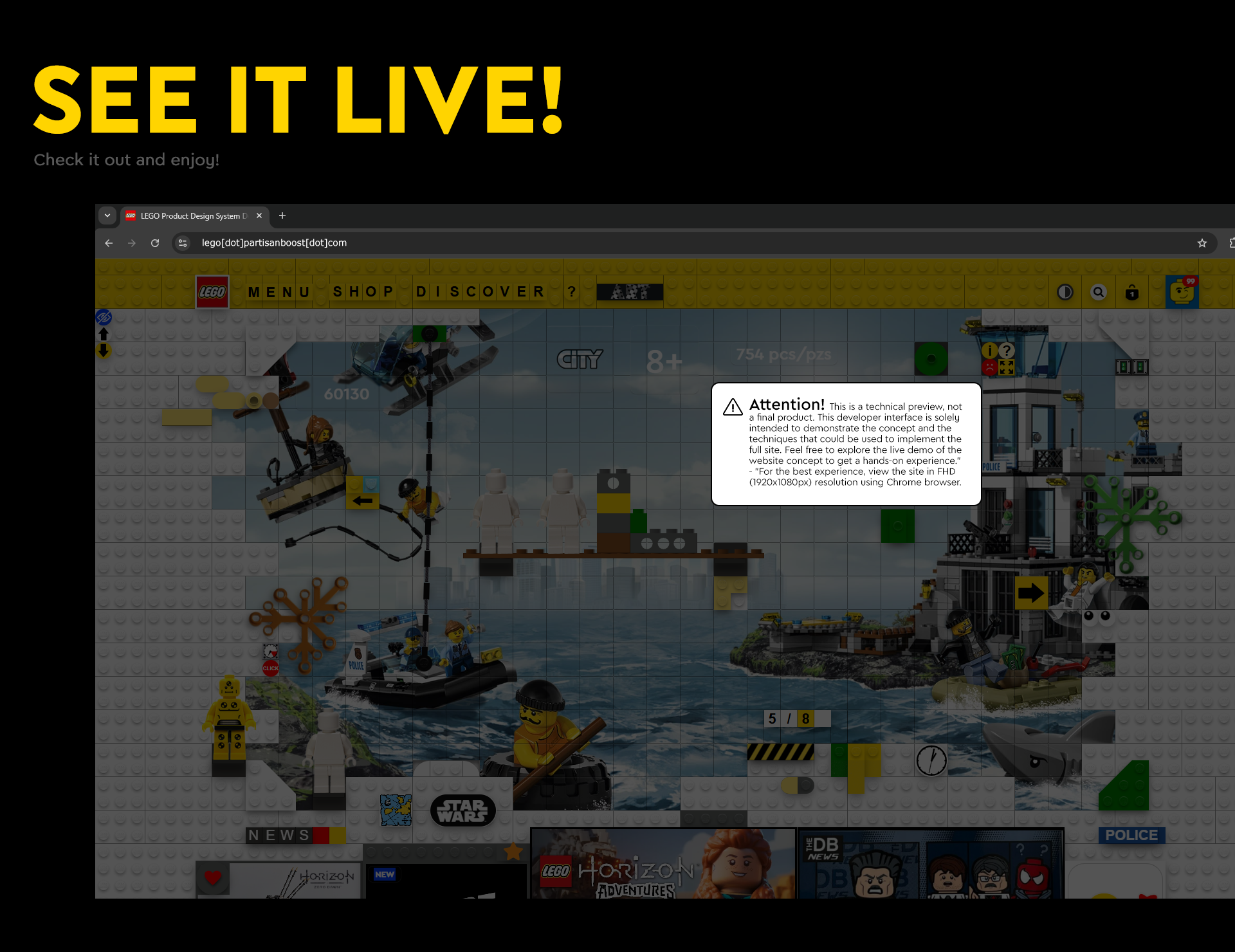
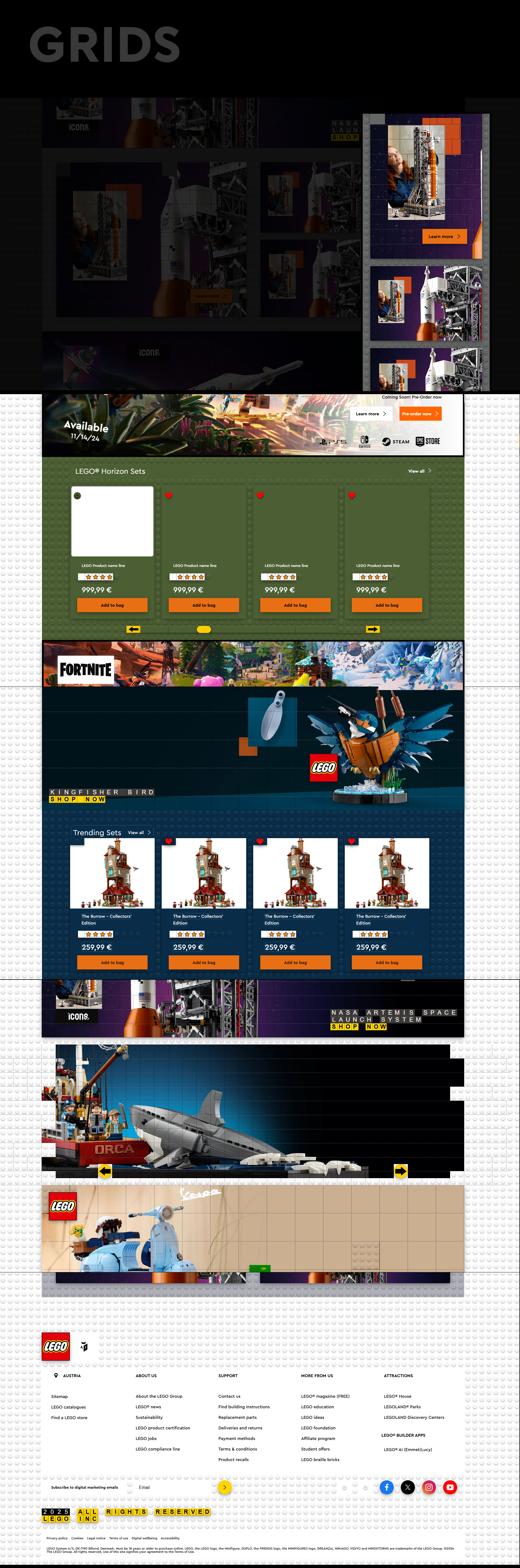
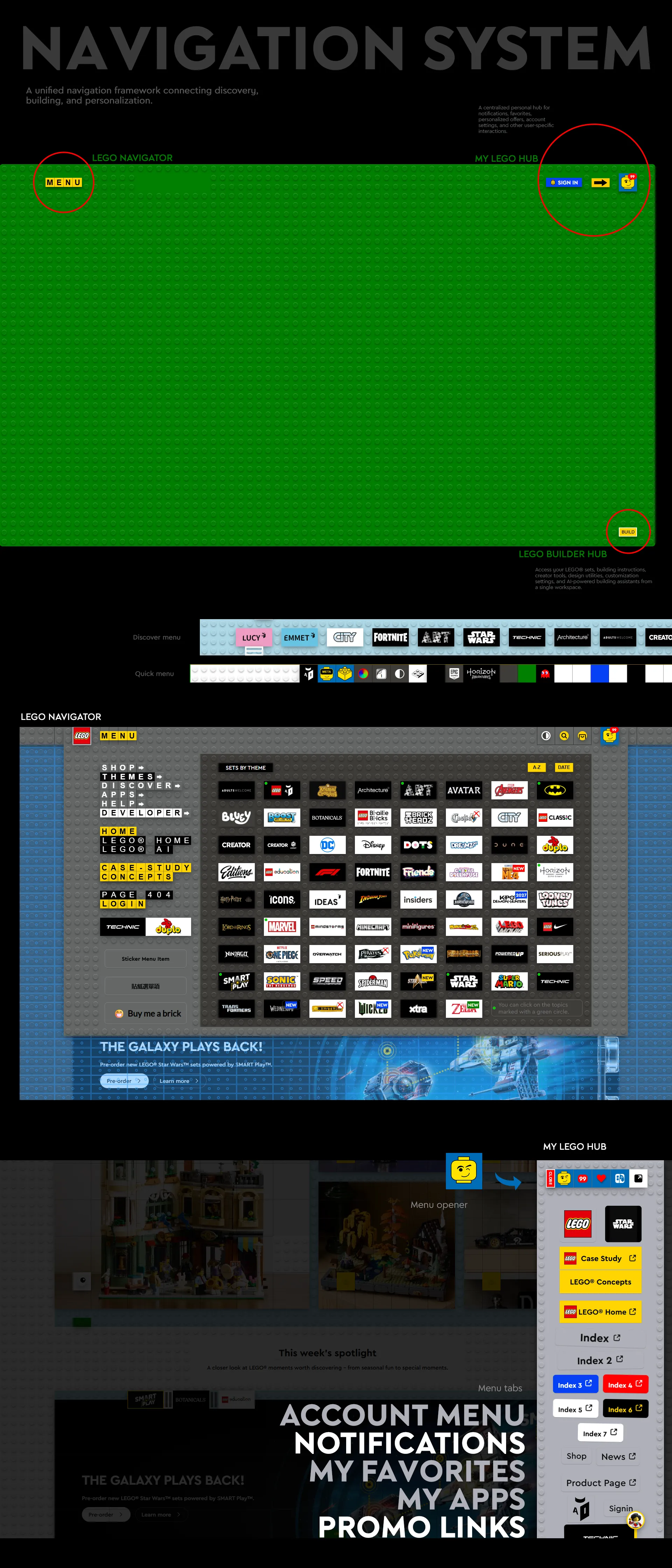
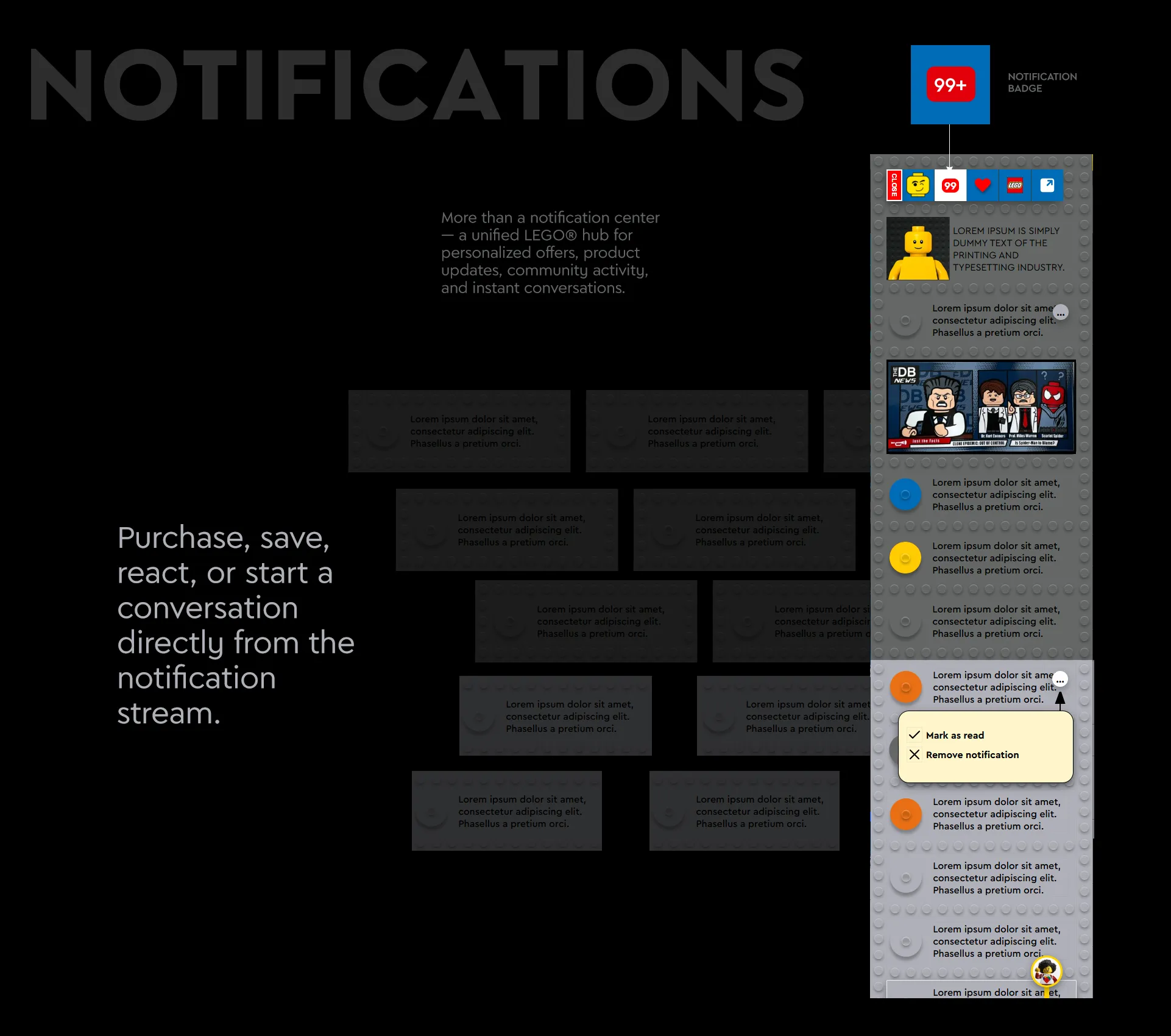
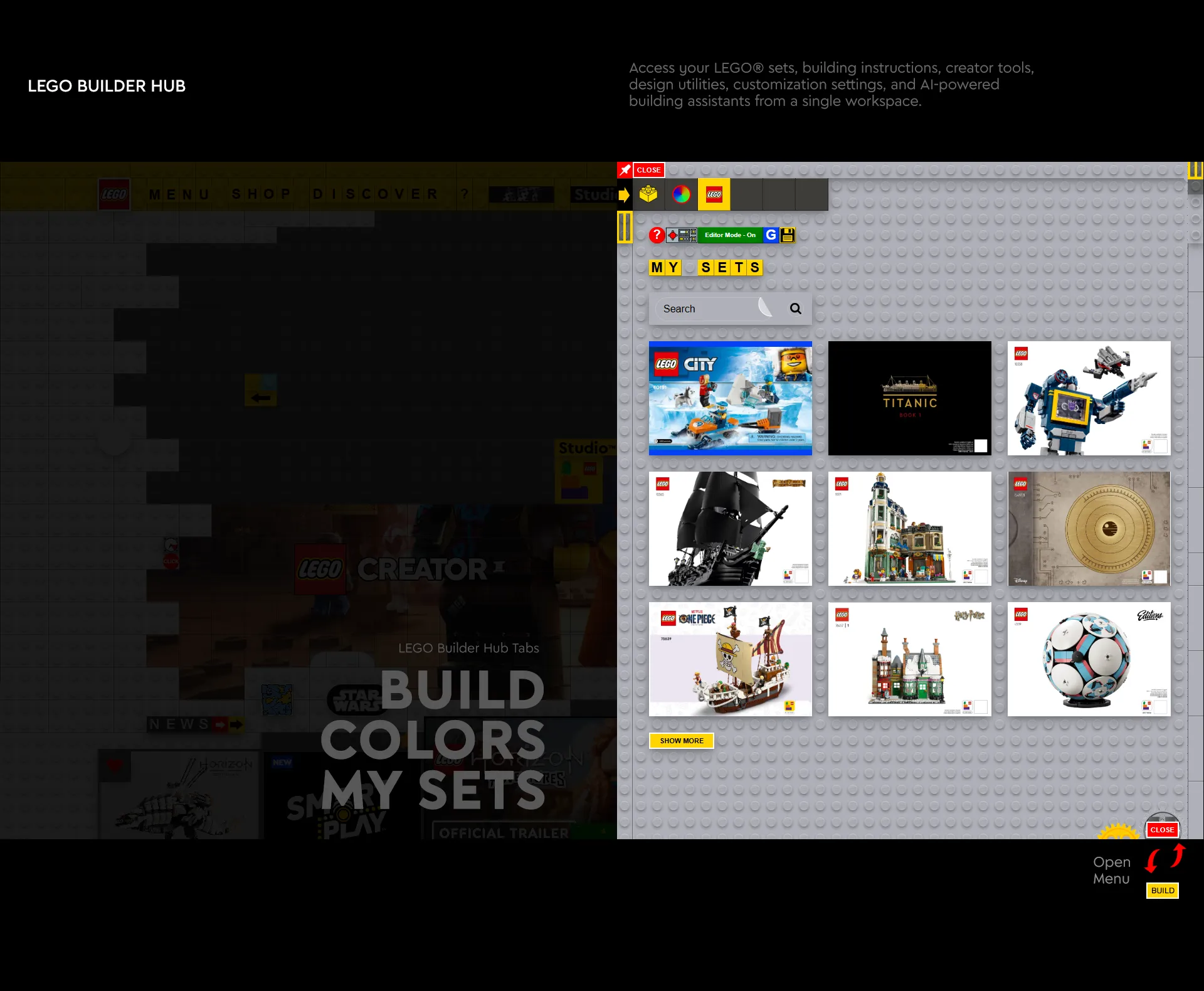
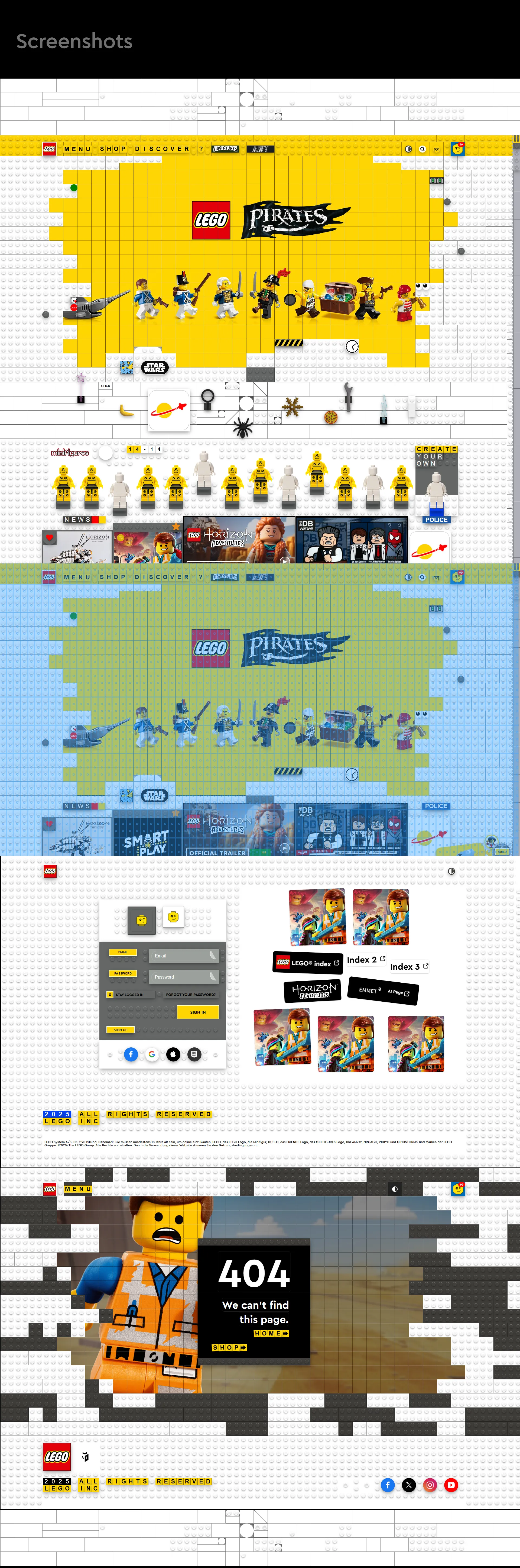
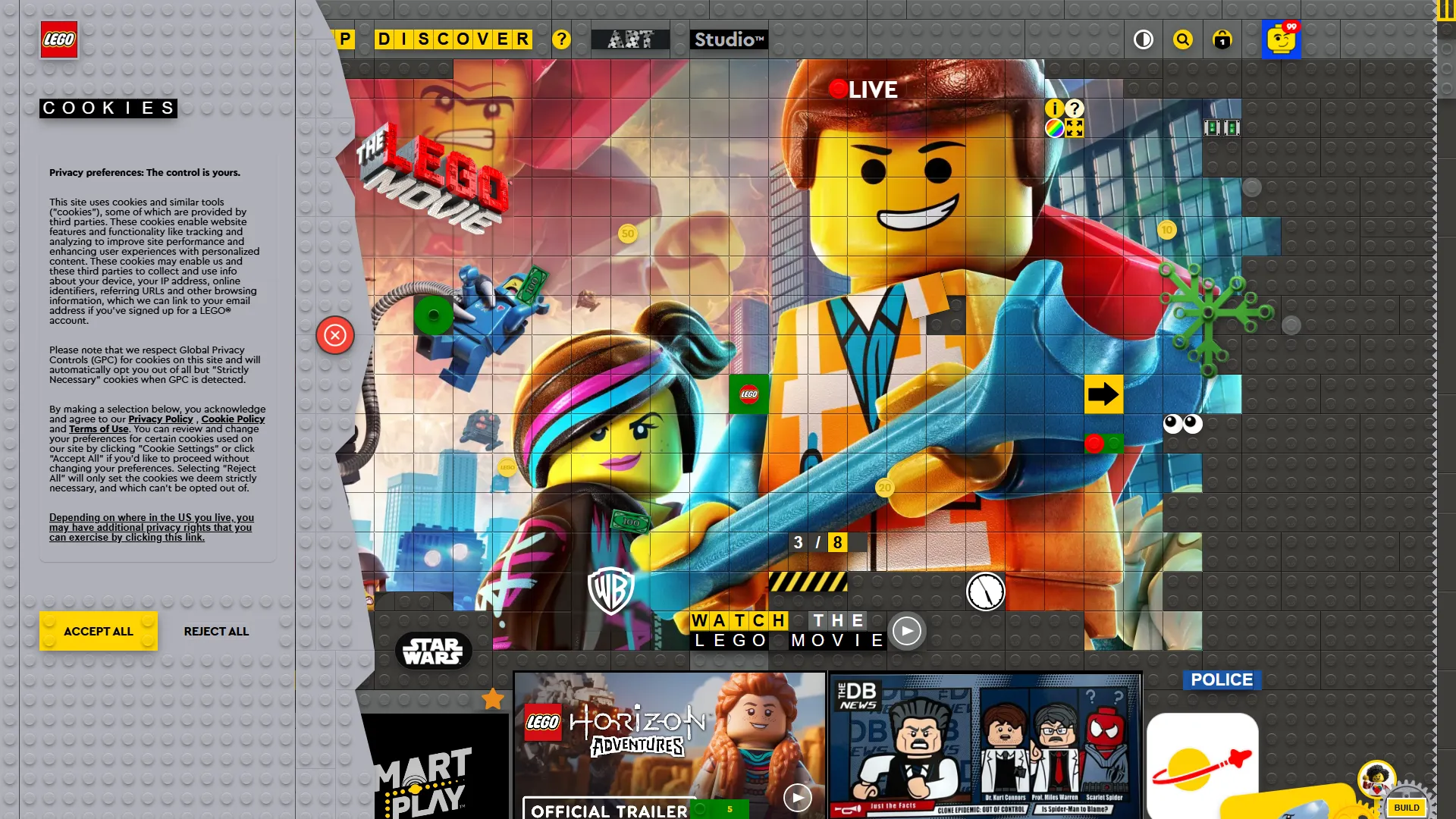
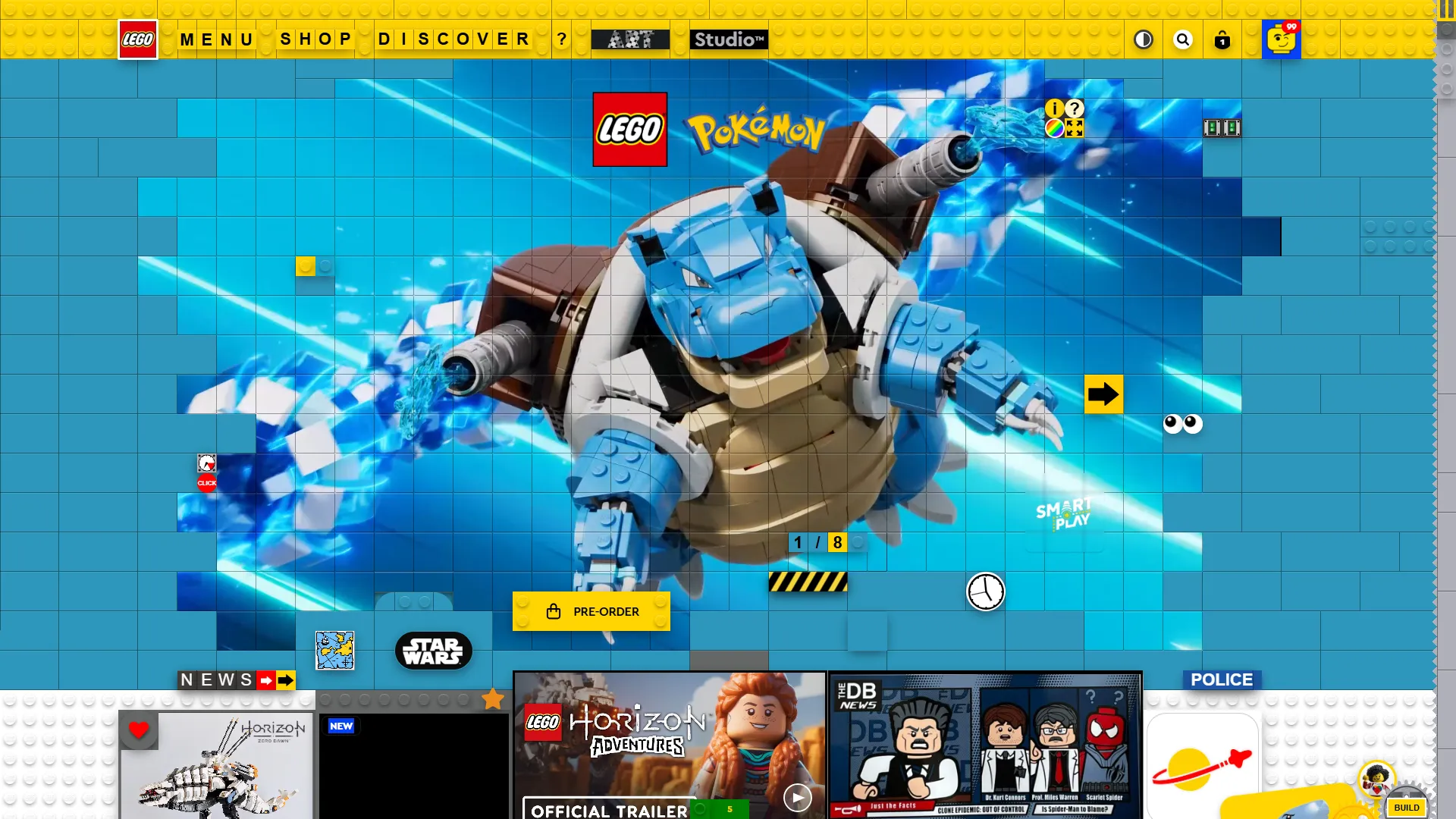
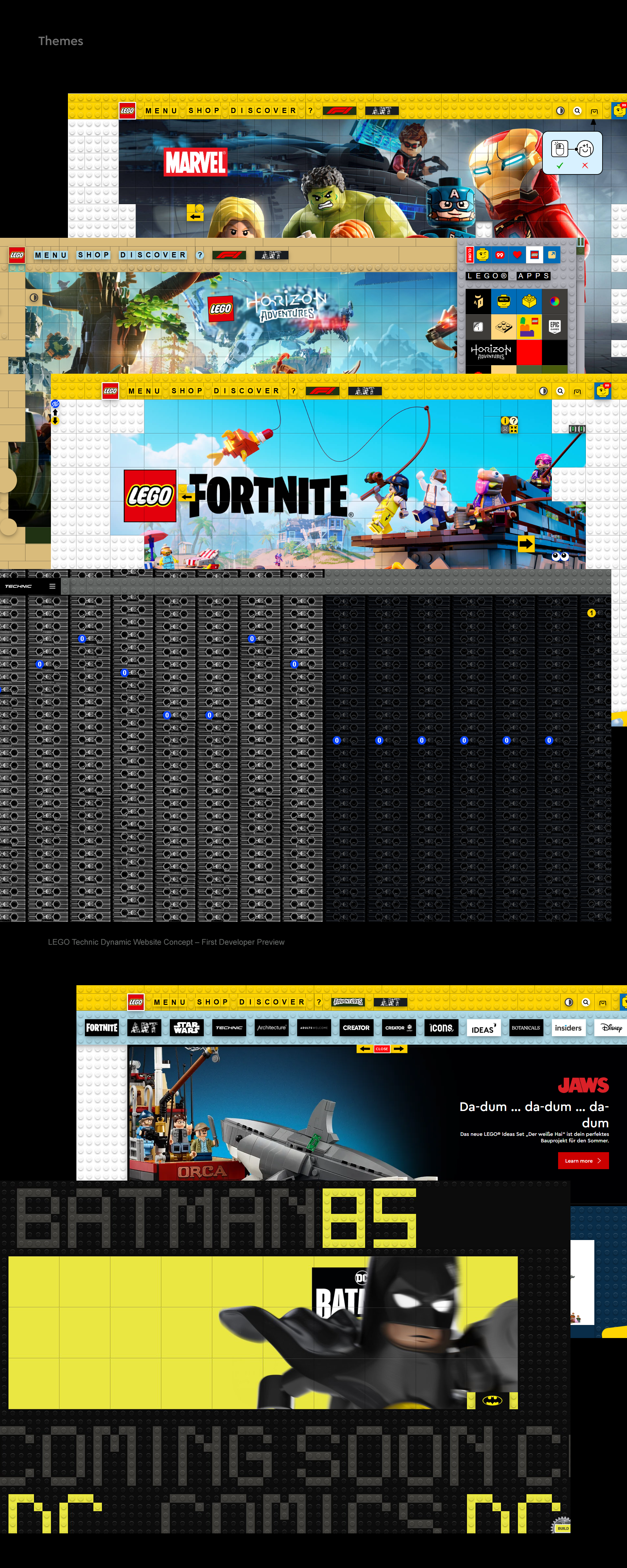
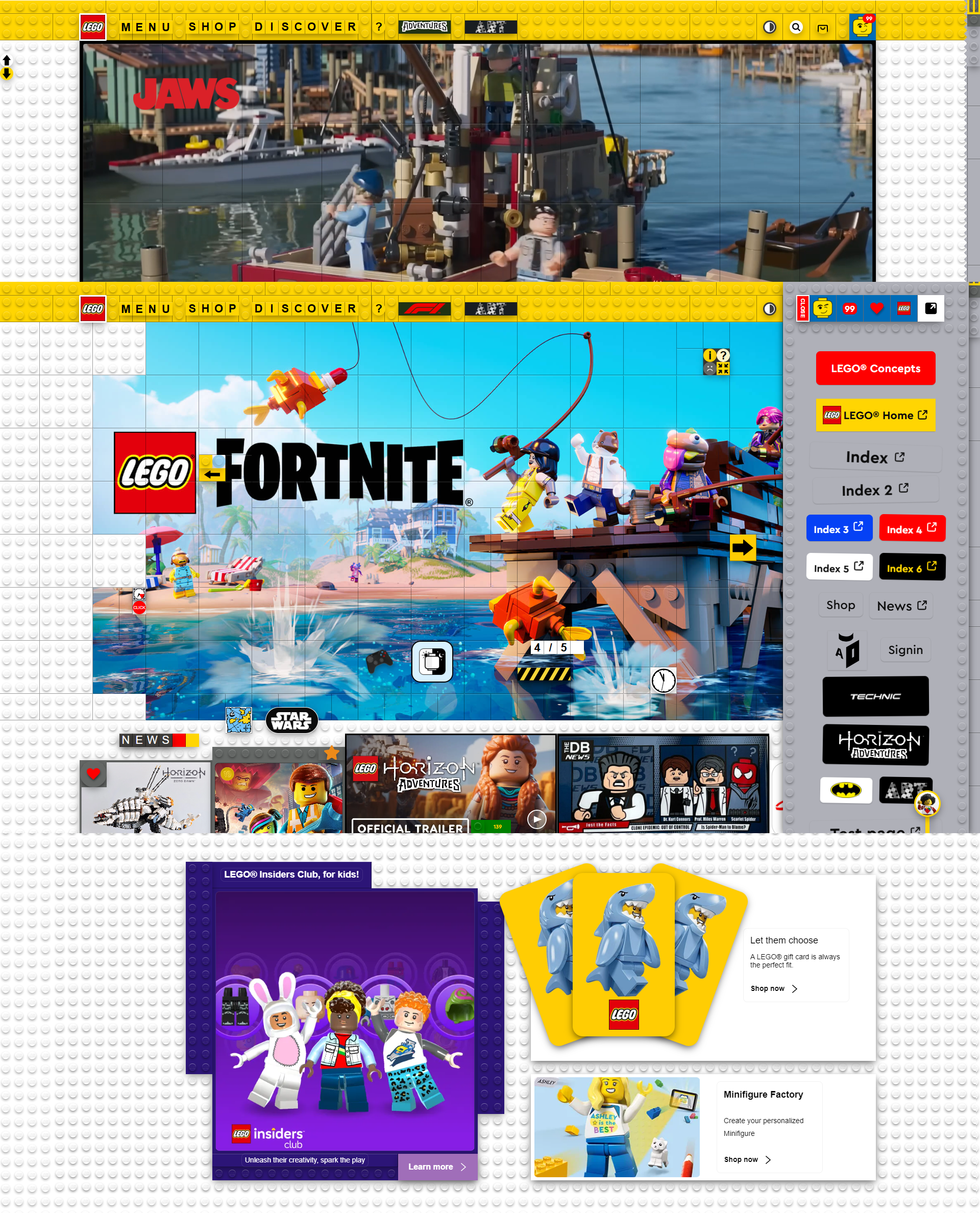
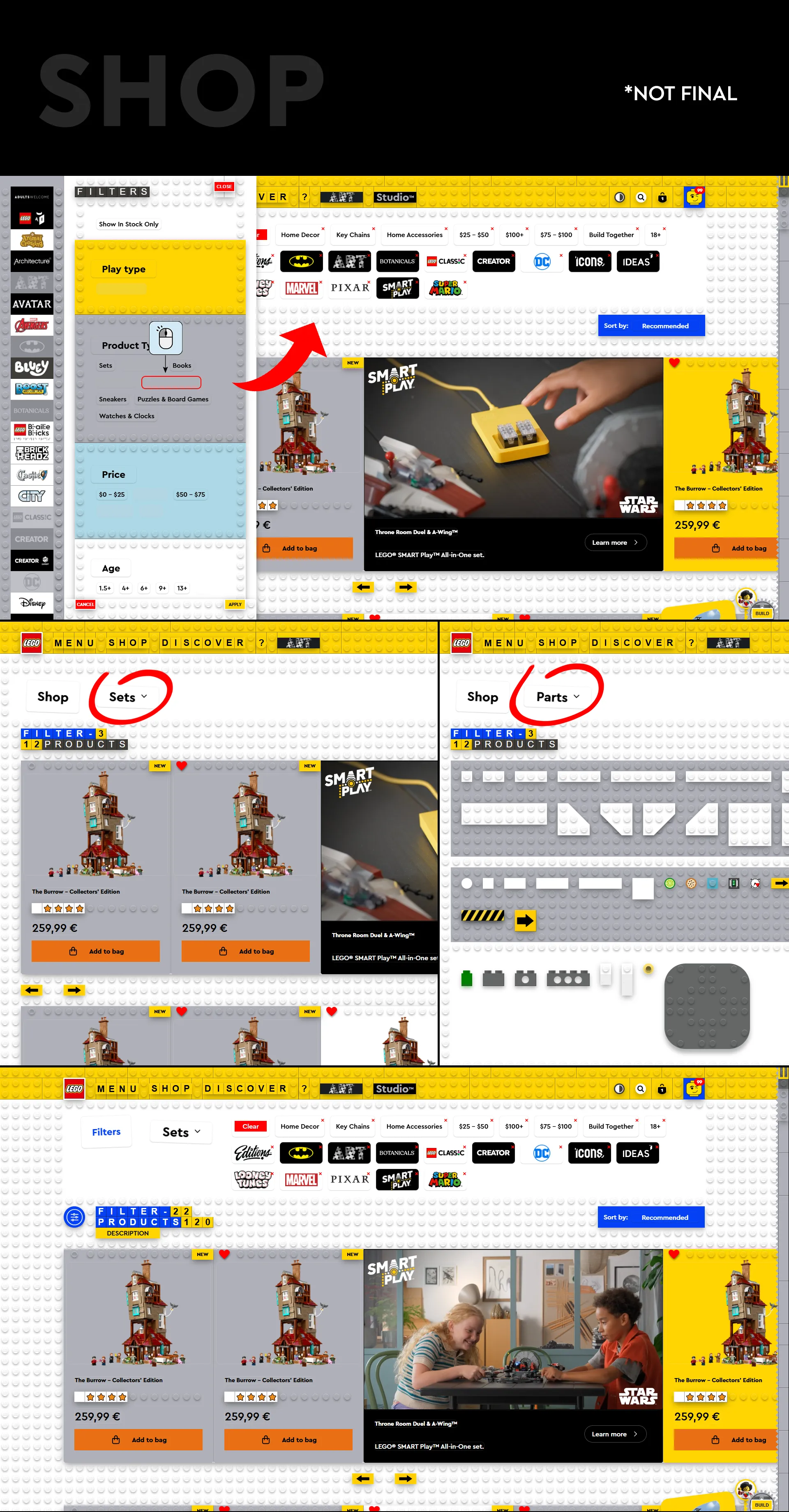
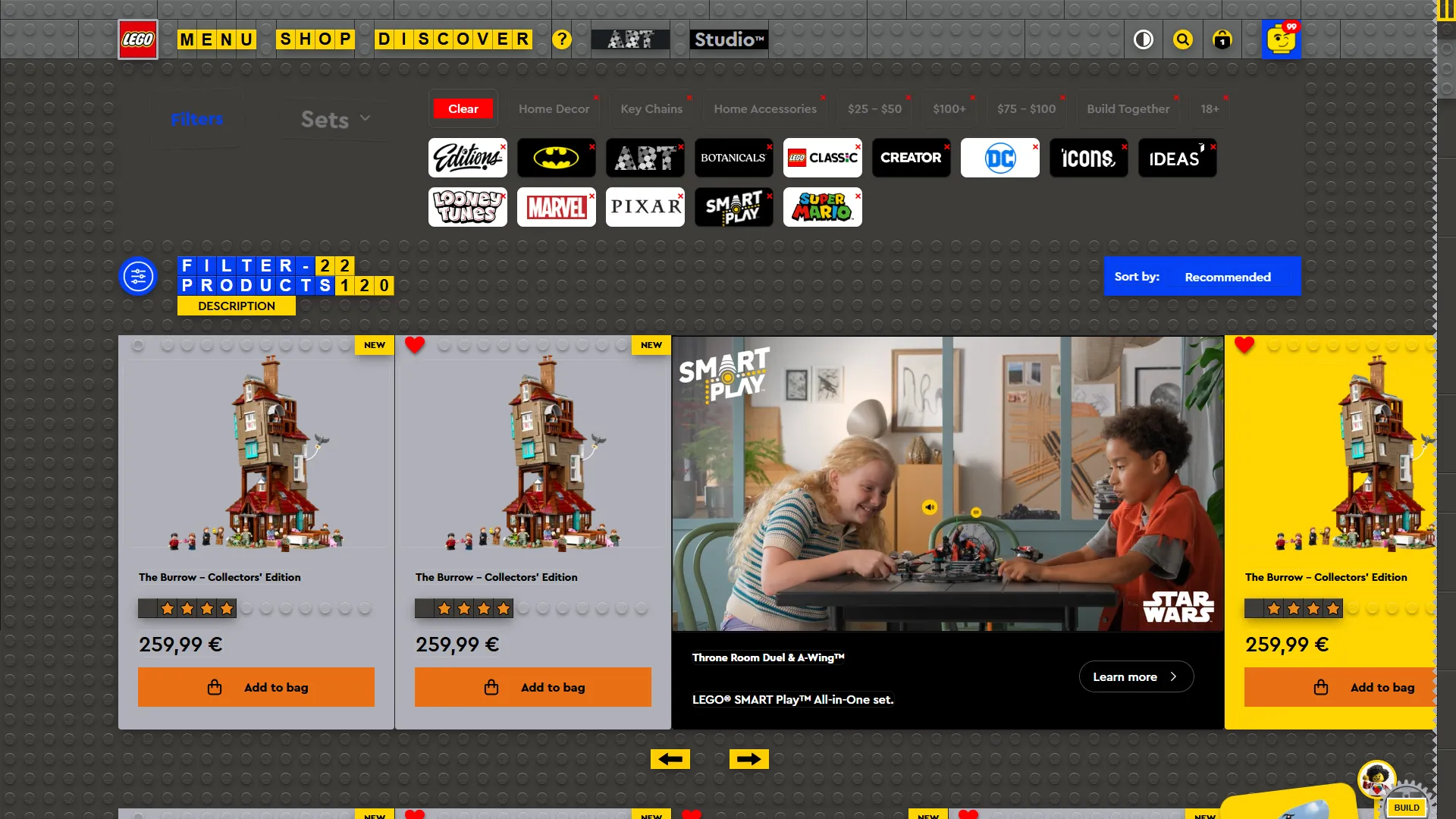
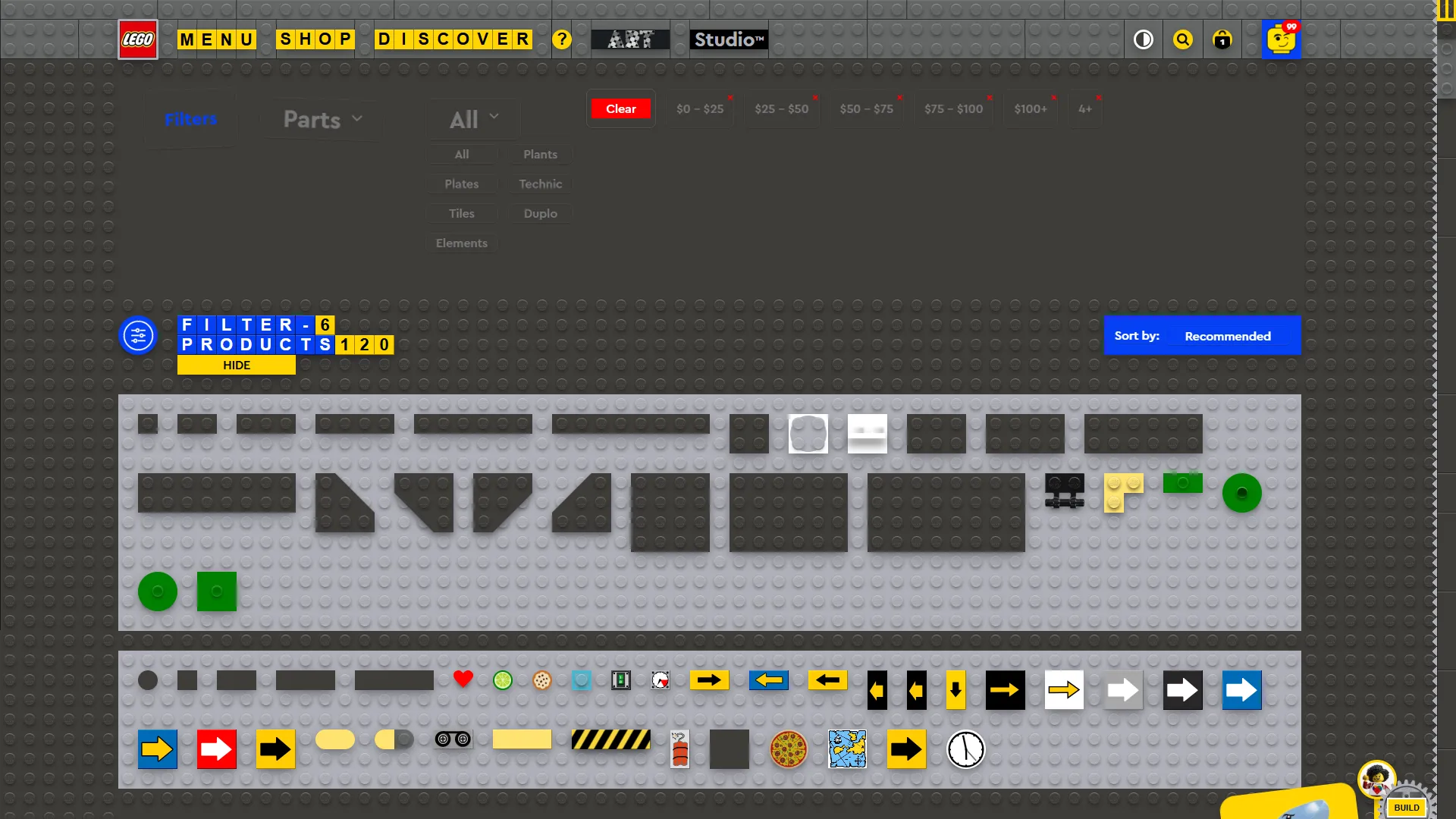
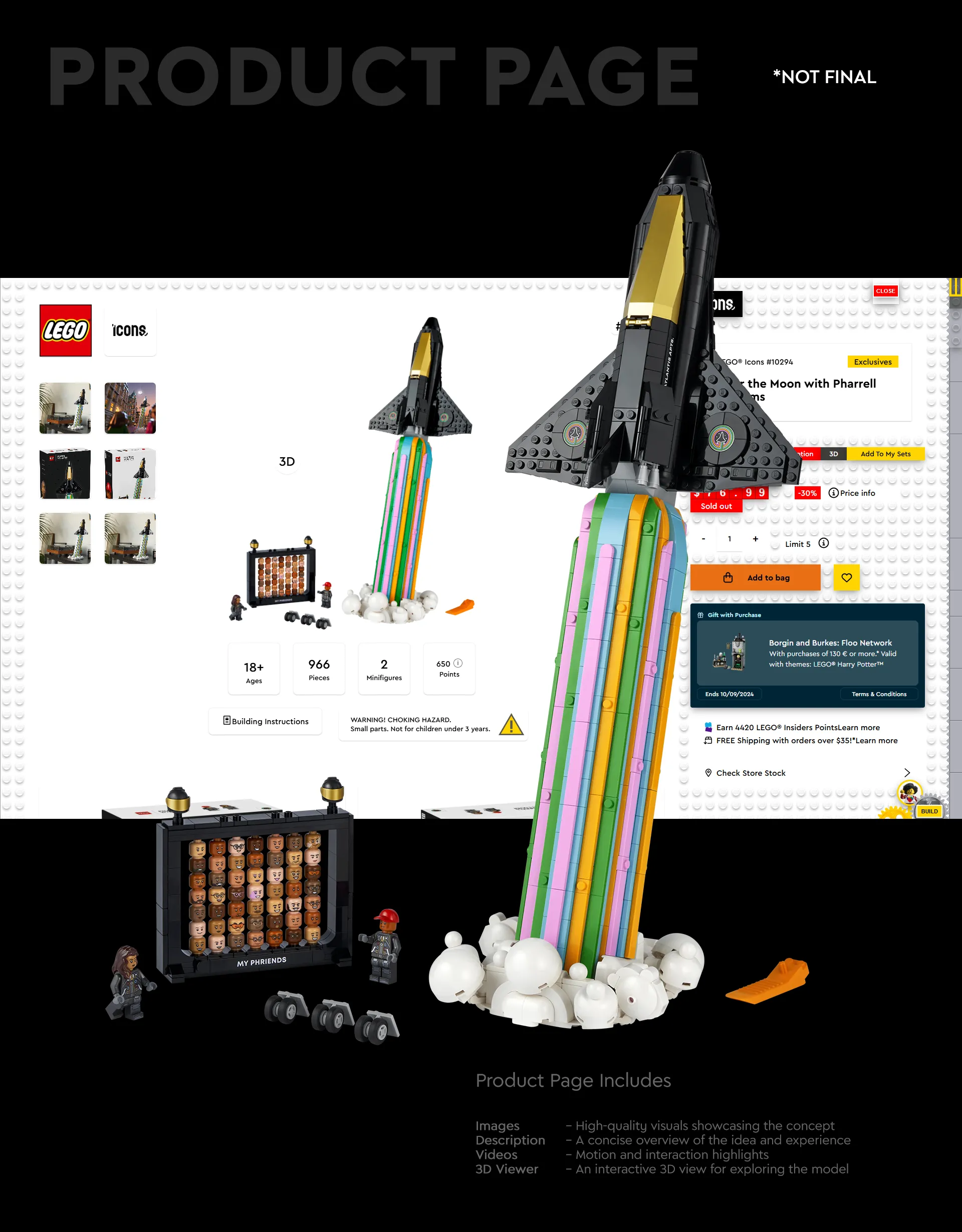
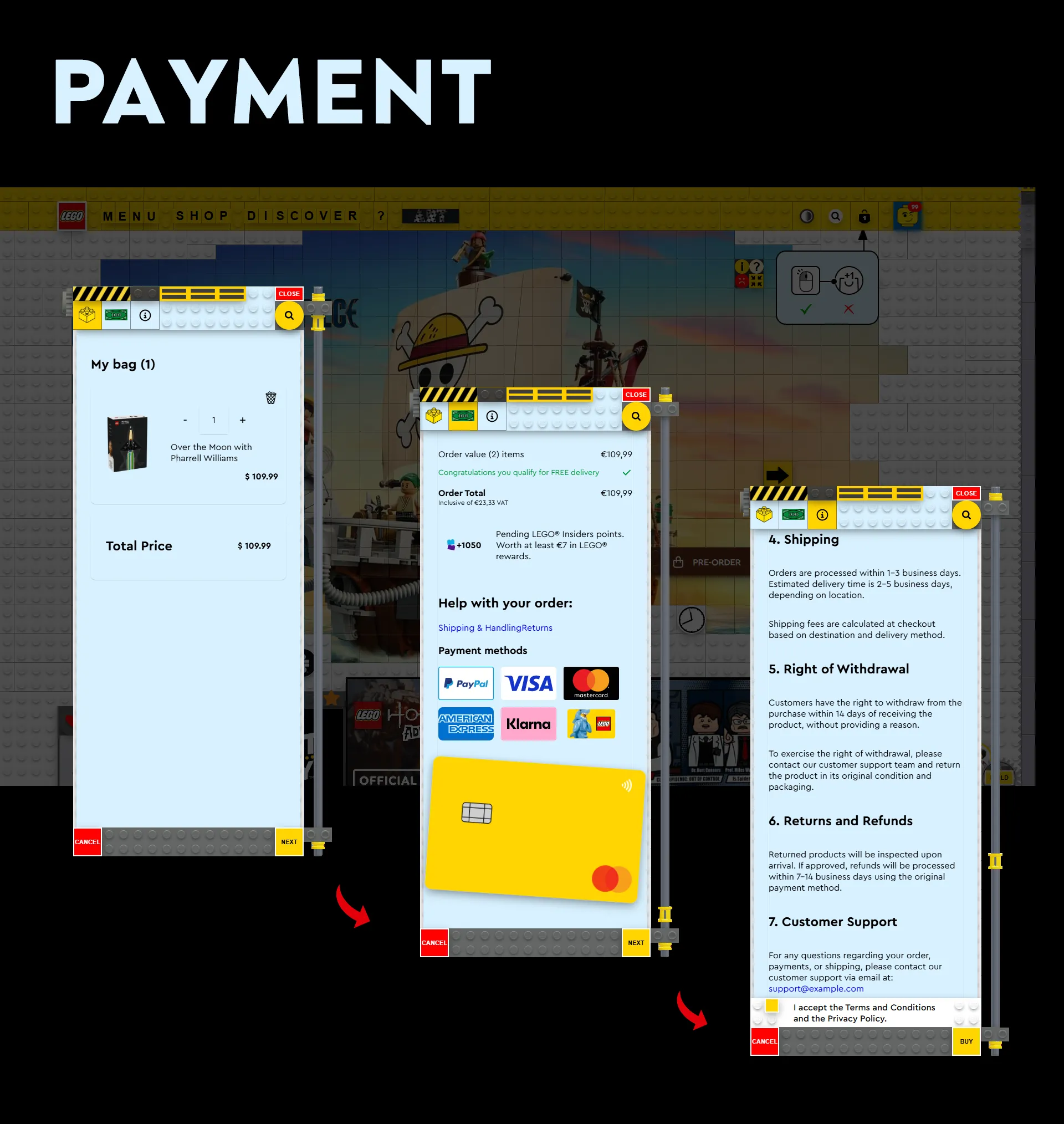
A fully interactive and fully working LEGO® website redesign concept — built entirely from 2D, 3D, and hybrid LEGO elements, featuring editable tiles, stickers, themes, patterns, and a custom real-time JavaScript engine you can try live.
The focus is on translating physical modular logic into a scalable digital UI system.
A quick screen-recorded demo
showing how it works in action.
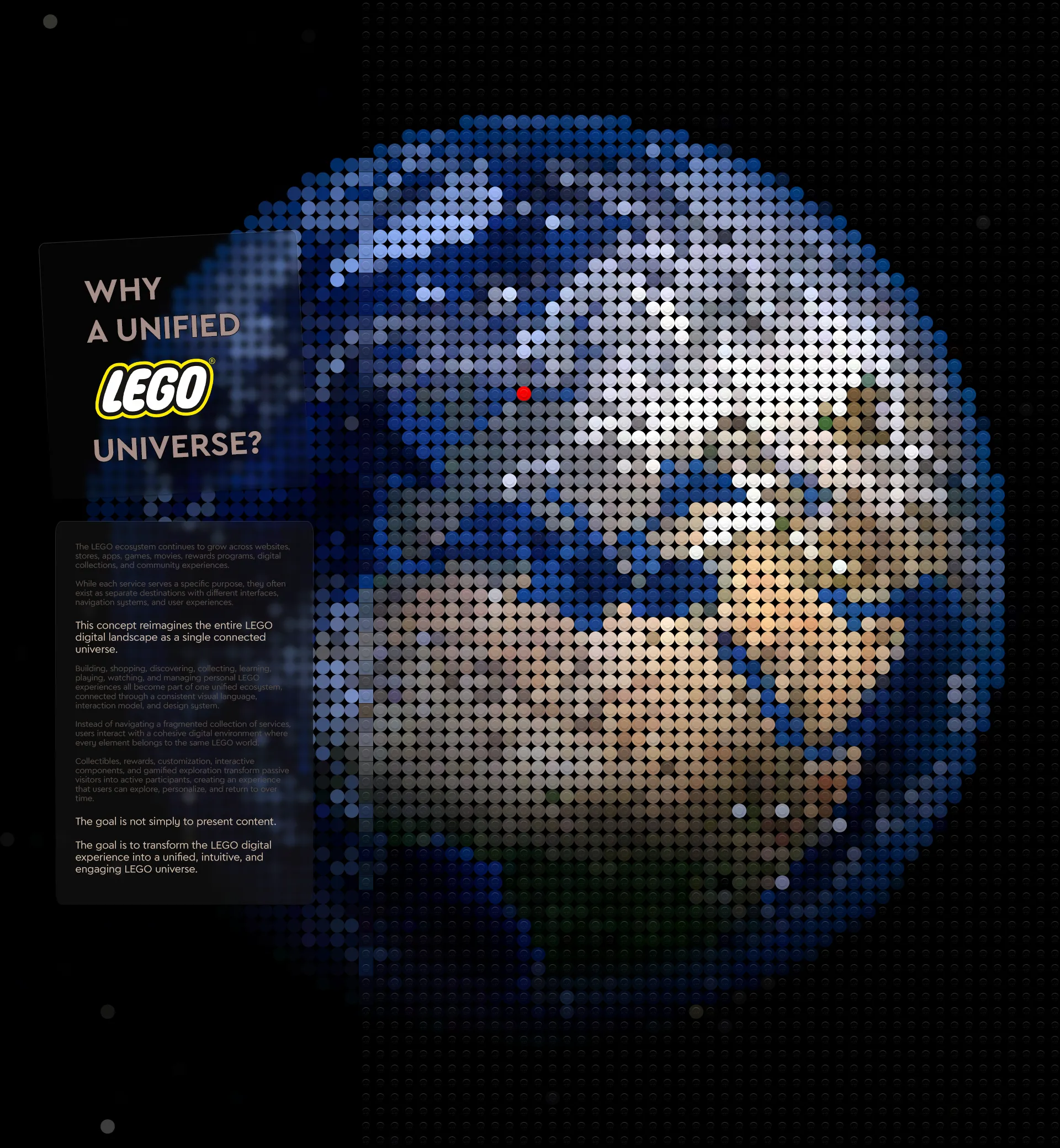
Why a Unified LEGO Universe?
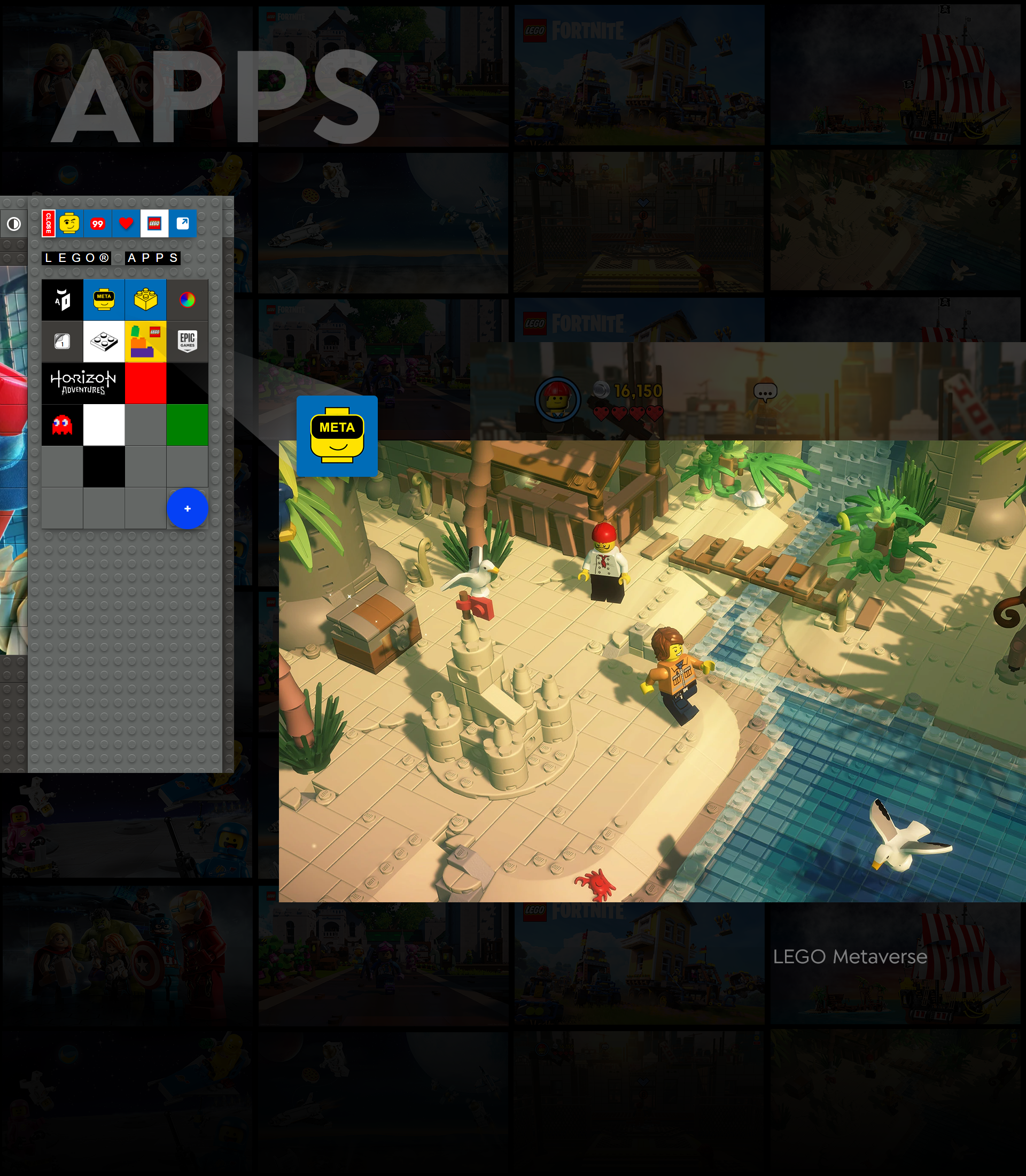
The LEGO ecosystem continues to grow across websites, stores, apps, games, movies, rewards programs, digital collections, and community experiences. While each service serves a specific purpose, they often exist as separate destinations with different interfaces, navigation systems, and user experiences. This concept reimagines the entire LEGO digital landscape as a single connected universe. Building, shopping, discovering, collecting, learning, playing, watching, and managing personal LEGO experiences all become part of one unified ecosystem, connected through a consistent visual language, interaction model, and design system. Instead of navigating a fragmented collection of services, users interact with a cohesive digital environment where every element belongs to the same LEGO world. Collectibles, rewards, customization, interactive components, and gamified exploration transform passive visitors into active participants, creating an experience that users can explore, personalize, and return to over time. The goal is not simply to present content. The goal is to transform the LEGO digital experience into a unified, intuitive, and engaging LEGO universe.
The Challenge & The Vision
Traditional brand websites often force a compromise: either they rely on conventional, static layouts that fail to capture the character of the brand, or they depend on heavy 3D runtimes that negatively impact performance, accessibility, and SEO.
For LEGO, this challenge is even greater. The physical product is inherently modular, tactile, creative, and interactive, yet most digital experiences reduce it to a standard web interface.
My goal was to explore whether a LEGO-inspired digital ecosystem could preserve these qualities while remaining fast, accessible, SEO-friendly, and lightweight enough to run entirely in the browser without external 3D engines.
My Role
End-to-end Creative Direction, Product Vision,
UI/UX Architecture, Design System Development,
and Custom Rendering Engine Development.
Core Philosophy
"A LEGO-inspired digital experience without sacrificing performance, SEO, or speed."


Recolor System
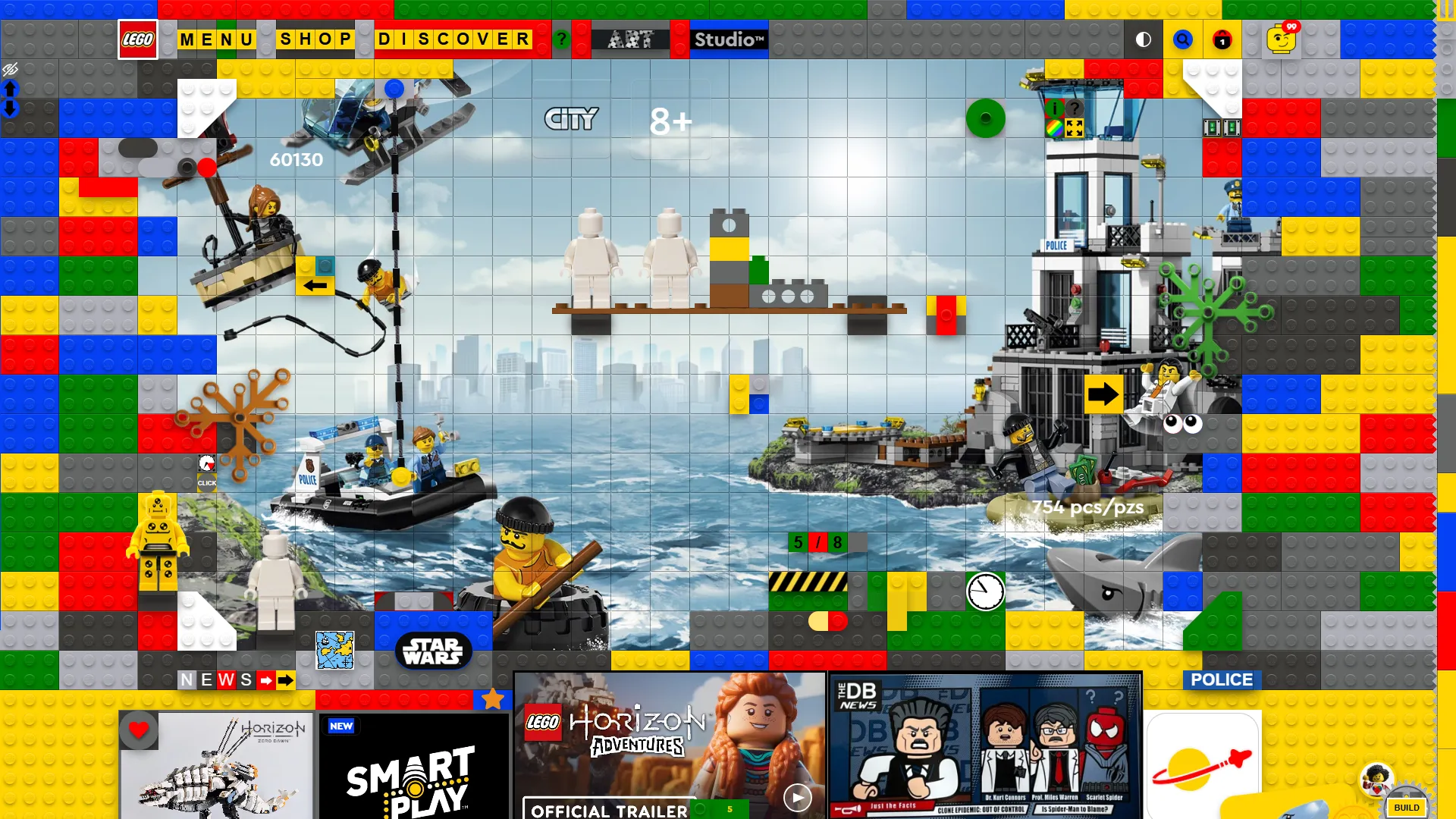
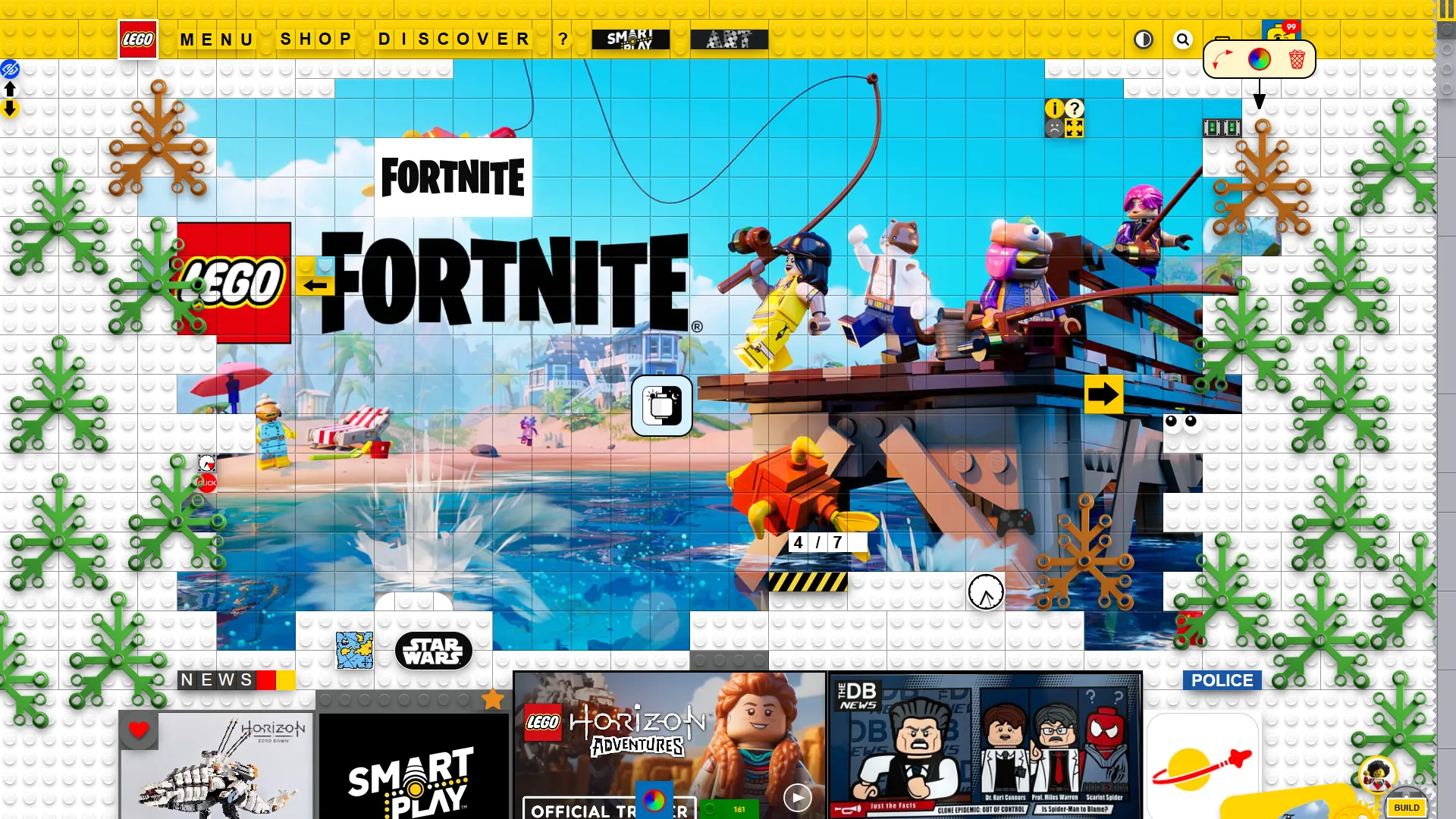
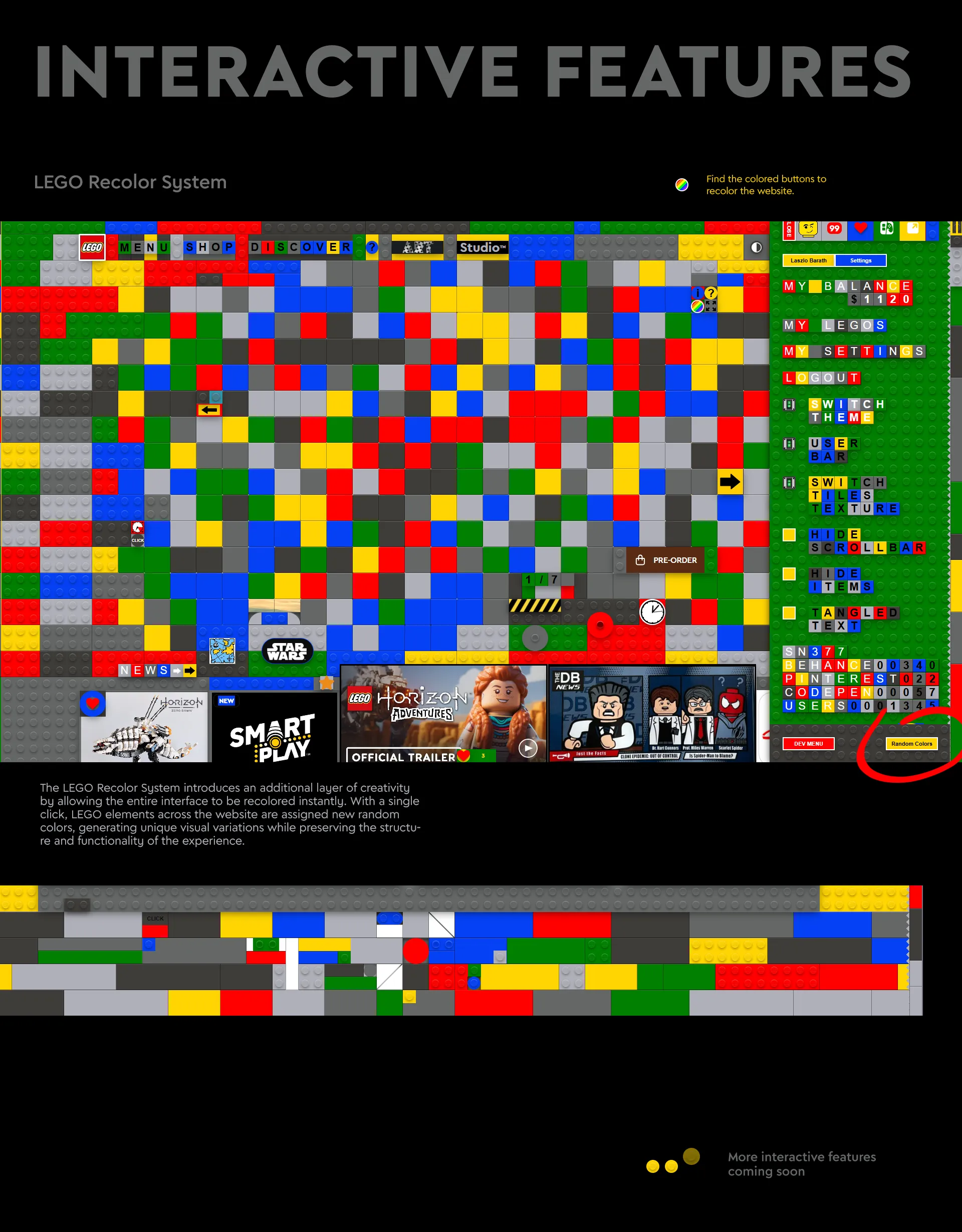
The Recolor System enables real-time recoloring of nearly the entire LEGO-themed interface without re-rendering the page or causing performance degradation.
Unlike traditional theme switching, the system operates on individual LEGO elements based on their semantic type rather than on entire interface blocks.
By default, every LEGO element is eligible for recoloring. Only elements explicitly marked as No Recolor are excluded from the process, allowing precise control over protected interface components.
Element Classification
Every LEGO piece receives a detailed CSS class structure that defines its type, geometry, color and behavior.
plate grid2x2 green lv1
tile grid2x2 red circle lv2 ps2
brick grid1x4 blue
slope grid2x2 yellow
text grid1x1 white
These classes allow the engine to apply type-specific recoloring rules.
Selective Recoloring
The system intelligently excludes elements that must retain their original appearance.
- LEGO and partner logos
- Minifigure faces and printed details
- Stickers and decorative overlays
- Standard UI controls and icons
- Protected content areas and images
- Certain text elements (when explicitly marked)
All other structural LEGO elements—including dynamically generated LEGO text characters—participate in the recoloring process.
Rule-Based Color Engine
Recoloring is fully rule-driven and highly configurable.
The system supports a wide range of parameters, including:
- Allowed color palettes and restrictions
- Element-type specific rules
- Texture opacity, gap styling and slider variants
- Randomized yet coherent color generation
- Color priority and layering order
This makes it possible to generate thousands of unique LEGO color compositions while maintaining a consistent visual language.
Performance
Instead of rebuilding the page, the engine updates only the visual properties of the affected LEGO elements.
This approach allows thousands of individual elements to be recolored in real time while maintaining production-level performance.
Summary
The Recolor System is a rule-based LEGO rendering layer that goes far beyond traditional theme switching.
It enables modular, real-time visual transformation of thousands of individual LEGO elements while preserving protected interface components and maintaining production-level performance.
Technologies

Product-Ready Possibilities
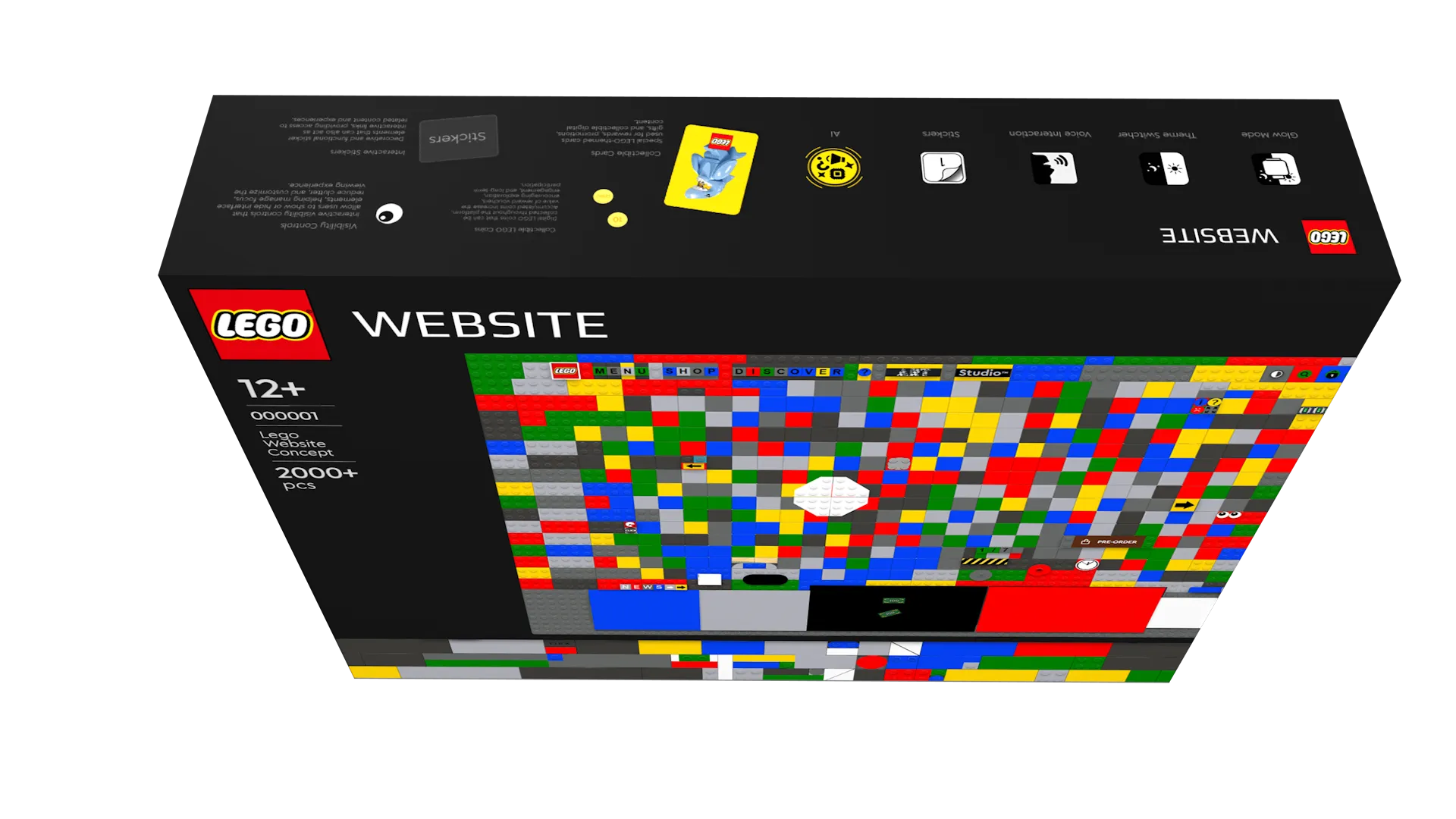
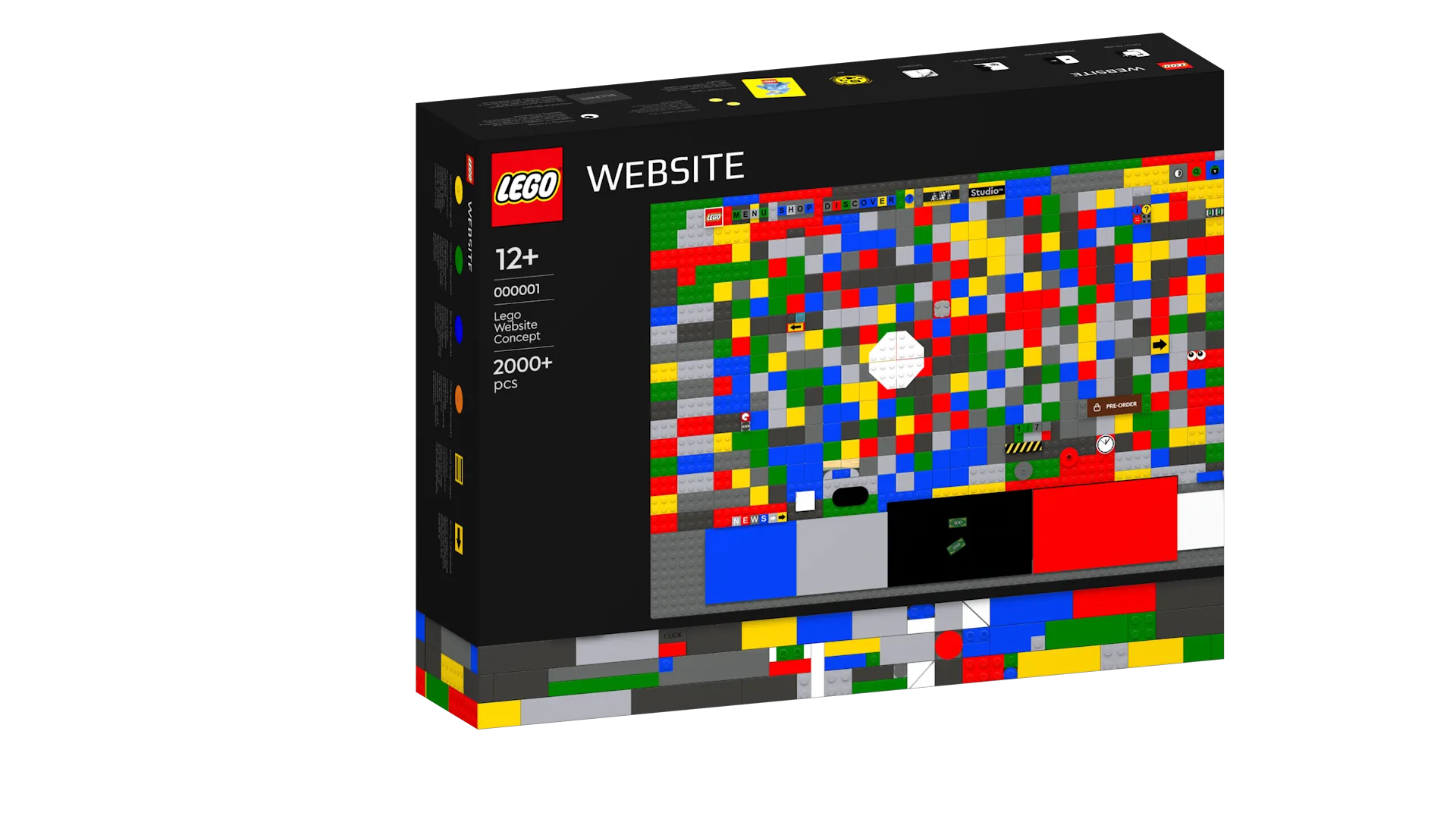
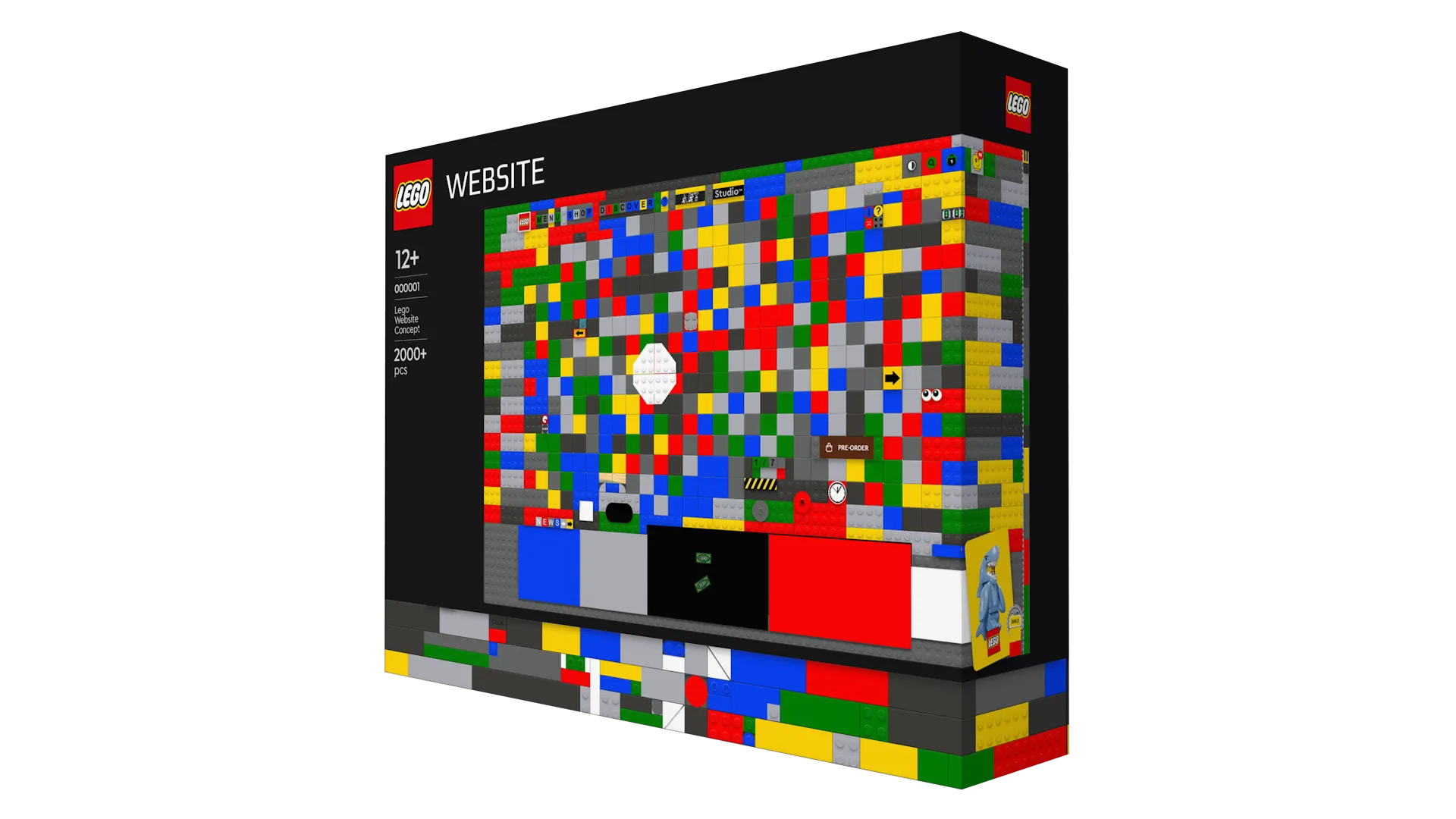
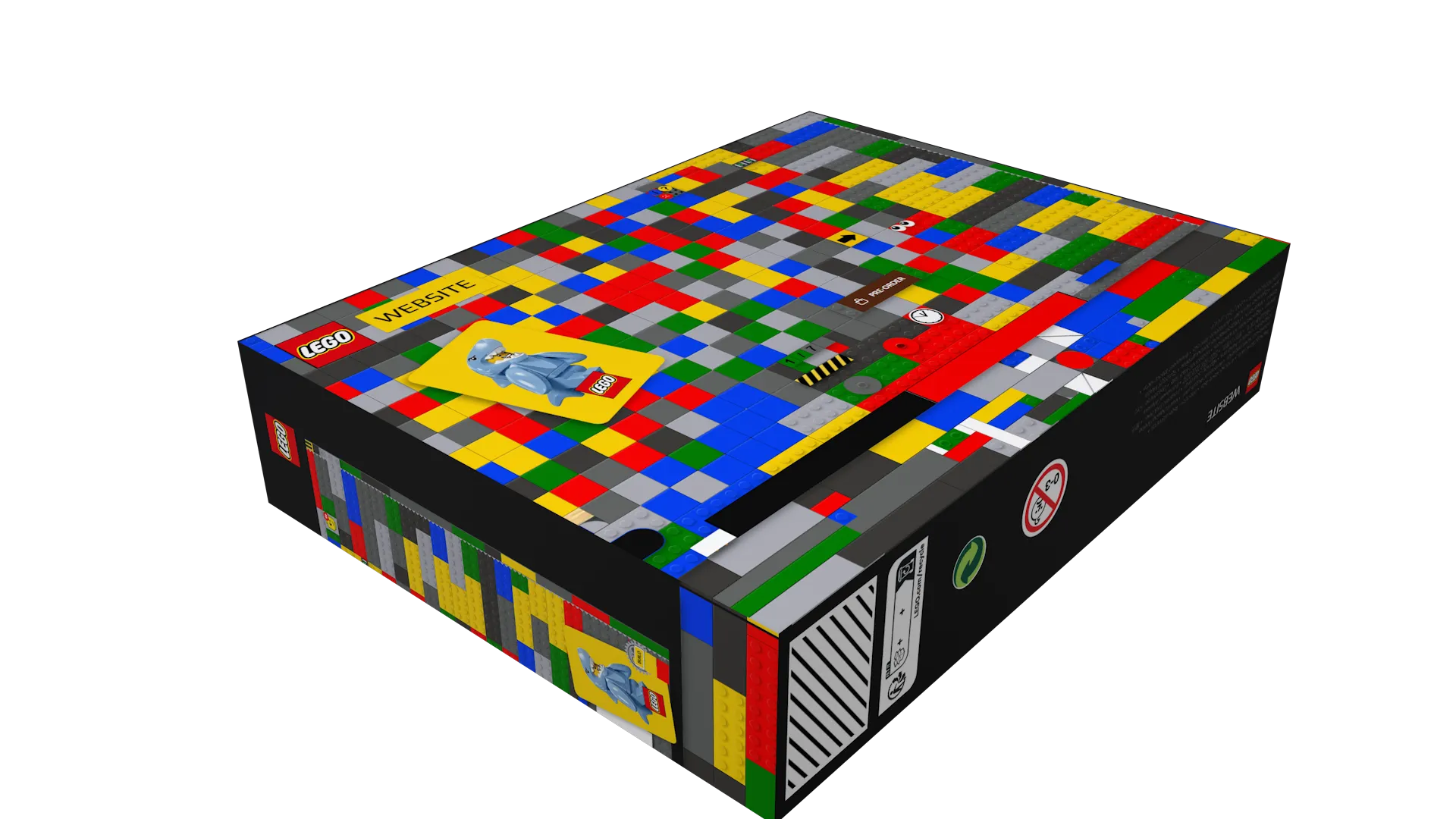
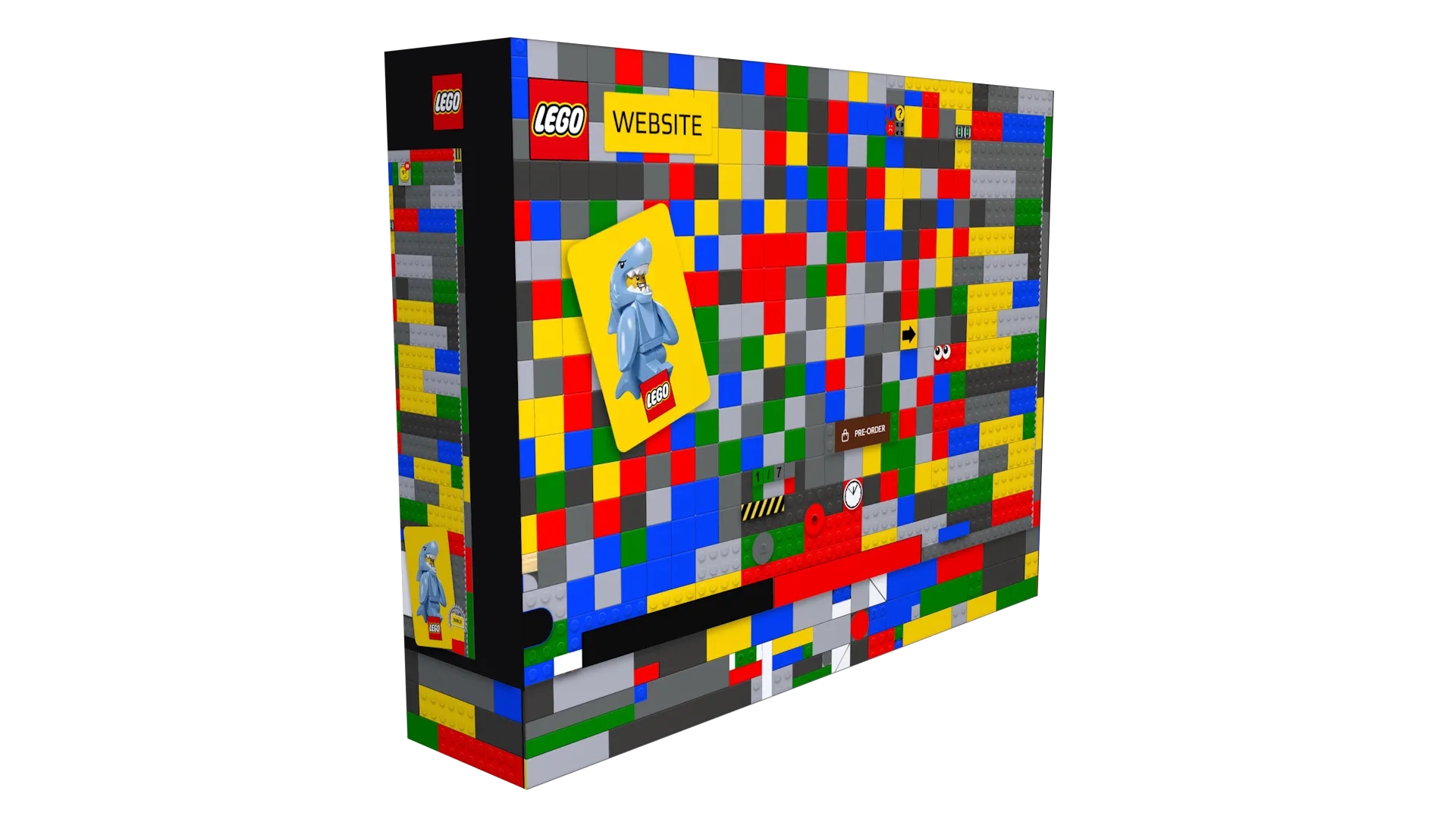
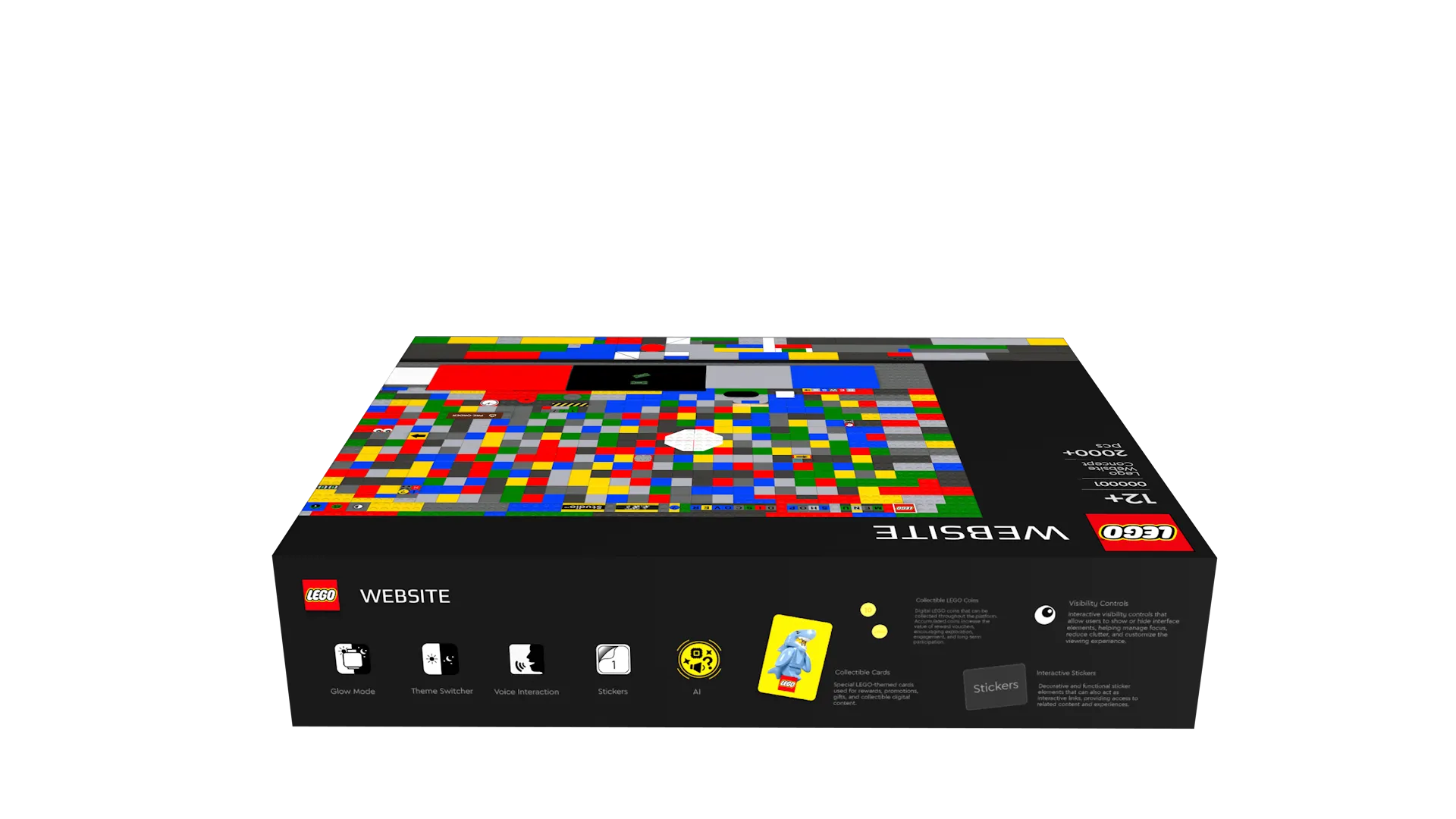
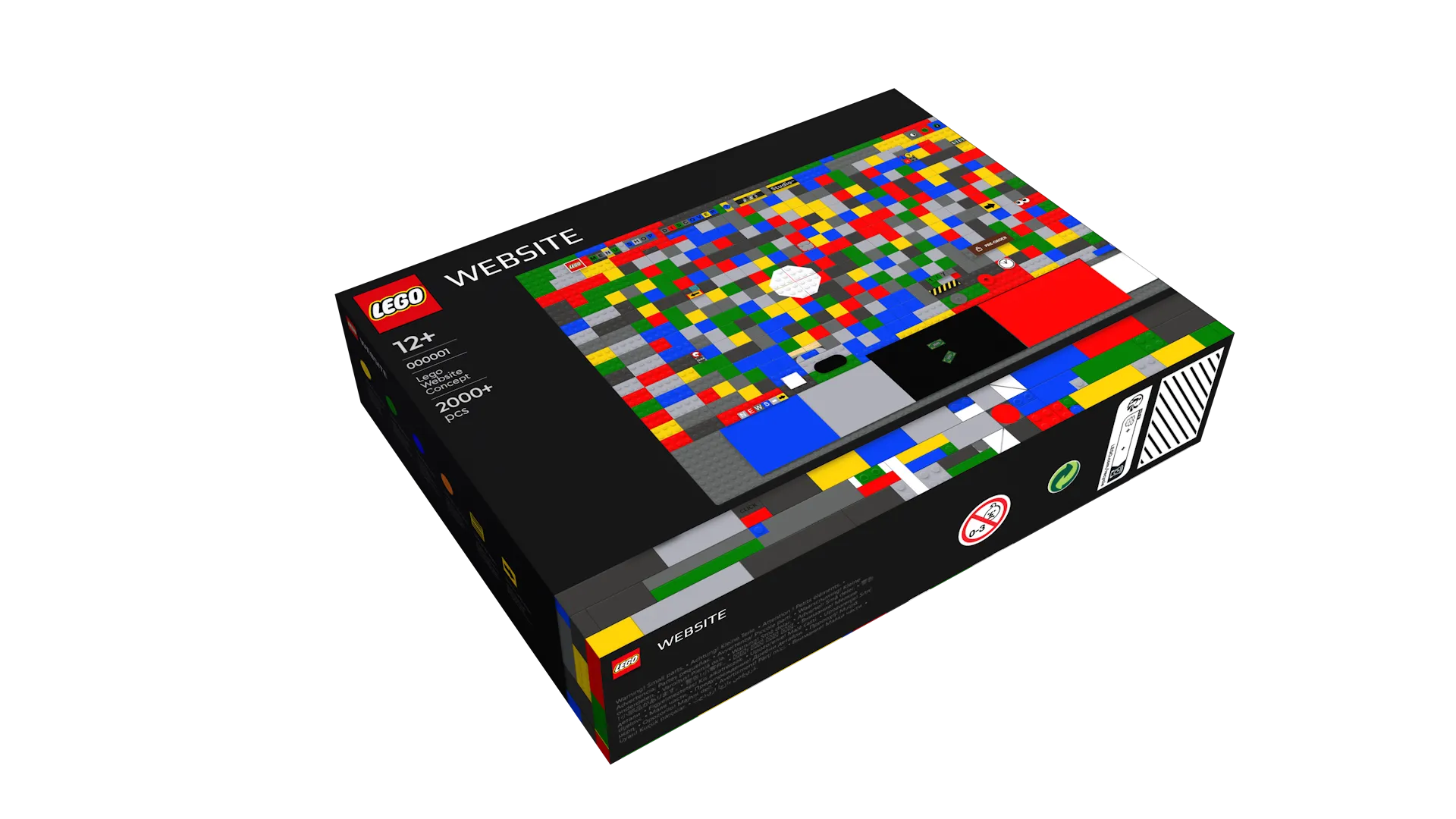
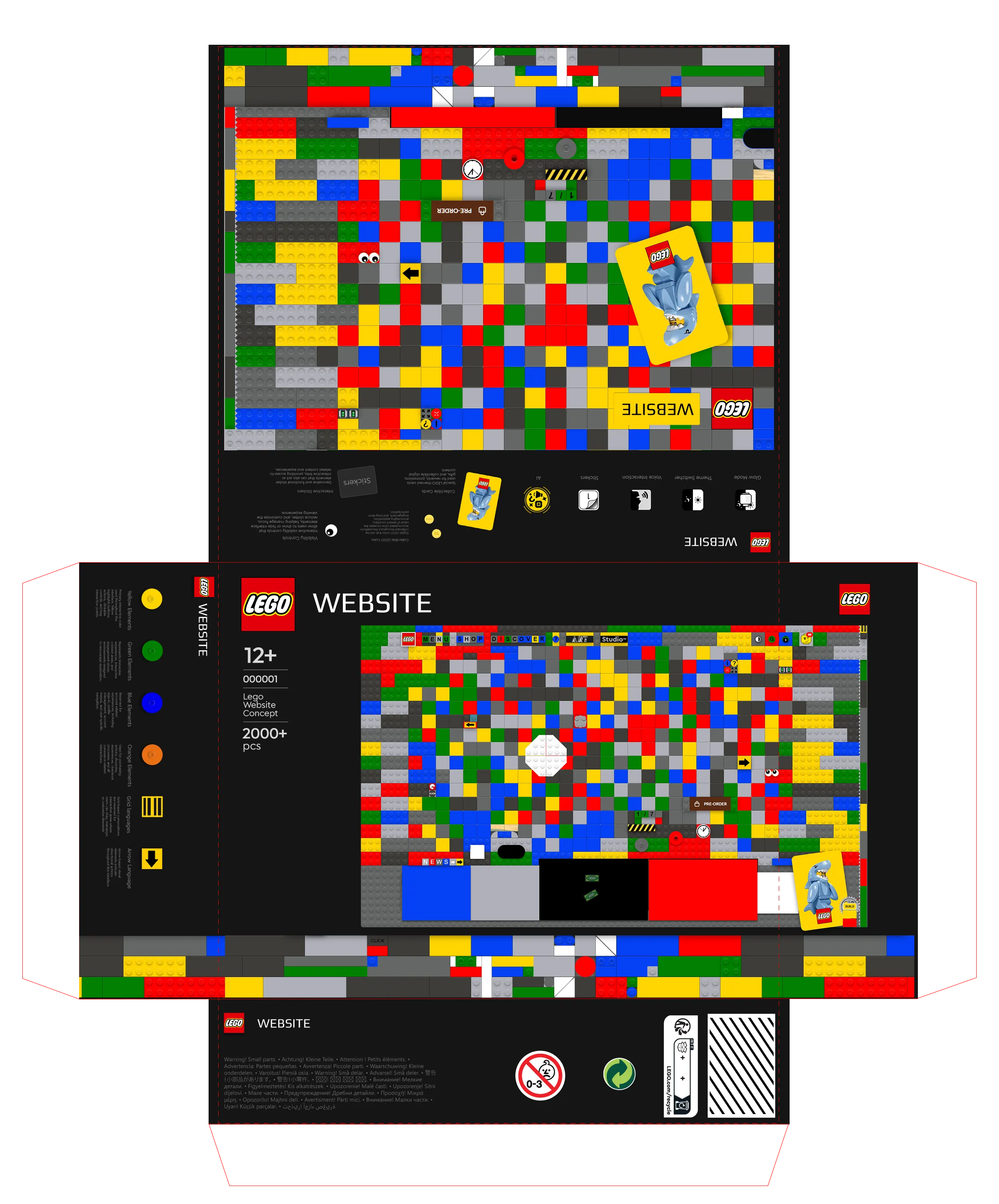
A Website in a Box
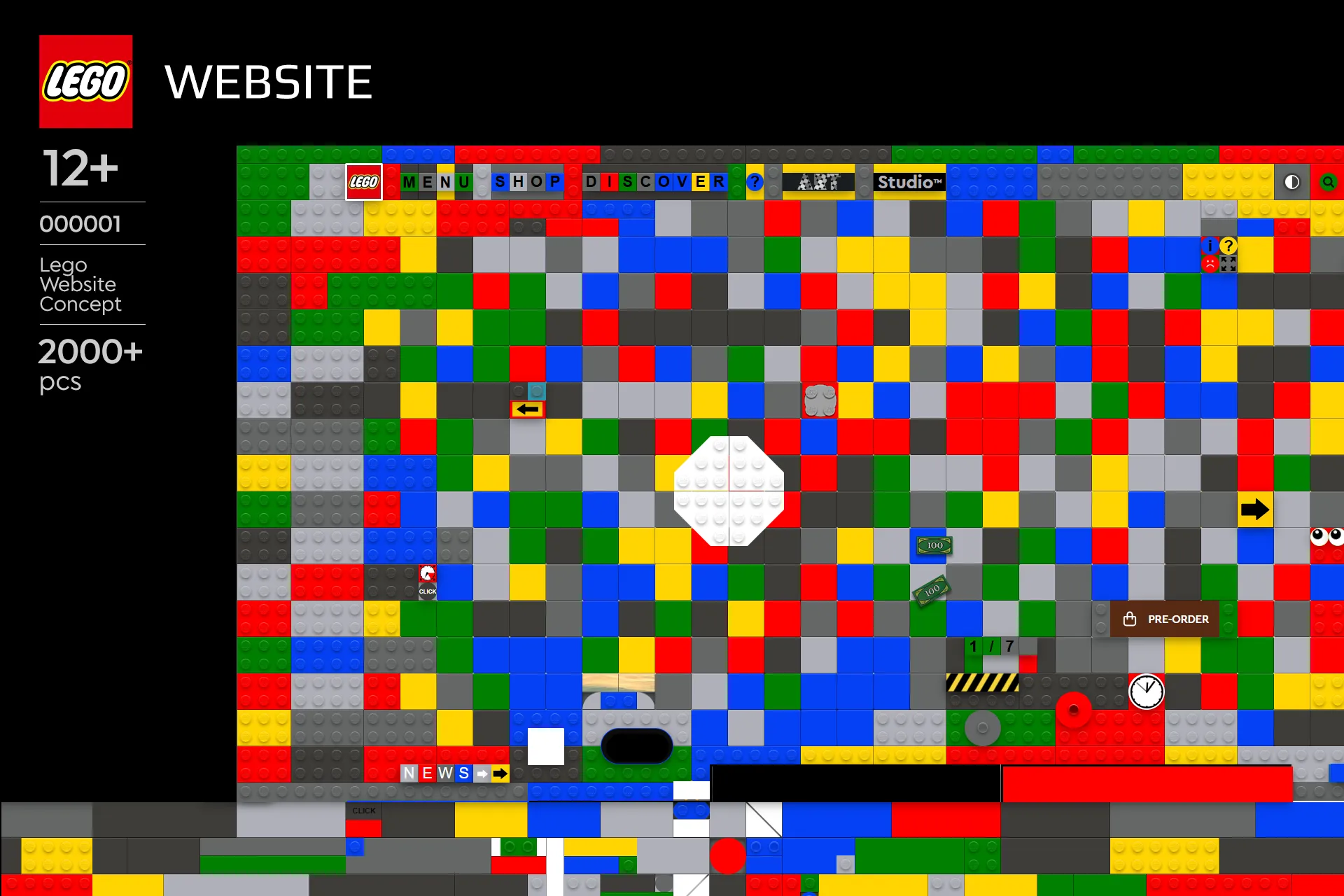
The LEGO® Website Concept could exist not only as a digital experience but also as a physical product. The website could be released as a boxed LEGO set for promotional campaigns, special offers, or customer rewards. For example, purchasing a gift card or voucher could include not only the card itself, but also a complete mini LEGO website set as a bonus. Since the concept is built primarily from standard LEGO elements, countless variations could be produced with relatively low manufacturing costs.
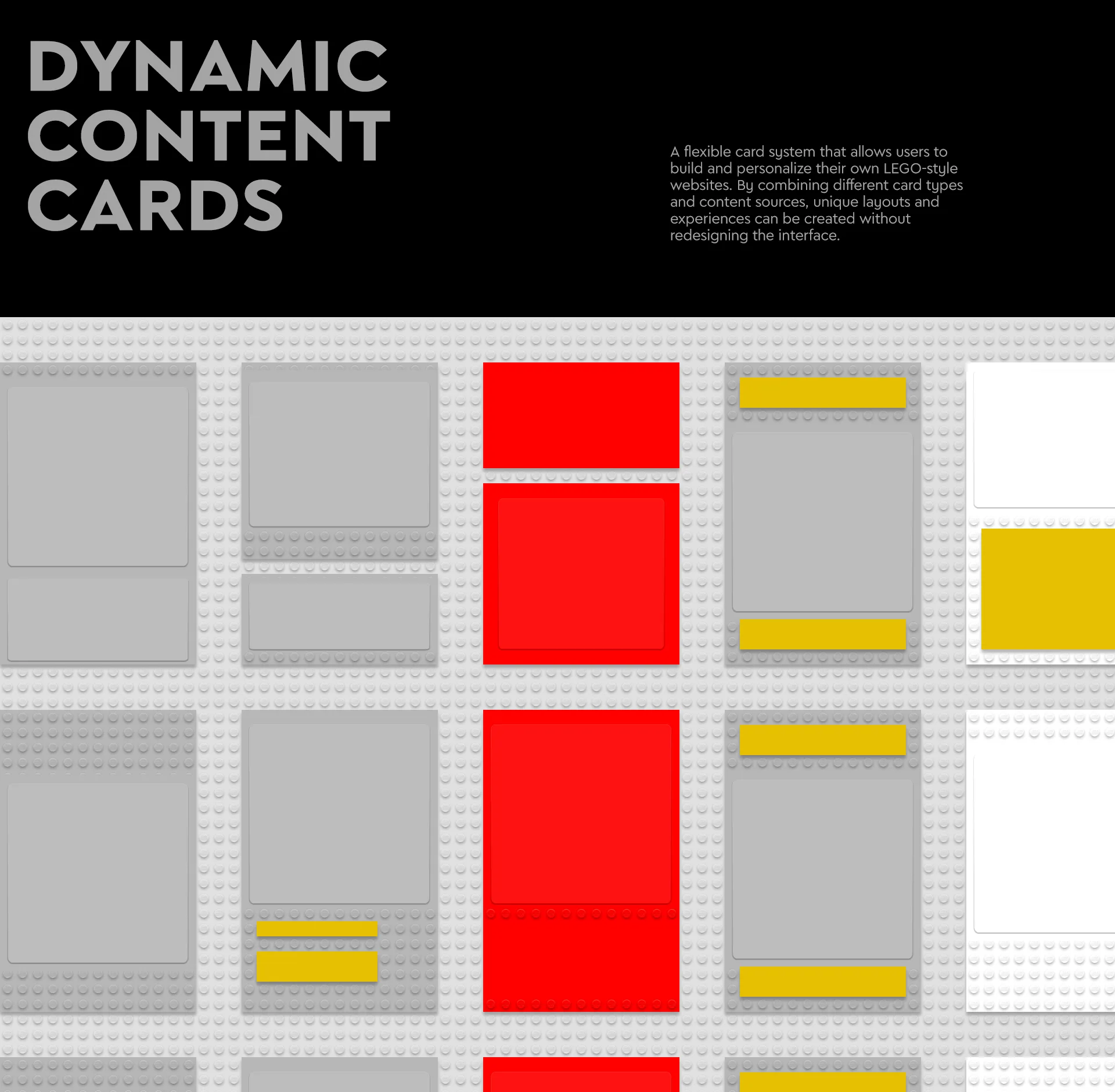
A Flexible Design System
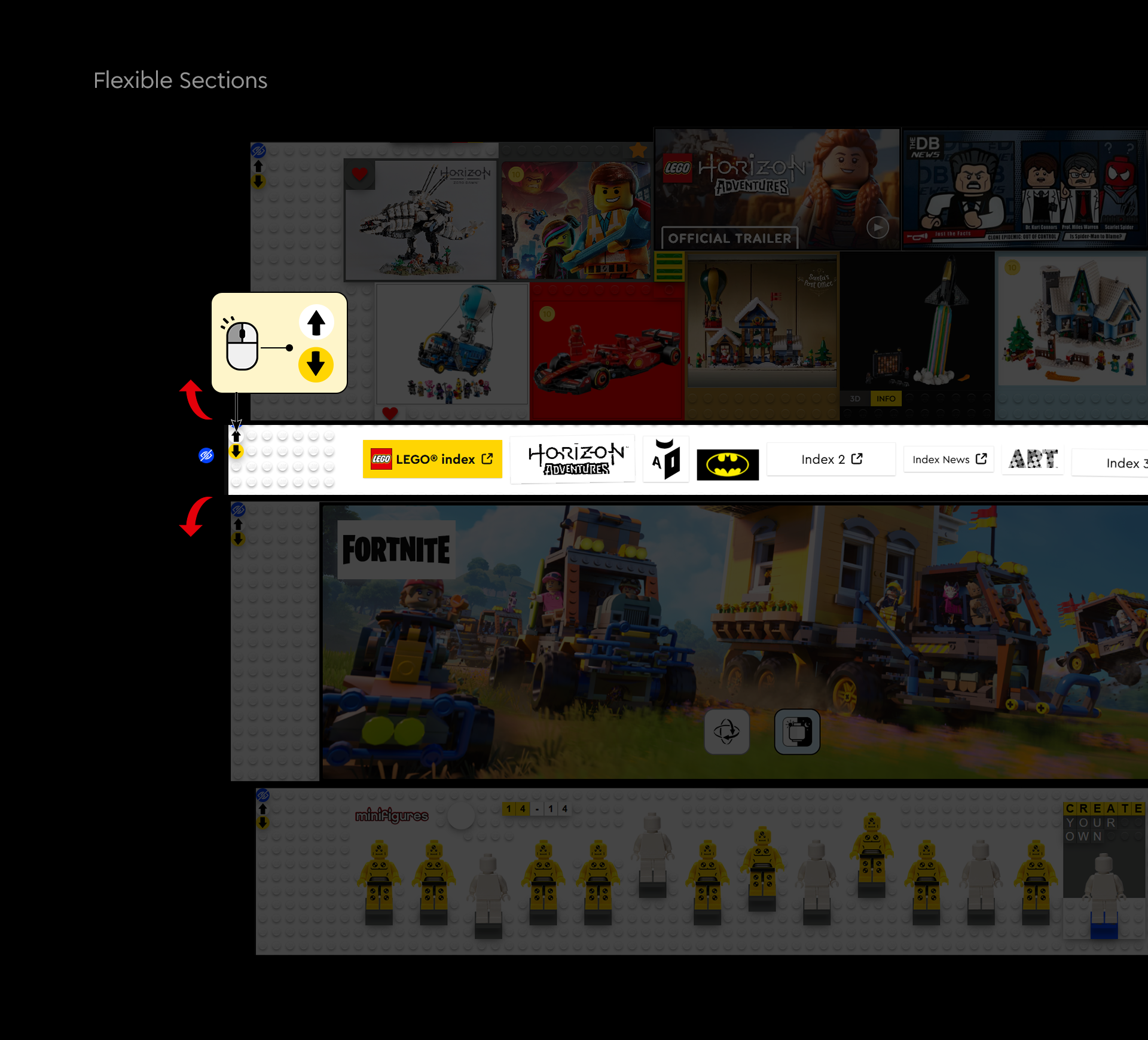
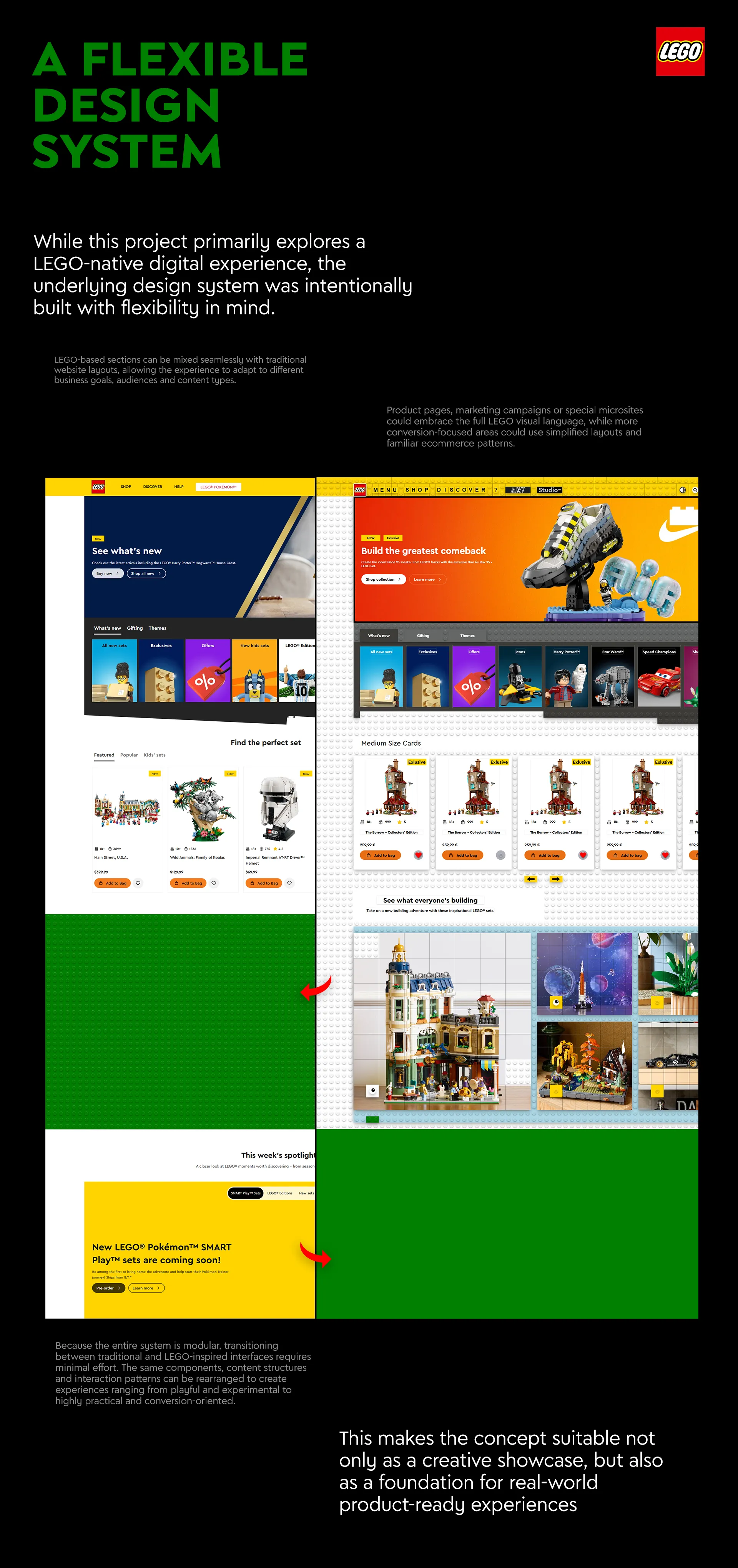
While this project primarily explores a LEGO-native digital experience, the underlying design system was intentionally built with flexibility in mind.
LEGO-based sections can be mixed seamlessly with traditional website layouts, allowing the experience to adapt to different business goals, audiences and content types.
Product pages, marketing campaigns or special microsites could embrace the full LEGO visual language, while more conversion-focused areas could use simplified layouts and familiar ecommerce patterns.
Because the entire system is modular, transitioning between traditional and LEGO-inspired interfaces requires minimal effort. The same components, content structures and interaction patterns can be rearranged to create experiences ranging from playful and experimental to highly practical and conversion-oriented.
This makes the concept suitable not only as a creative showcase, but also as a foundation for real-world product-ready experiences.
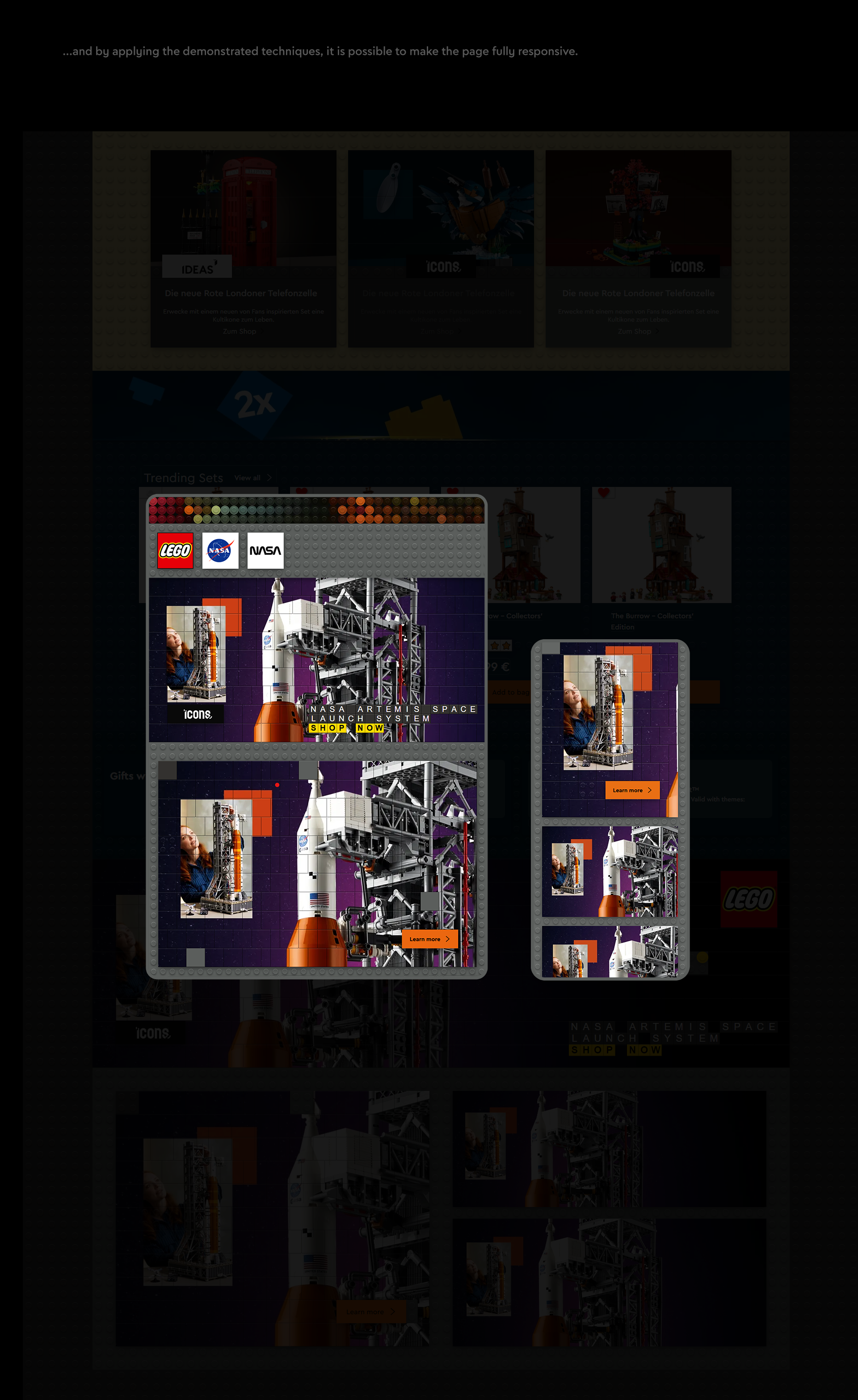
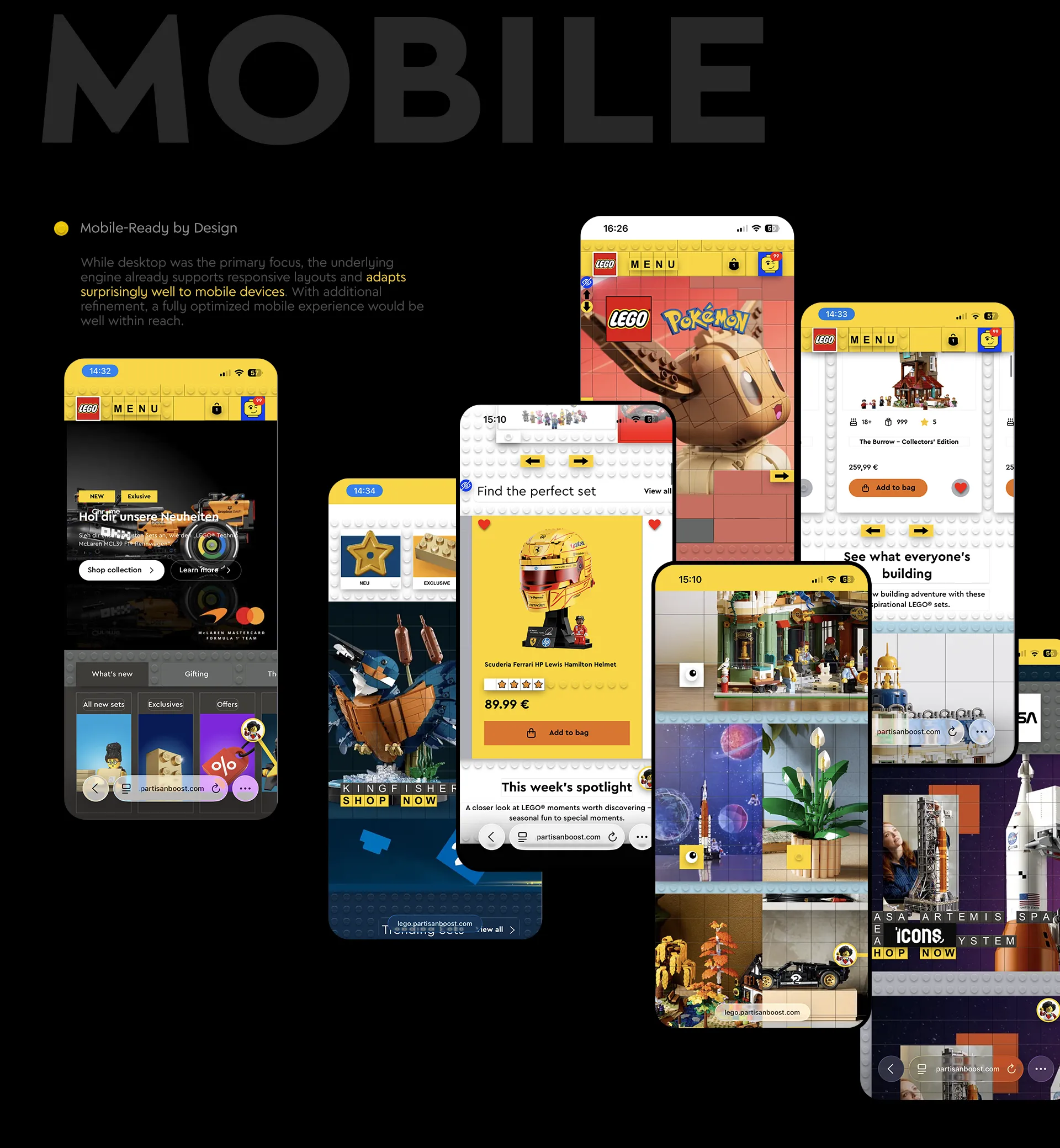
Mobile-Ready by Design
While desktop was the primary focus, the underlying engine already supports responsive layouts and adapts surprisingly well to mobile devices. With additional refinement, a fully optimized mobile experience would be well within reach.
Beyond the Concept
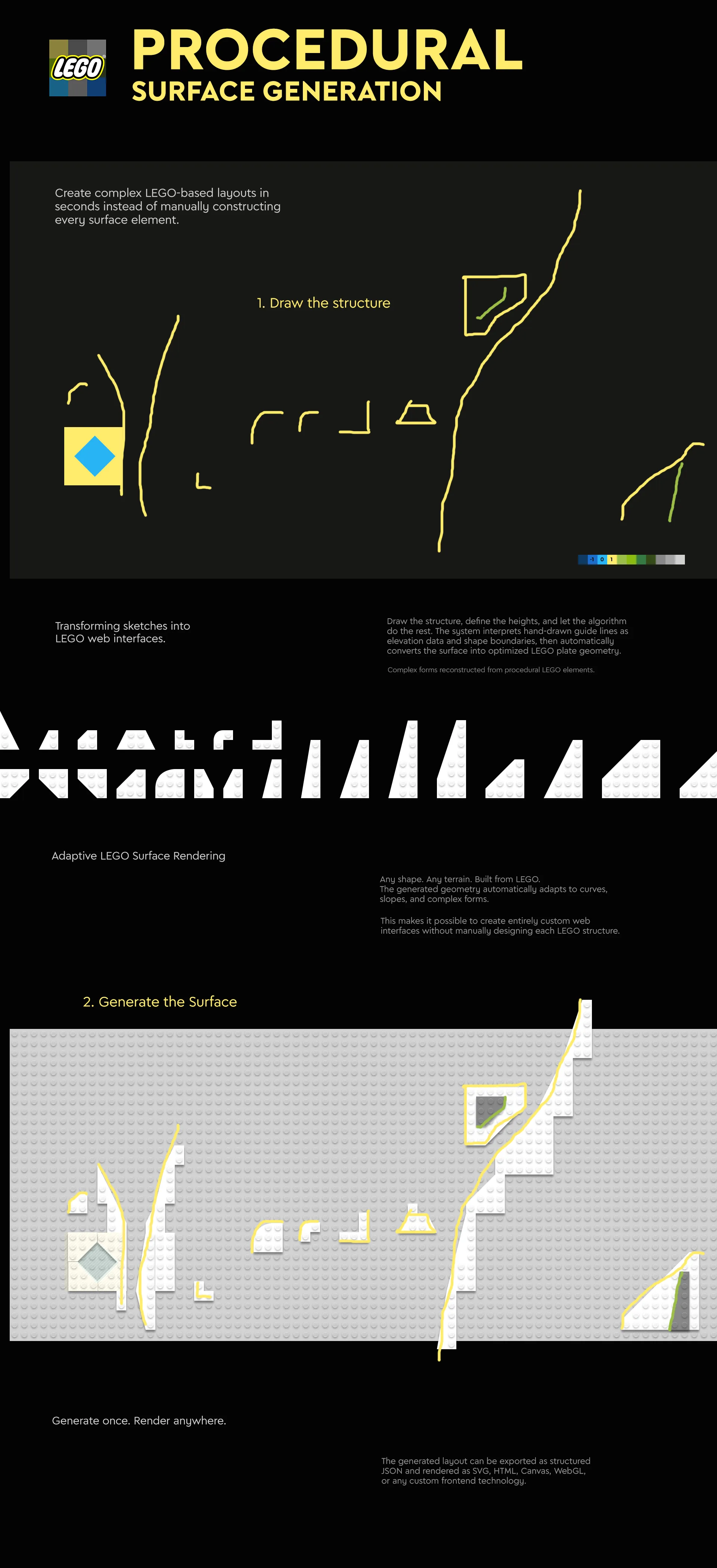
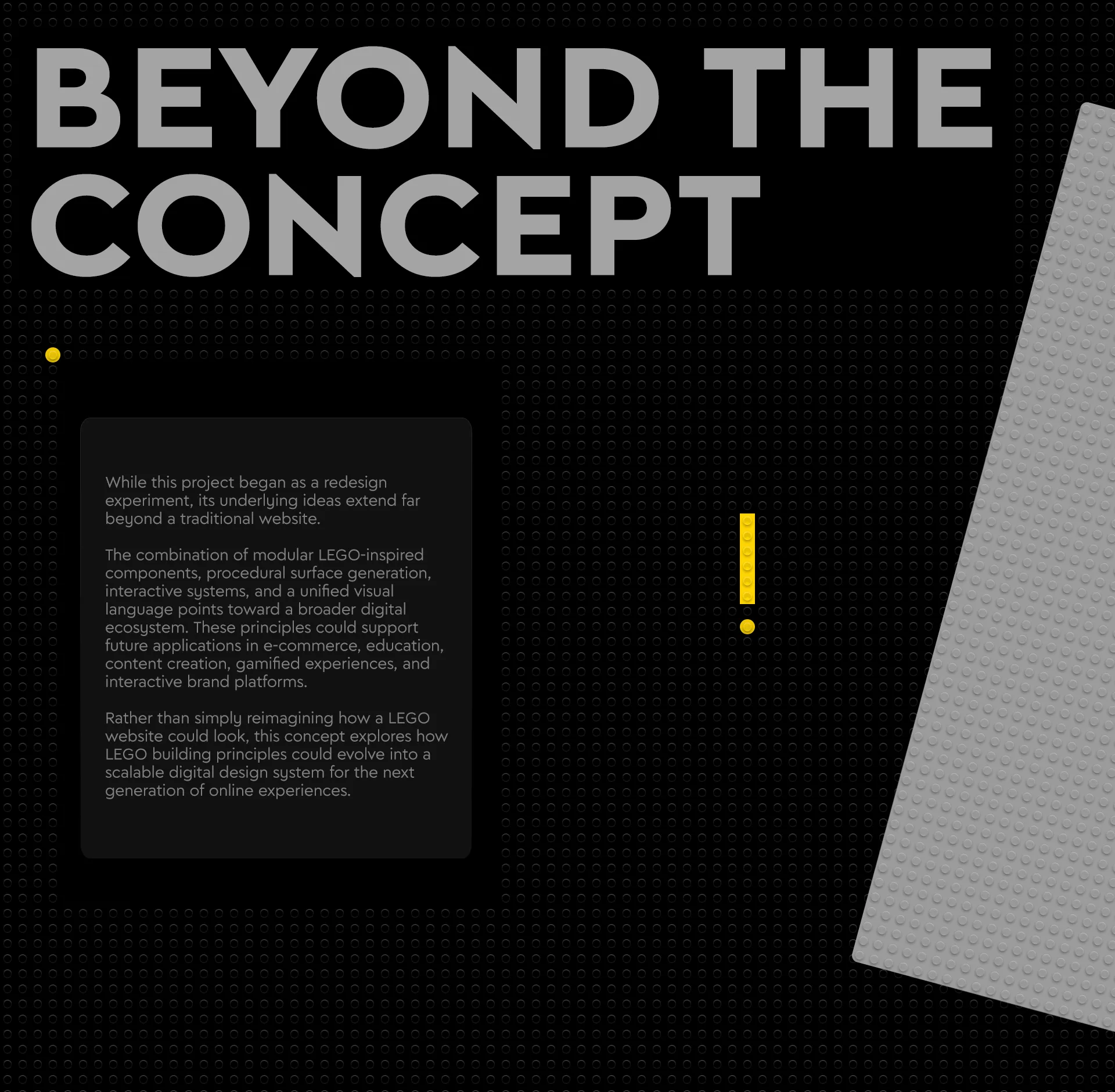
While this project began as a redesign experiment, its underlying ideas extend far beyond a traditional website. The combination of modular LEGO-inspired components, procedural surface generation, interactive systems, and a unified visual language points toward a broader digital ecosystem. These principles could support future applications in e-commerce, education, content creation, gamified experiences, and interactive brand platforms. Rather than simply reimagining how a LEGO website could look, this concept explores how LEGO building principles could evolve into a scalable digital design system for the next generation of online experiences.
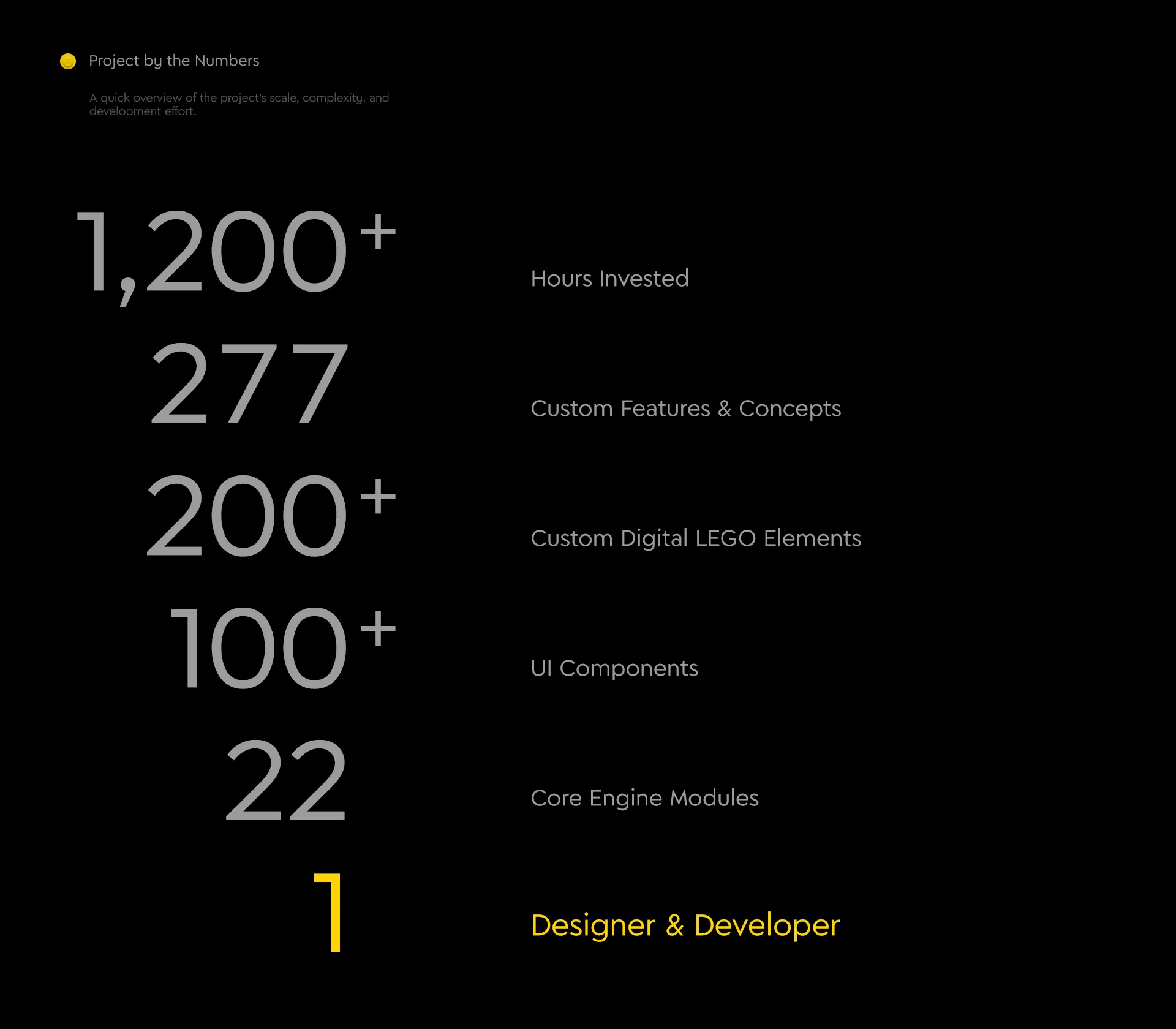
This project was originally envisioned as a much larger exploration of LEGO as a digital design language. While I developed the core concepts, systems, and prototypes presented here, time constraints prevented me from exploring the full scope of the idea. What is shown in this case study represents the foundation of a broader vision rather than its final form.
Project Overview
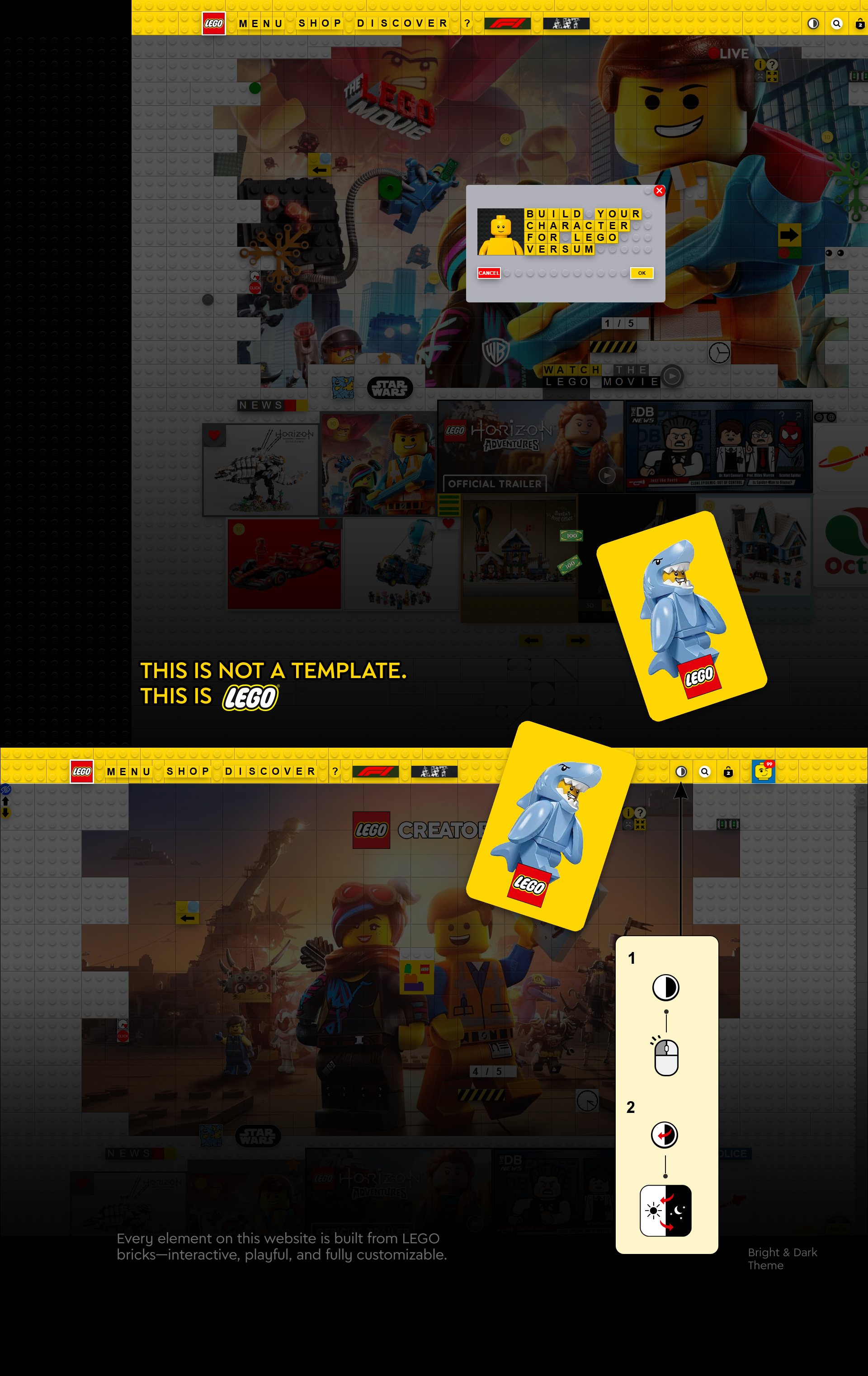
The LEGO® Website Redesign & Concept is a modern, interactive, and technically unique digital experience that reimagines how the LEGO universe could exist online. My goal was to explore what a LEGO website would look like if every single element were physically “built” from LEGO bricks — from backgrounds and UI components to text and interactions. This project is not a template and not a graphic mockup: every element is built live using HTML, CSS, and JavaScript.
What Problem Does It Solve?
The current LEGO digital experience is primarily built around conventional web design patterns. While the content is about LEGO, the interface itself does not fully reflect the core principles that define the physical LEGO experience: creativity, modularity, customization, and building.
This project explores how LEGO construction logic can be translated into a digital environment, where LEGO is not treated as a visual theme, but as the foundation of the interface itself.
The goal was to create a system in which the website behaves more like a LEGO creation than a traditional website — a modular environment built from reusable components that can be assembled, customized, and expanded.
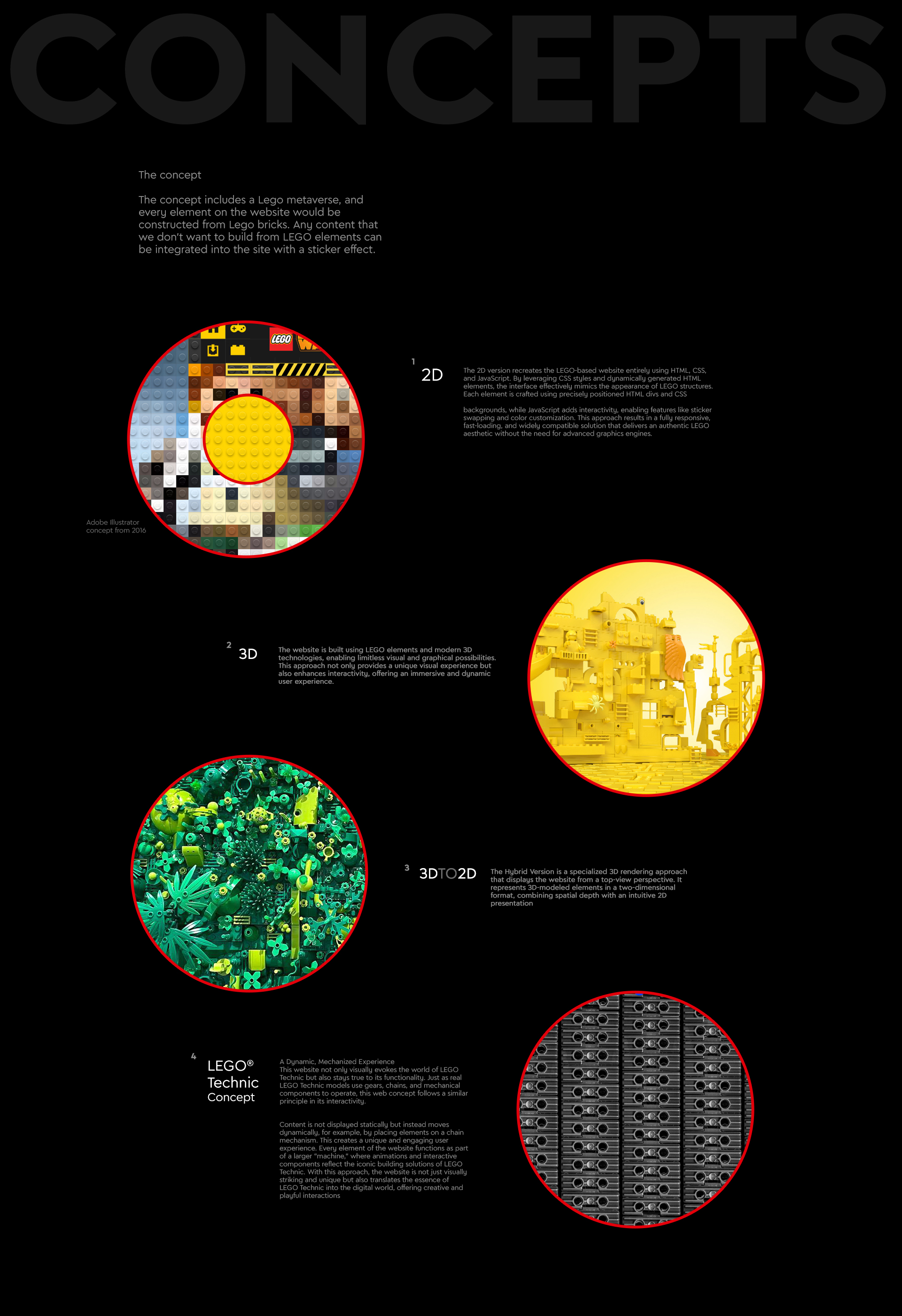
The Concept
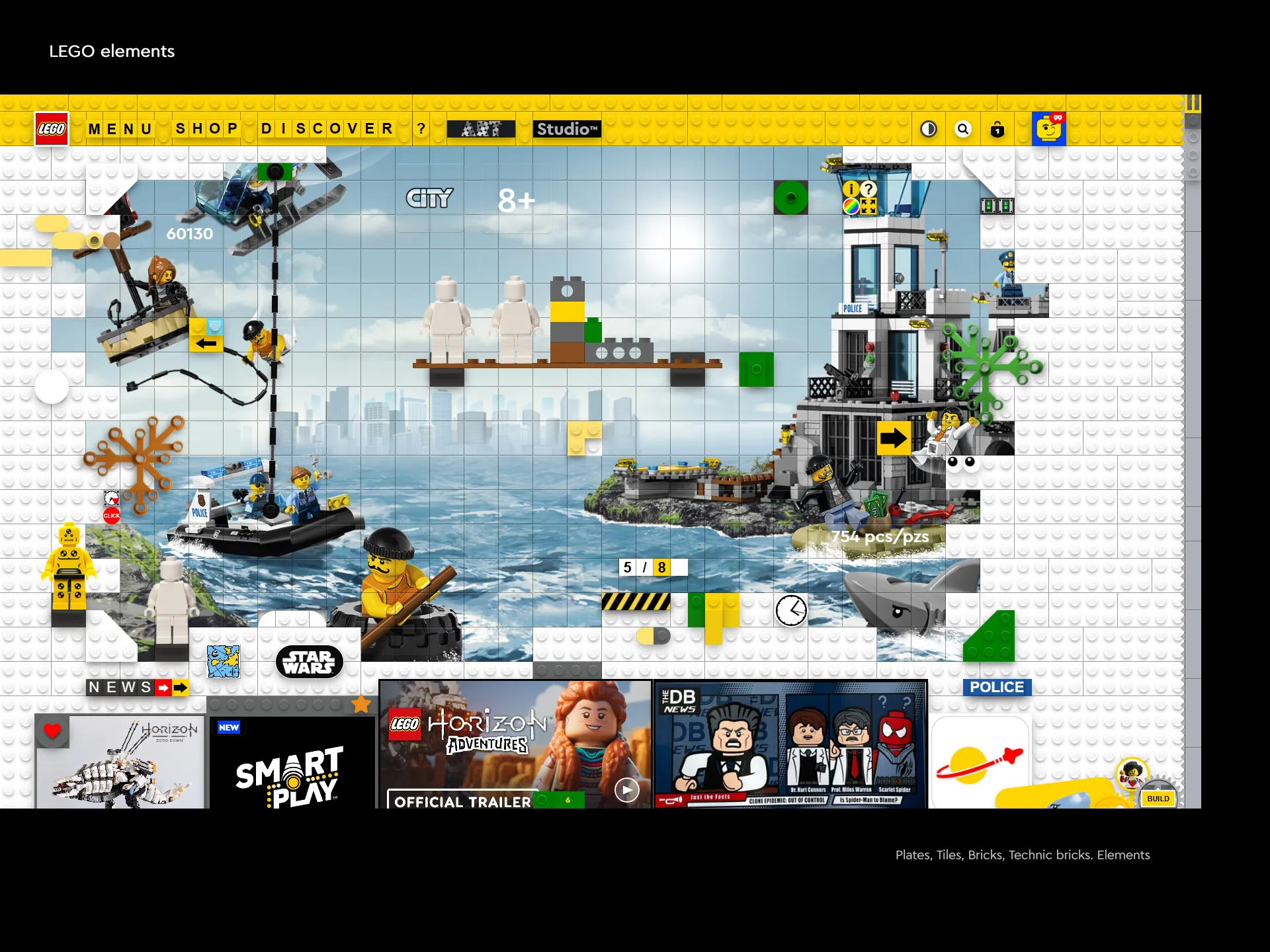
The core idea is that the entire website is constructed from LEGO elements:
- 2D LEGO pixel tiles
- 3D LEGO objects
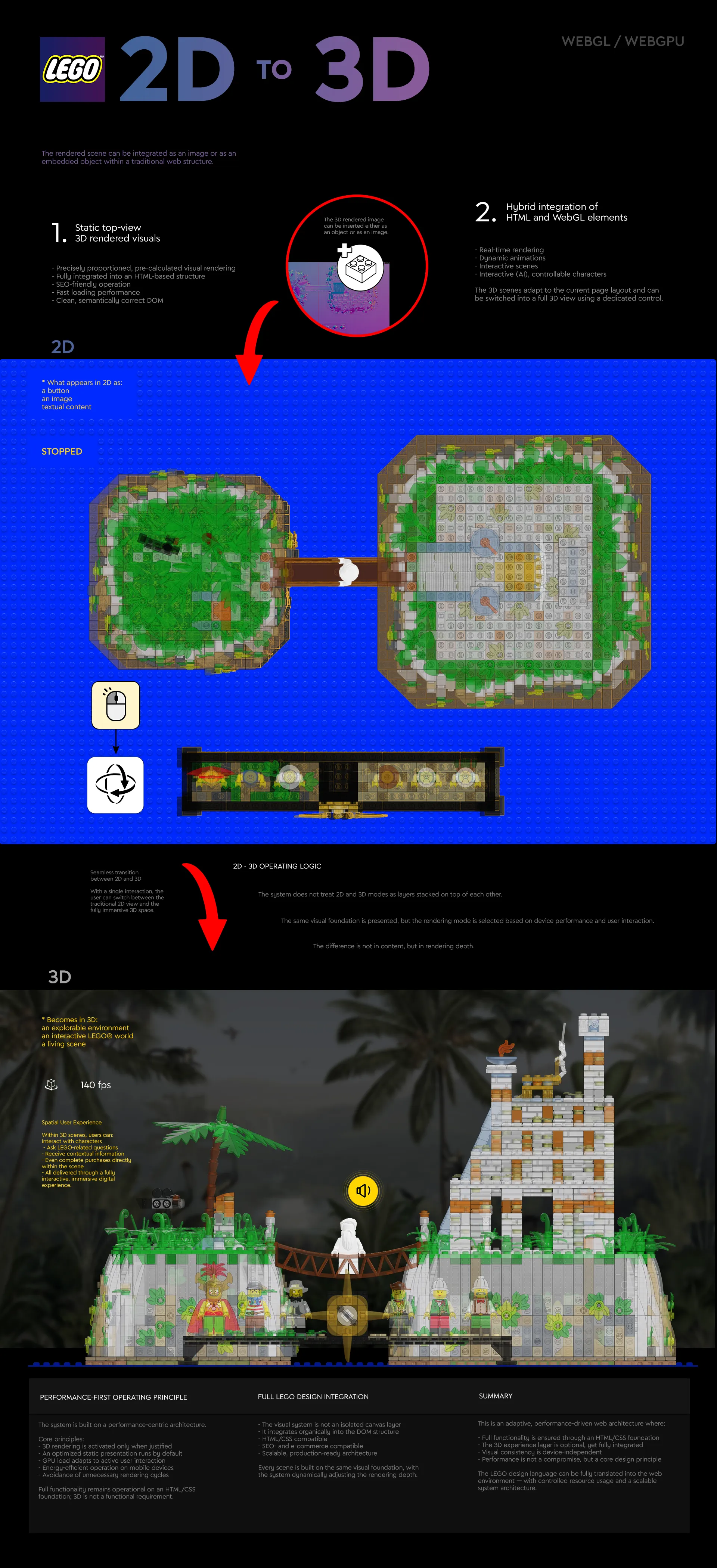
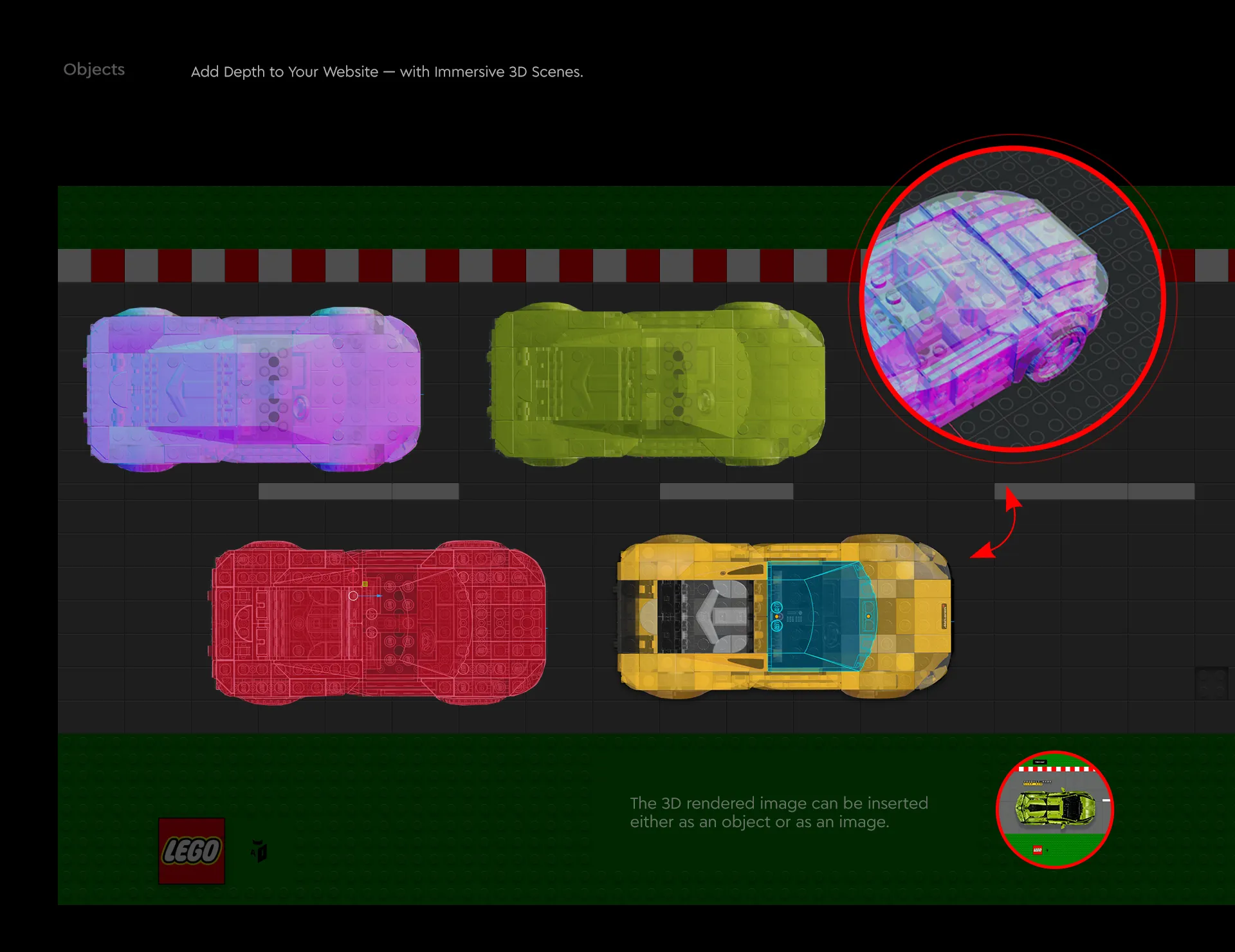
- hybrid 3D→2D rendering
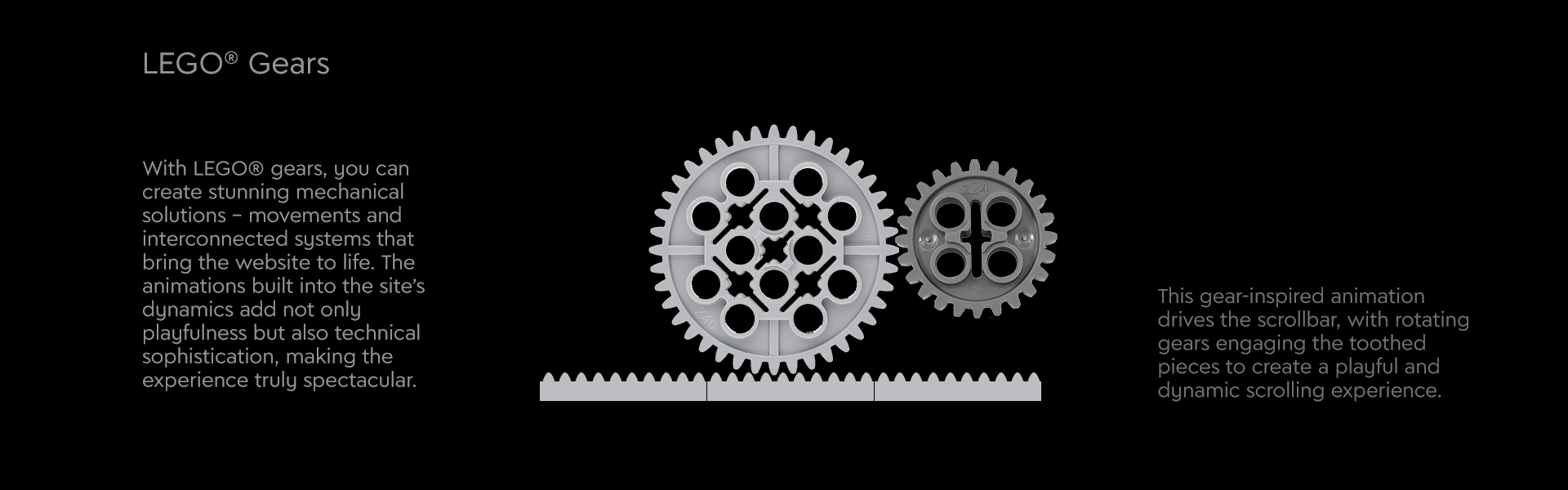
- Technic-inspired mechanical styles
For non-LEGO content, I developed a sticker system, allowing any external graphic to be placed into the LEGO environment as a custom sticker. The result is a playful, interactive, and fully modular web experience that can adapt to any LEGO theme.
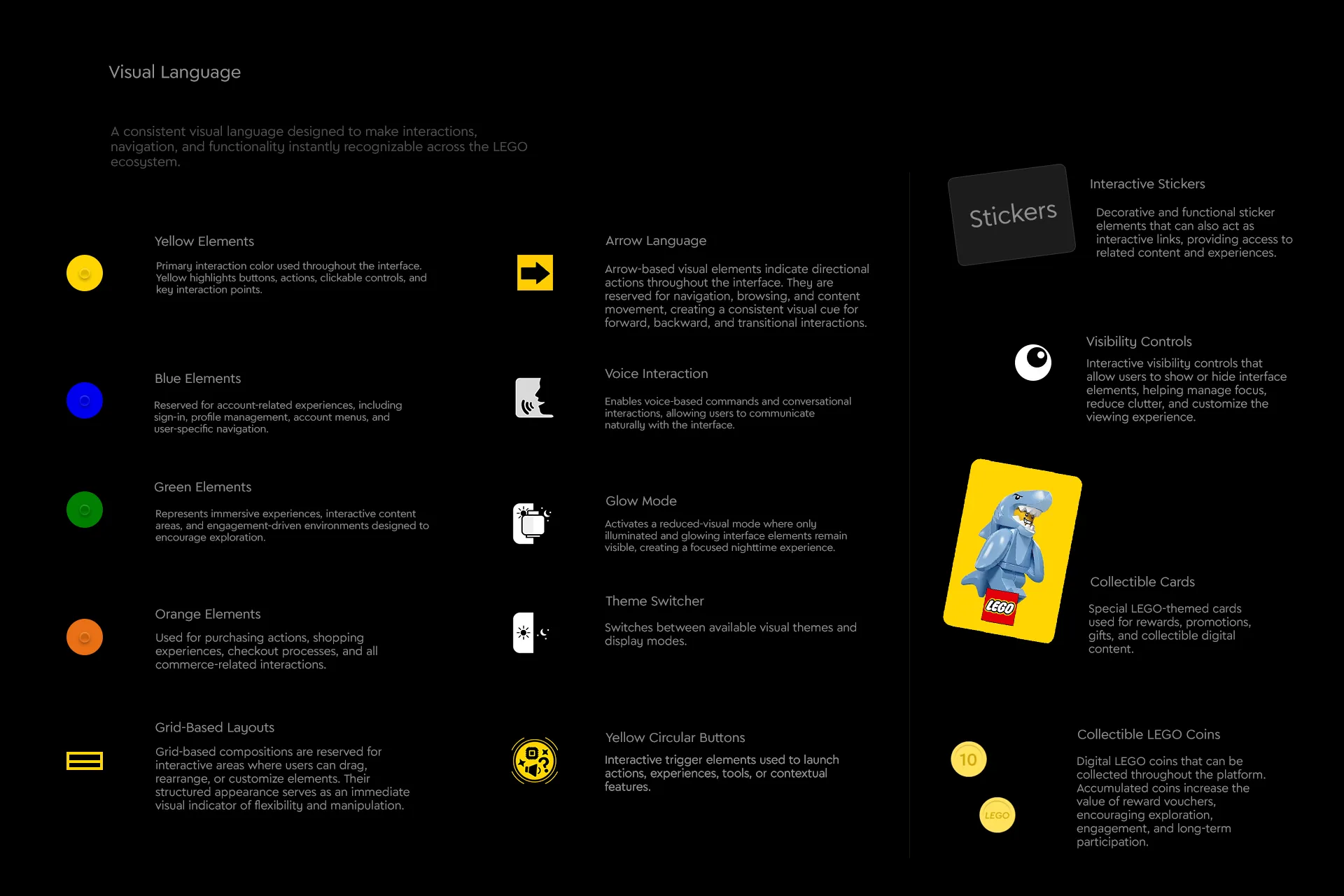
Key Features
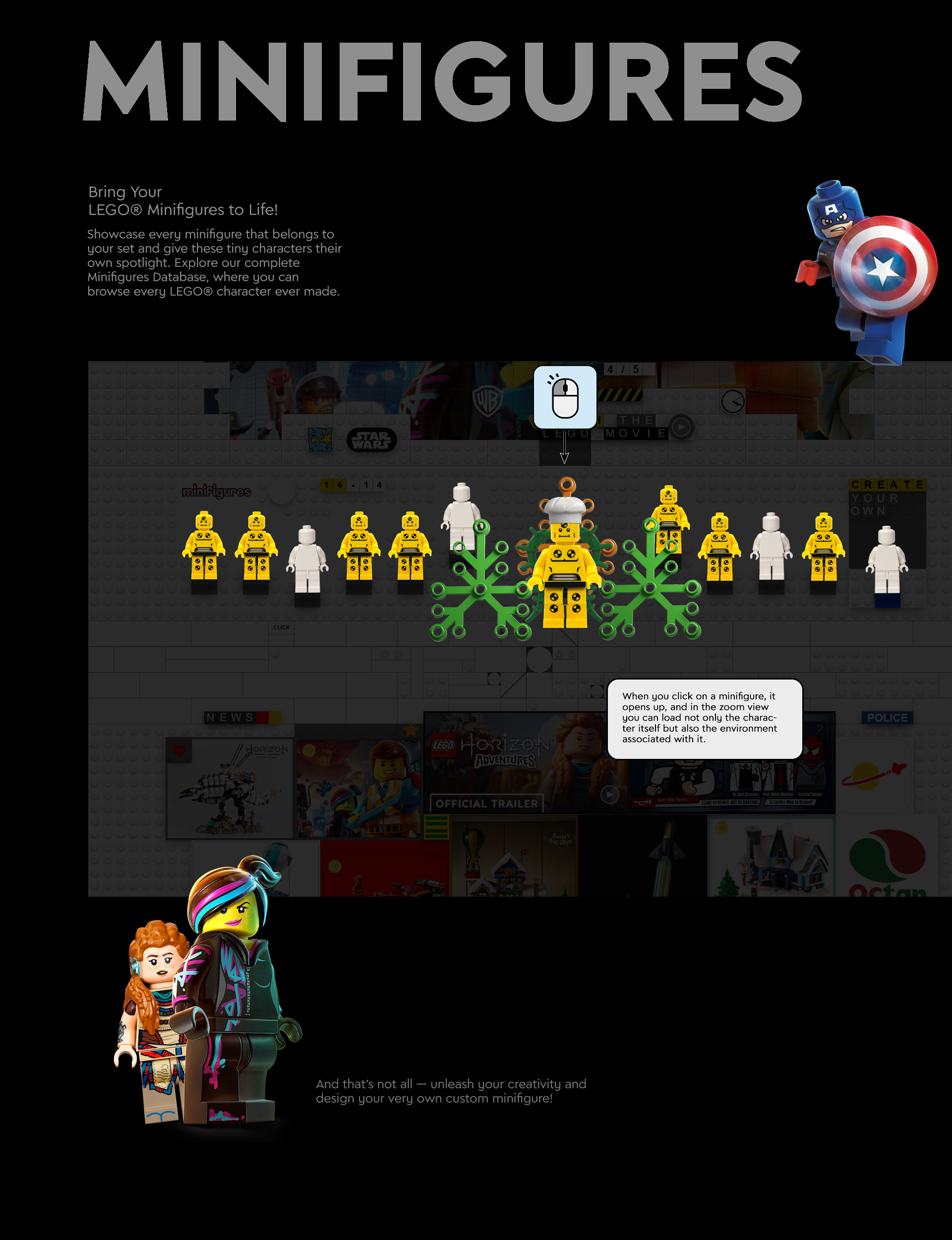
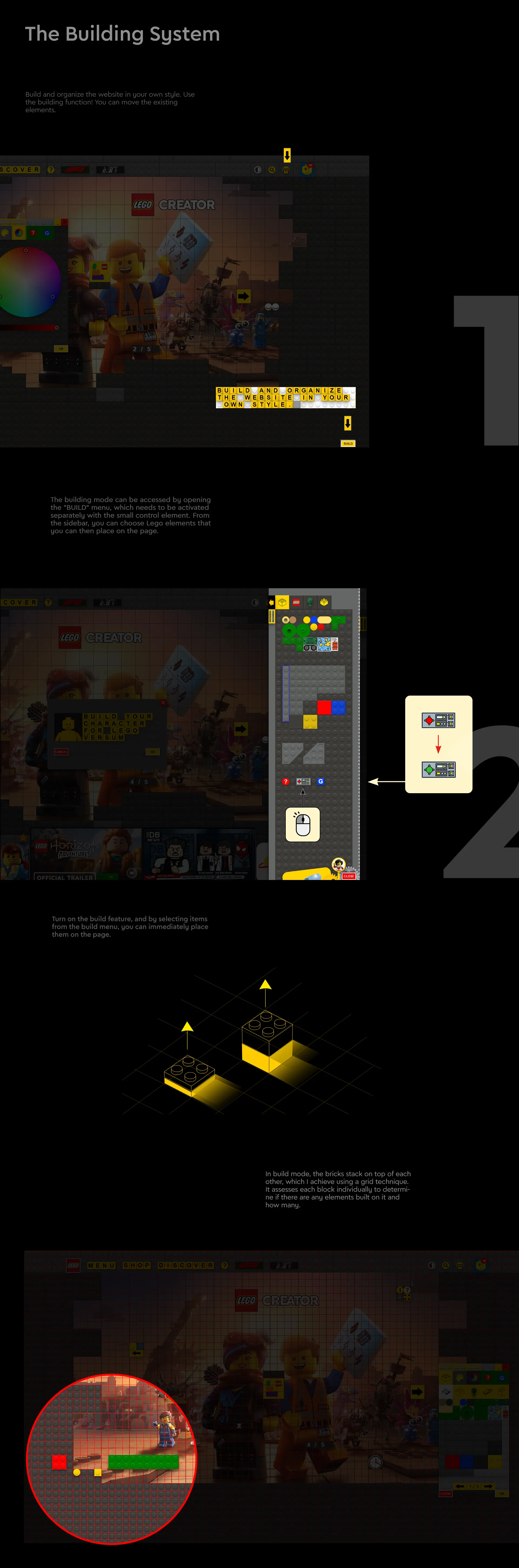
- Editable LEGO tiles – moveable, replaceable, rotatable elements
- Sticker Book System – hundreds of stickers with a book-style UI
- SmartSnap Tiles – automatic “stud alignment” based on LEGO logic
- Switchable stud styles – Standard, Technic, DUPLO, and Custom
- Dynamic Color Mixer – full LEGO palette + custom color spectrum
- Glow-in-the-Dark mode – highlights glowing LEGO elements
- Bright / Dark modes in LEGO style
- Zoomable LEGO Buttons – inspired by LEGO instruction manuals
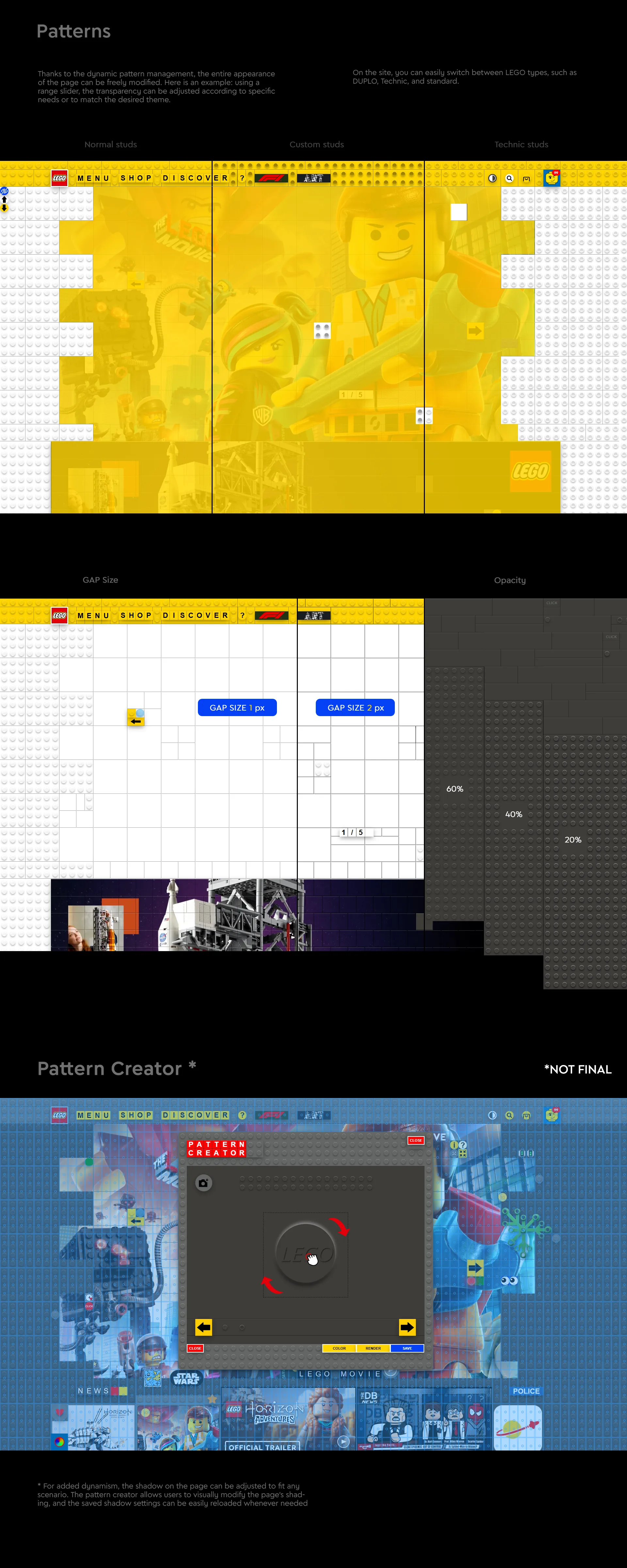
- Pattern Creator – edit shadows, opacity, texture and density
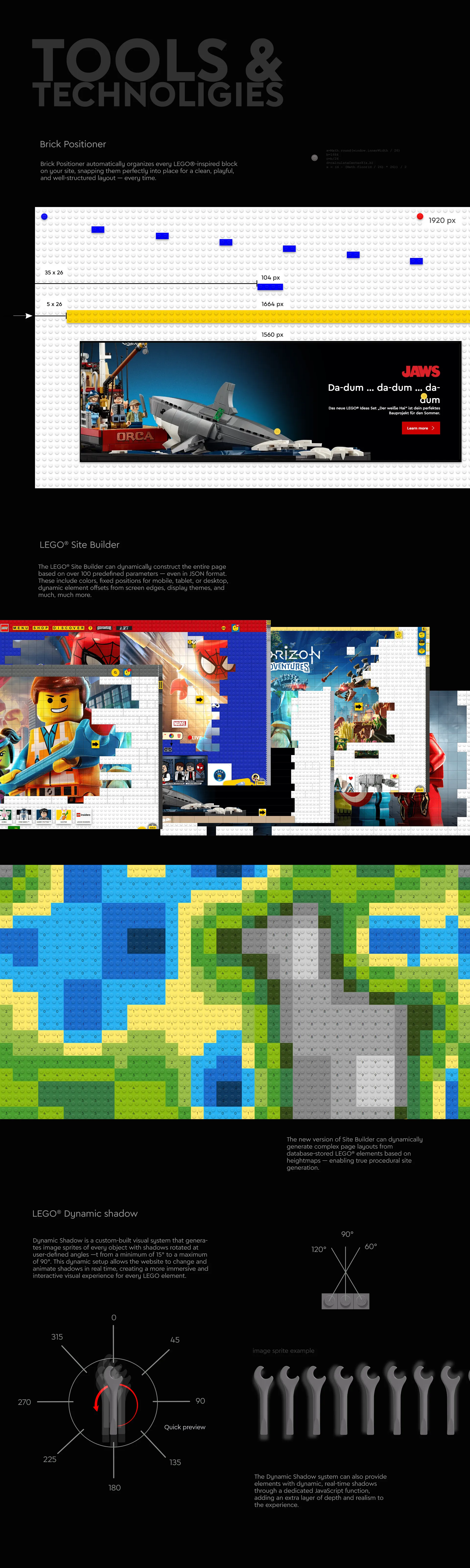
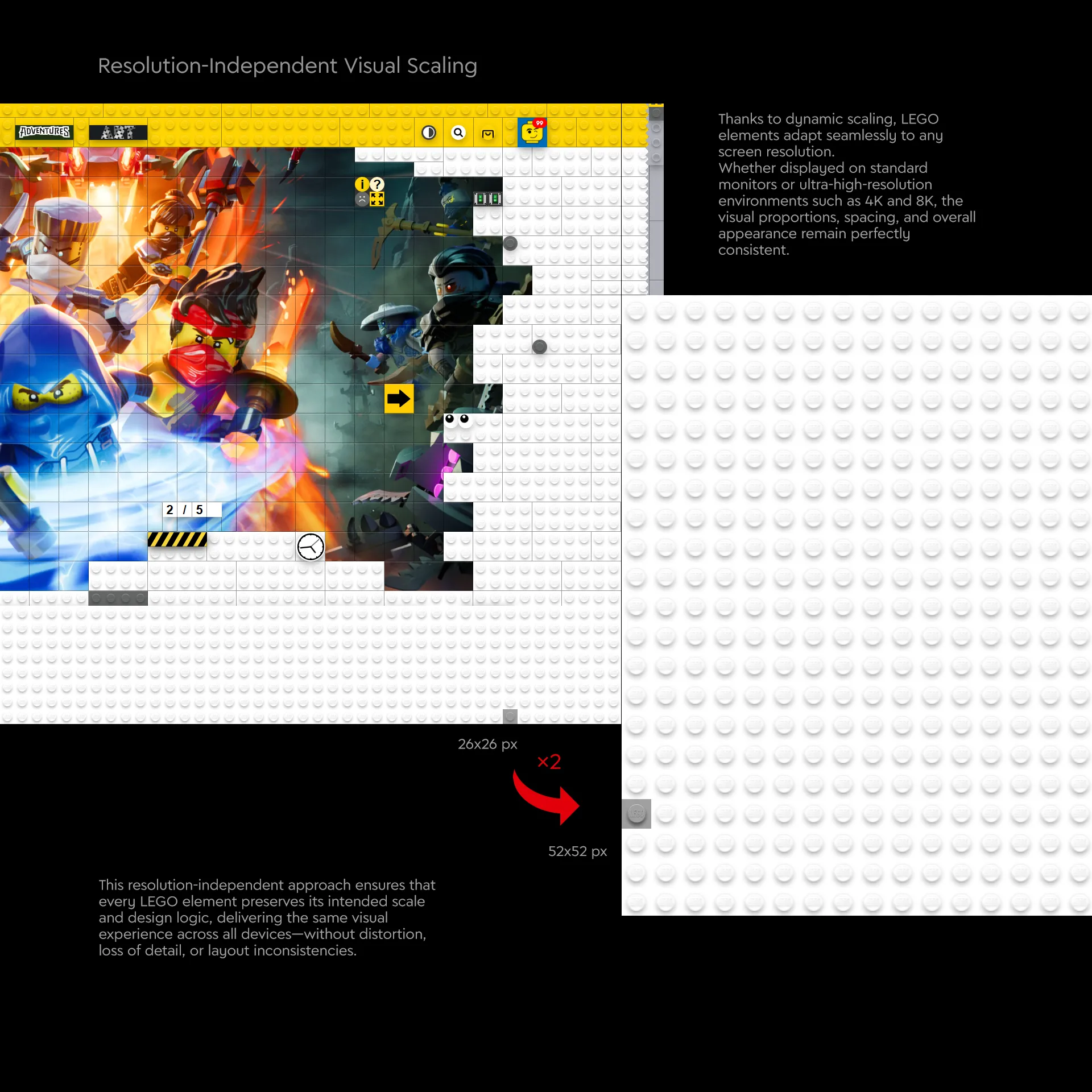
- Dynamic grid system (based on a 26×26 px LEGO plate)
- Magnetic blocks – offset-compatible snapping
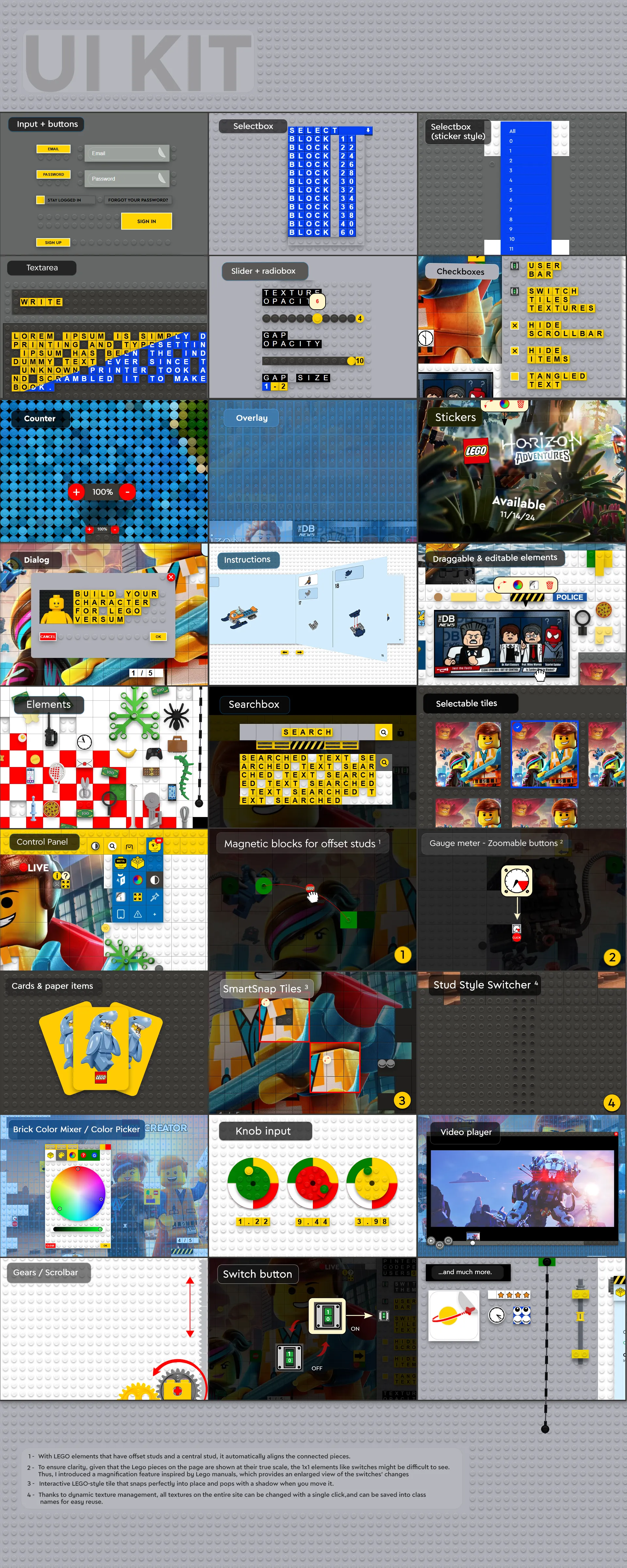
- Complete LEGO UI Kit with dozens of interactive components
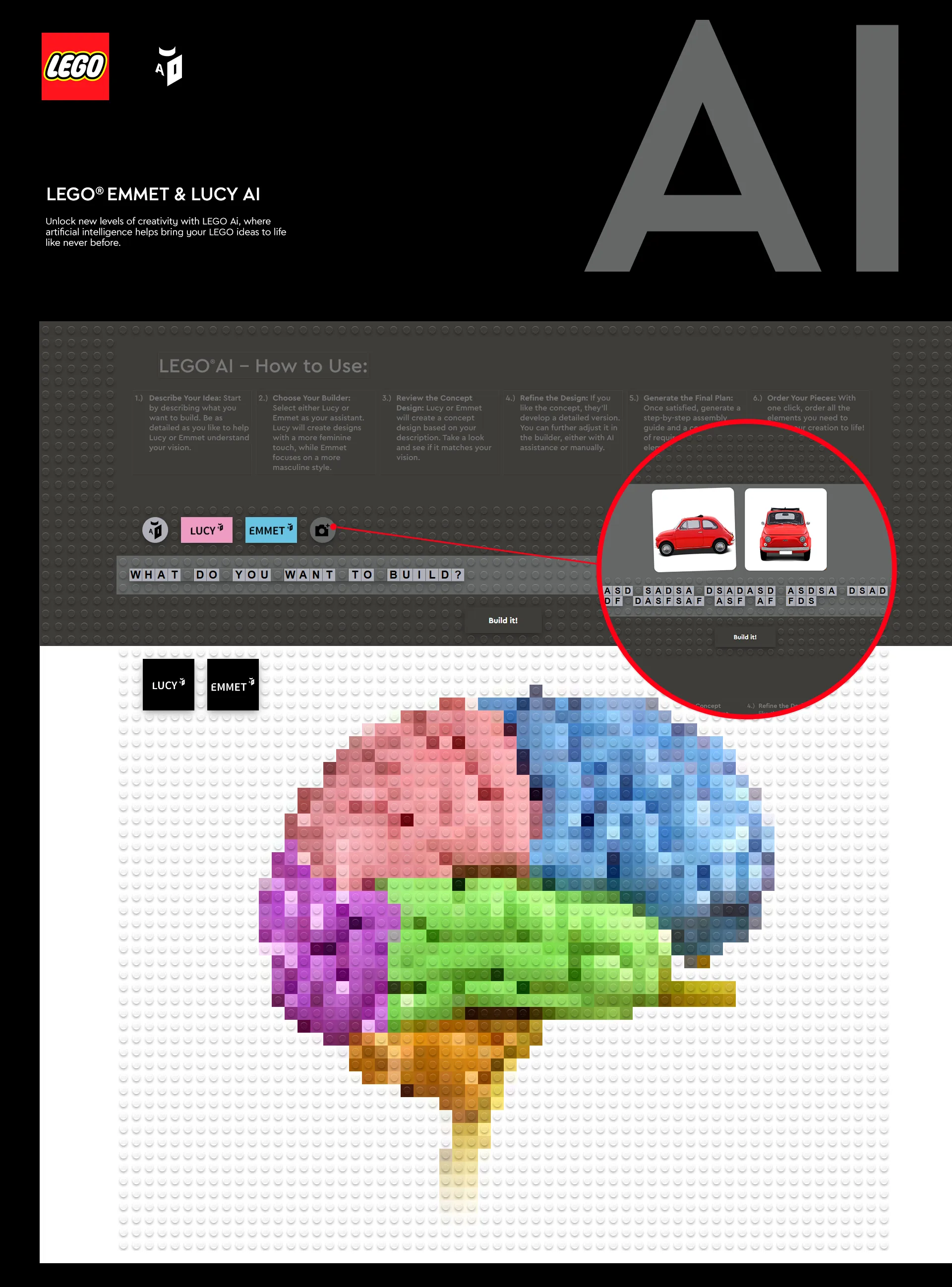
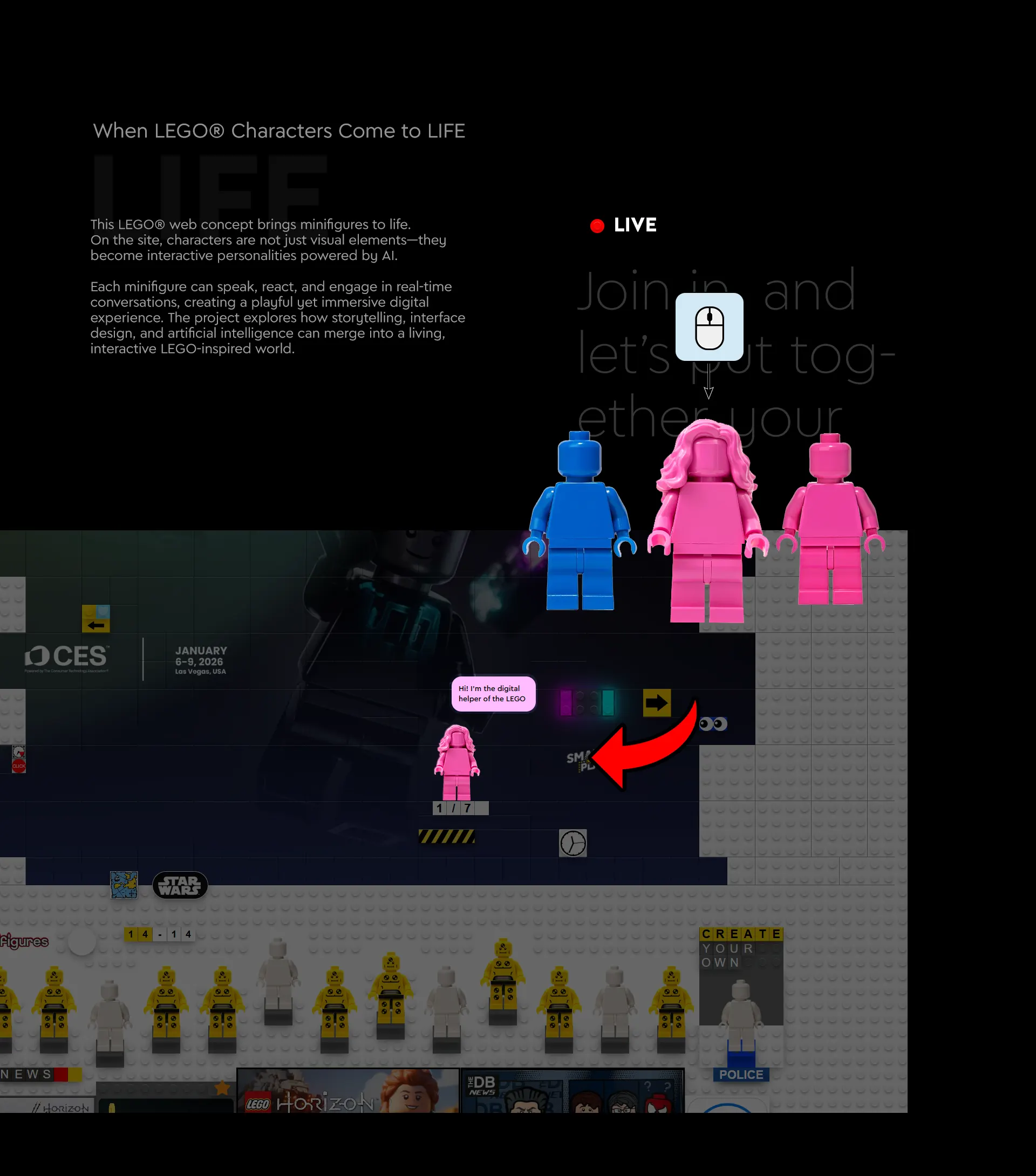
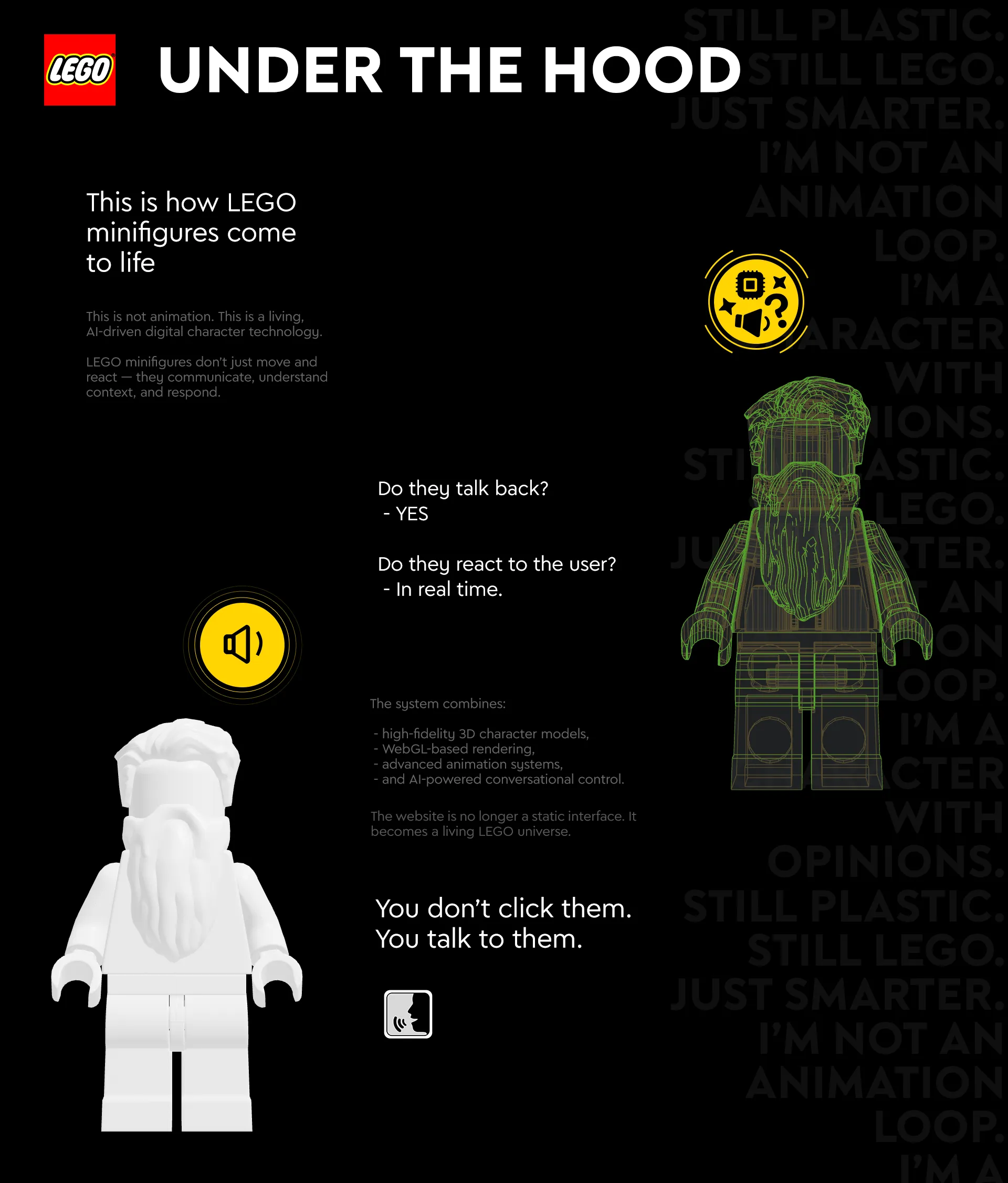
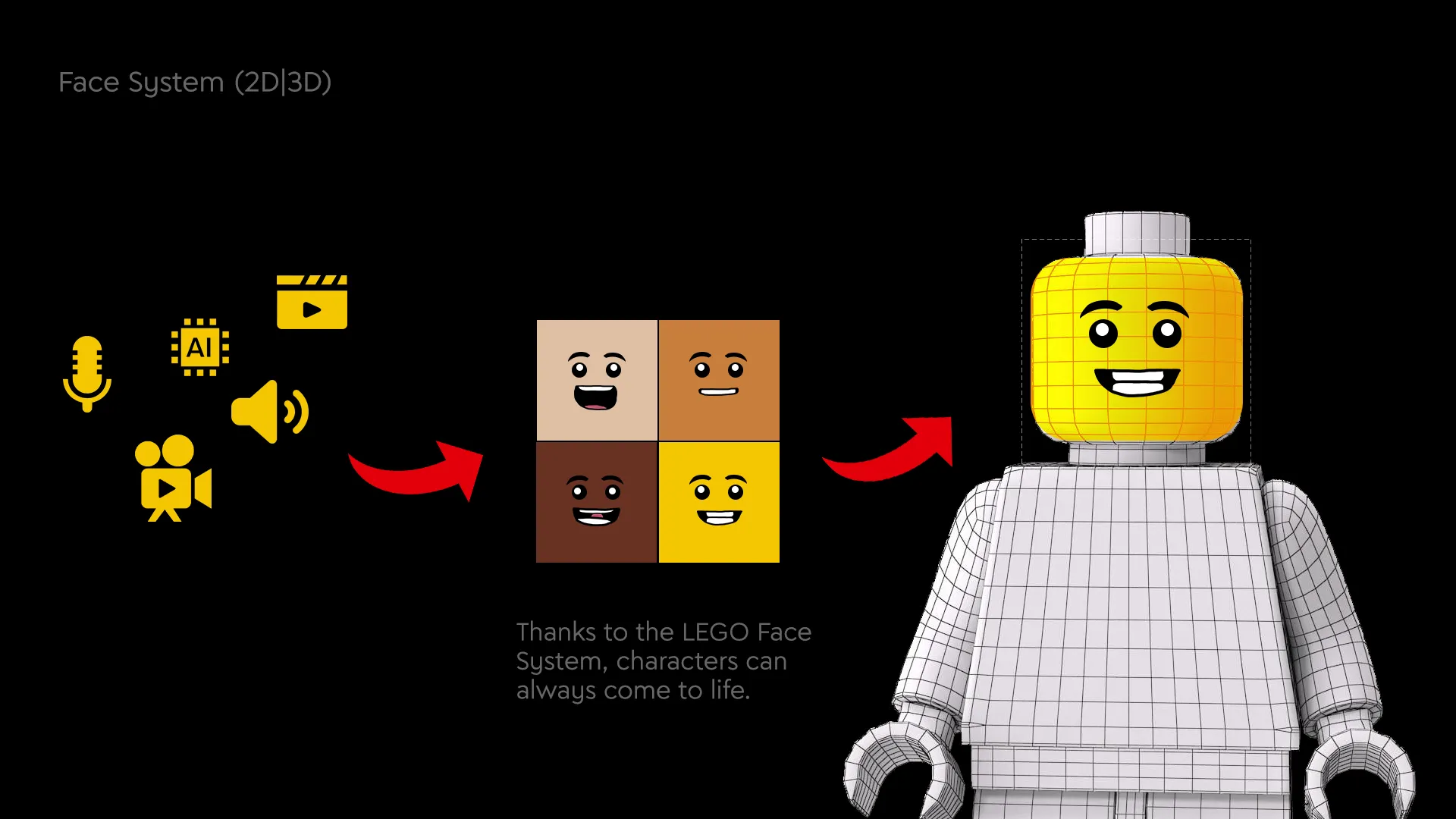
- Minifigure Face Animation System – dynamic facial expressions driven by AI-powered states and interactions
- Multi-Dimensional Rendering – seamless transitions between 2D interfaces and immersive WebGL/WebGPU environments
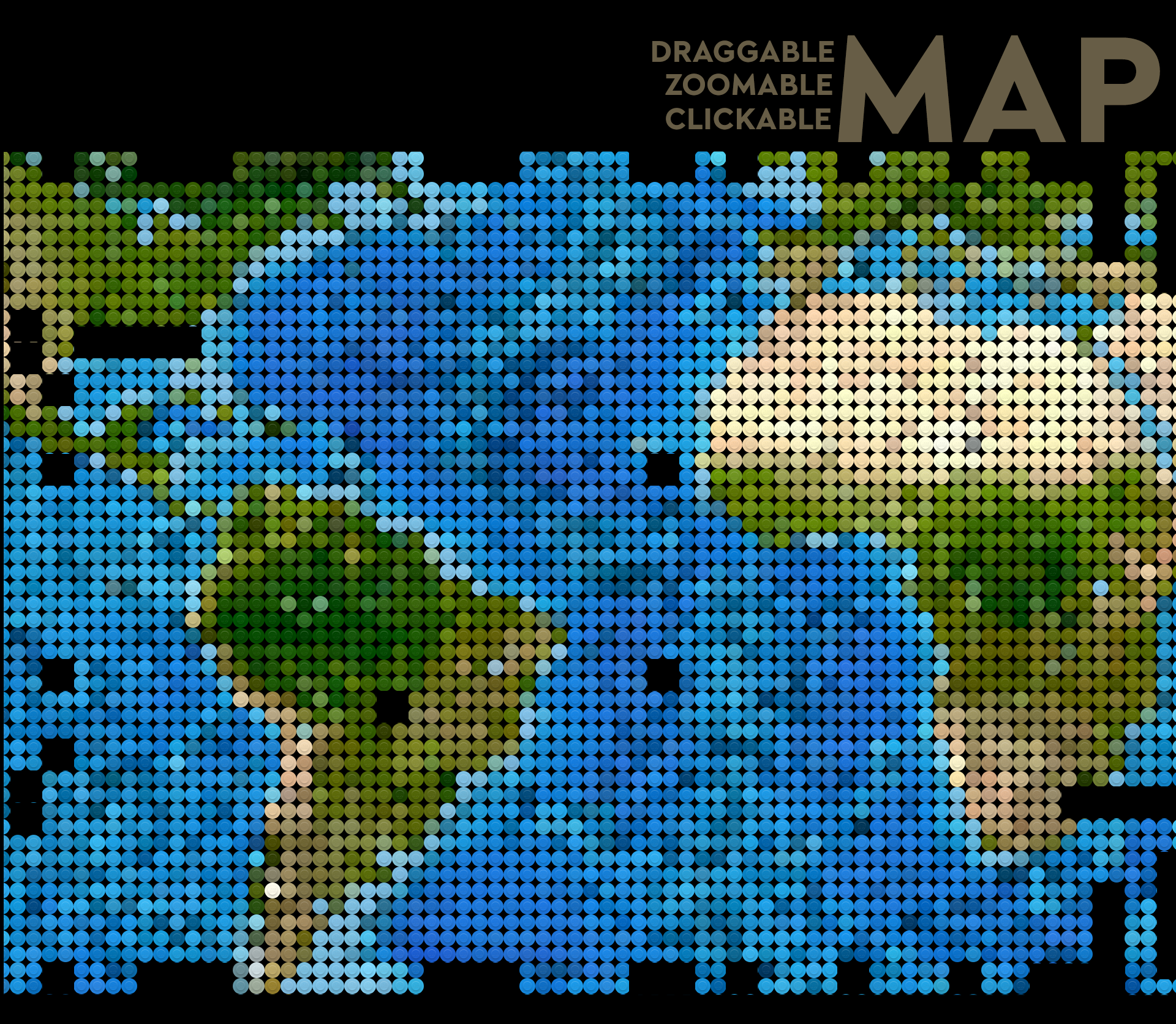
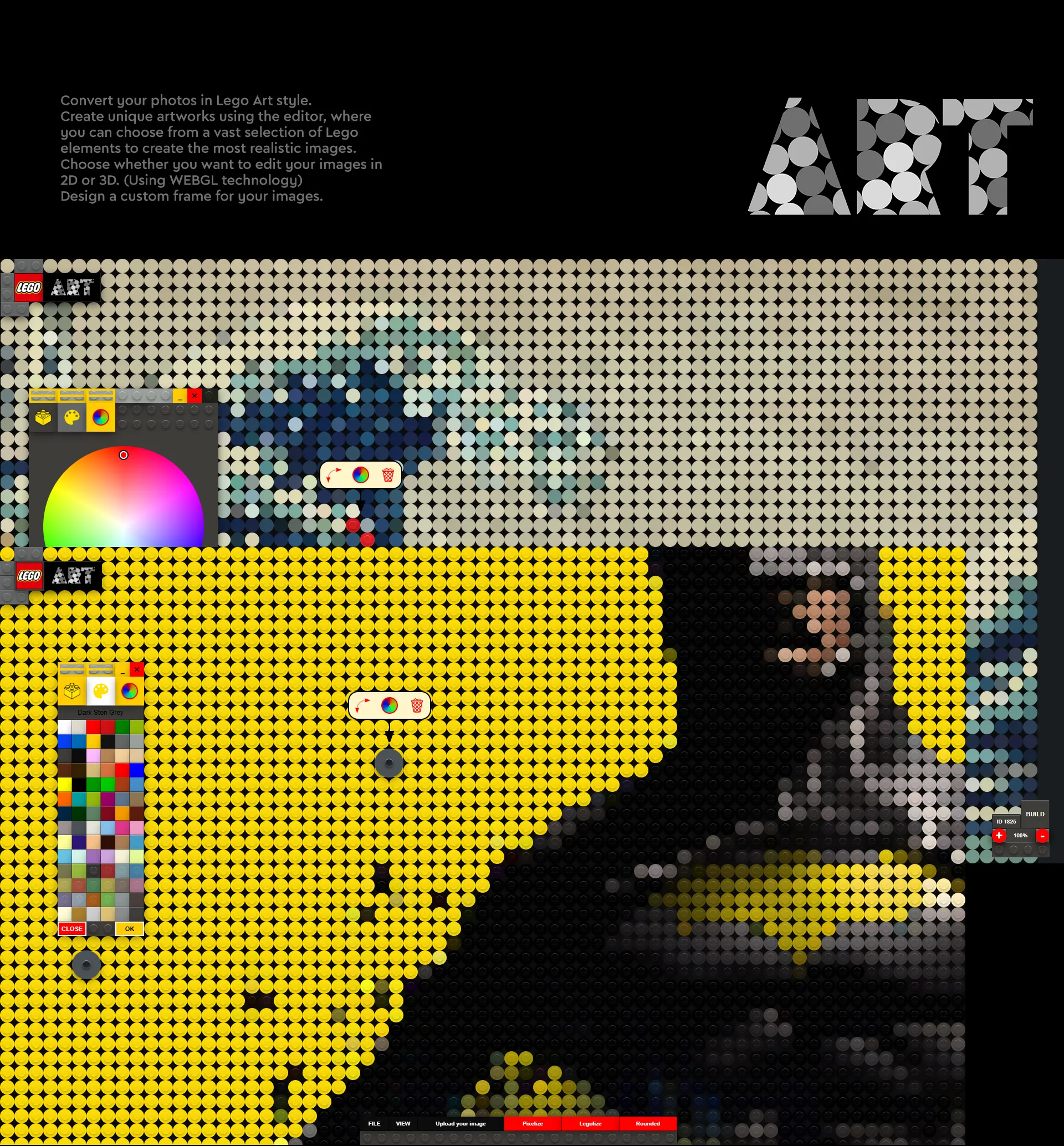
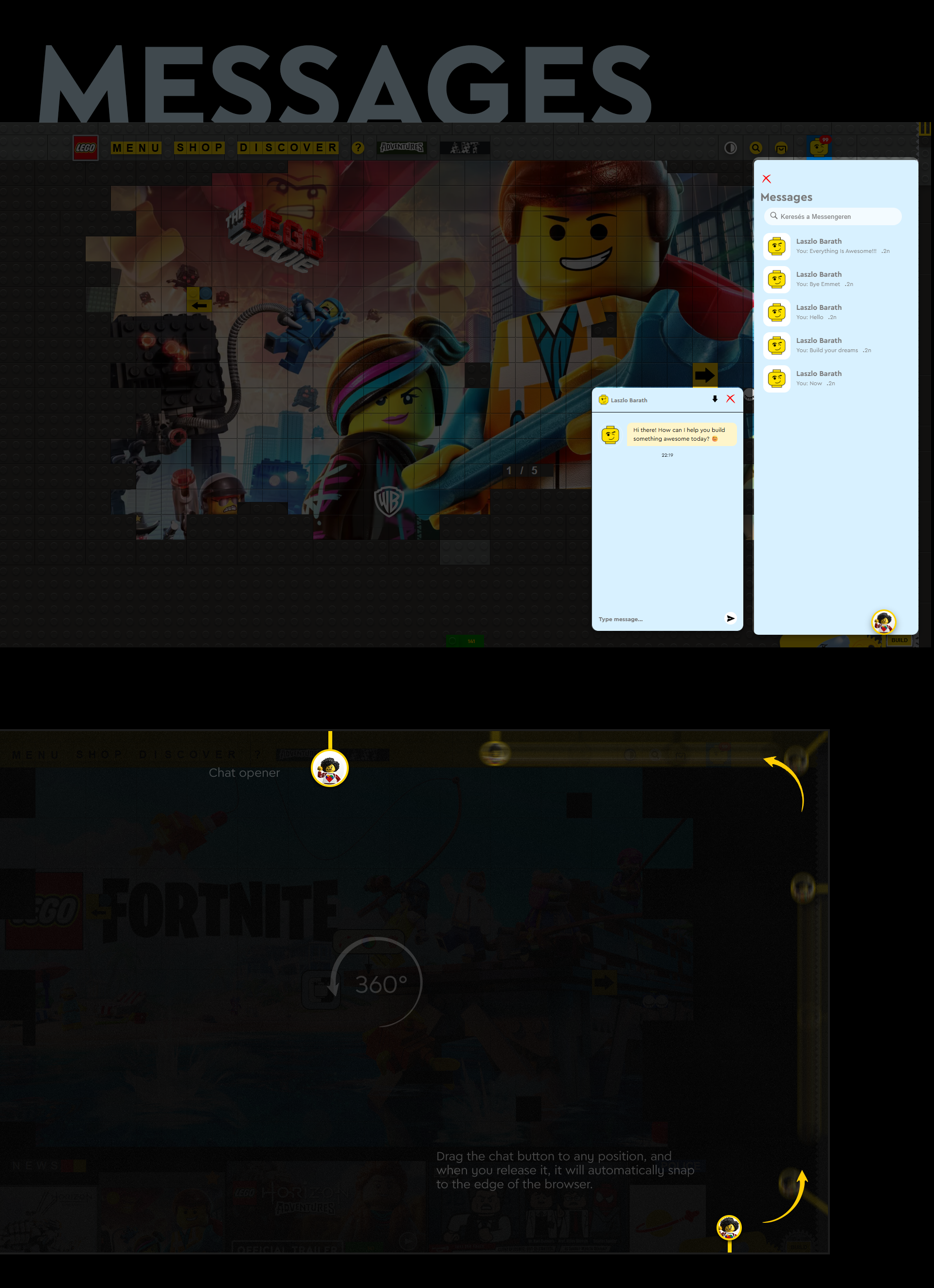
- ** Ecosystem Micro-Apps – integrated LEGO tools including LEGO Maps, LEGO Art Designer, and future modular experiences
UI/UX Approach
I aimed to design an interface that is:
- faithful to LEGO
- playful and tactile
- visually “buildable”
- fully customizable
- technically functional, not just conceptual
Nearly every component reacts in real time:
colors, stickers, textures, UI states, and patterns can be changed like pieces in a digital LEGO toolkit.
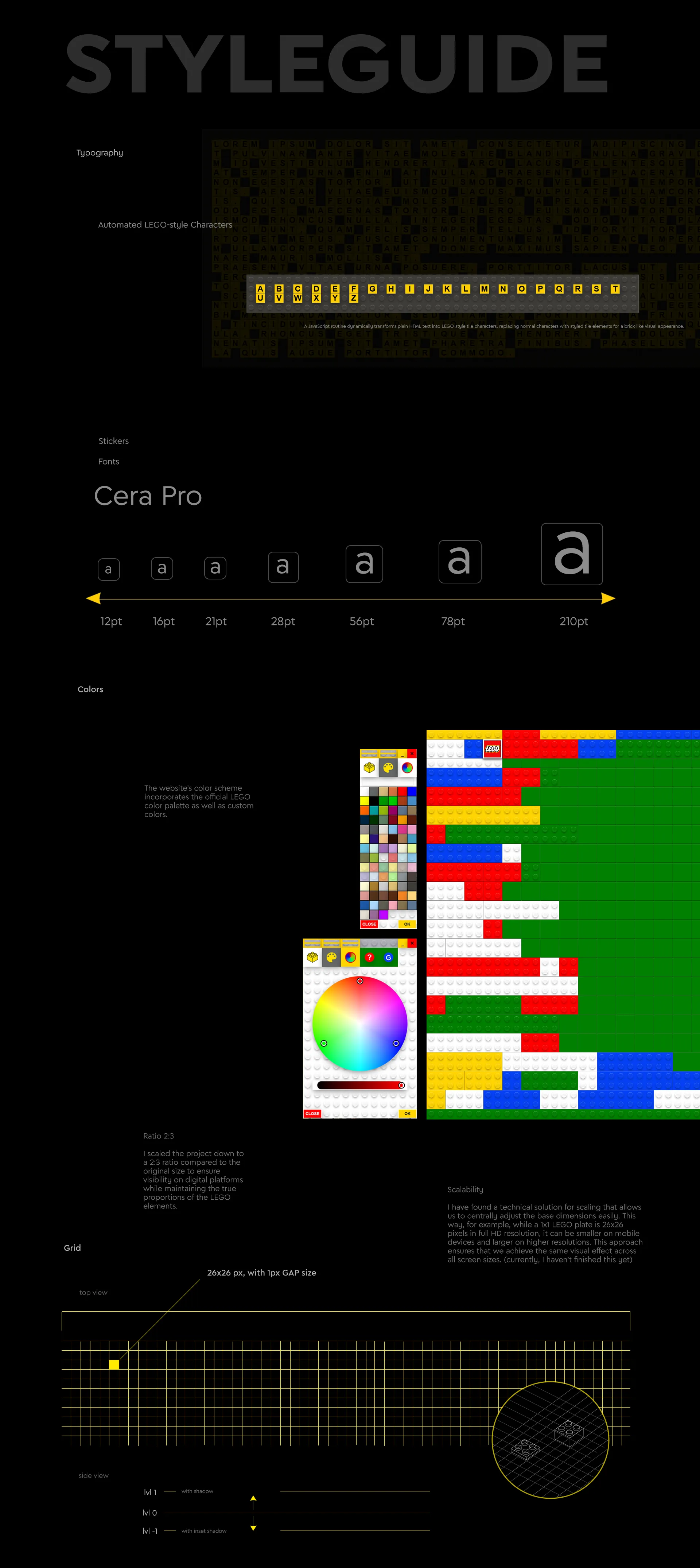
Visual System & Styleguide
- Automatic LEGO-style typography – text transforms into LEGO-like characters
- Cera Pro + LEGO typography hybrid
- LEGO color palette + extended custom colors
- 2D / 3D / hybrid rendering styles
- Clean, grid-based visual system
- Extensive UI Kit (inputs, dialogs, select boxes, sliders, overlays, sticker tools, etc.)
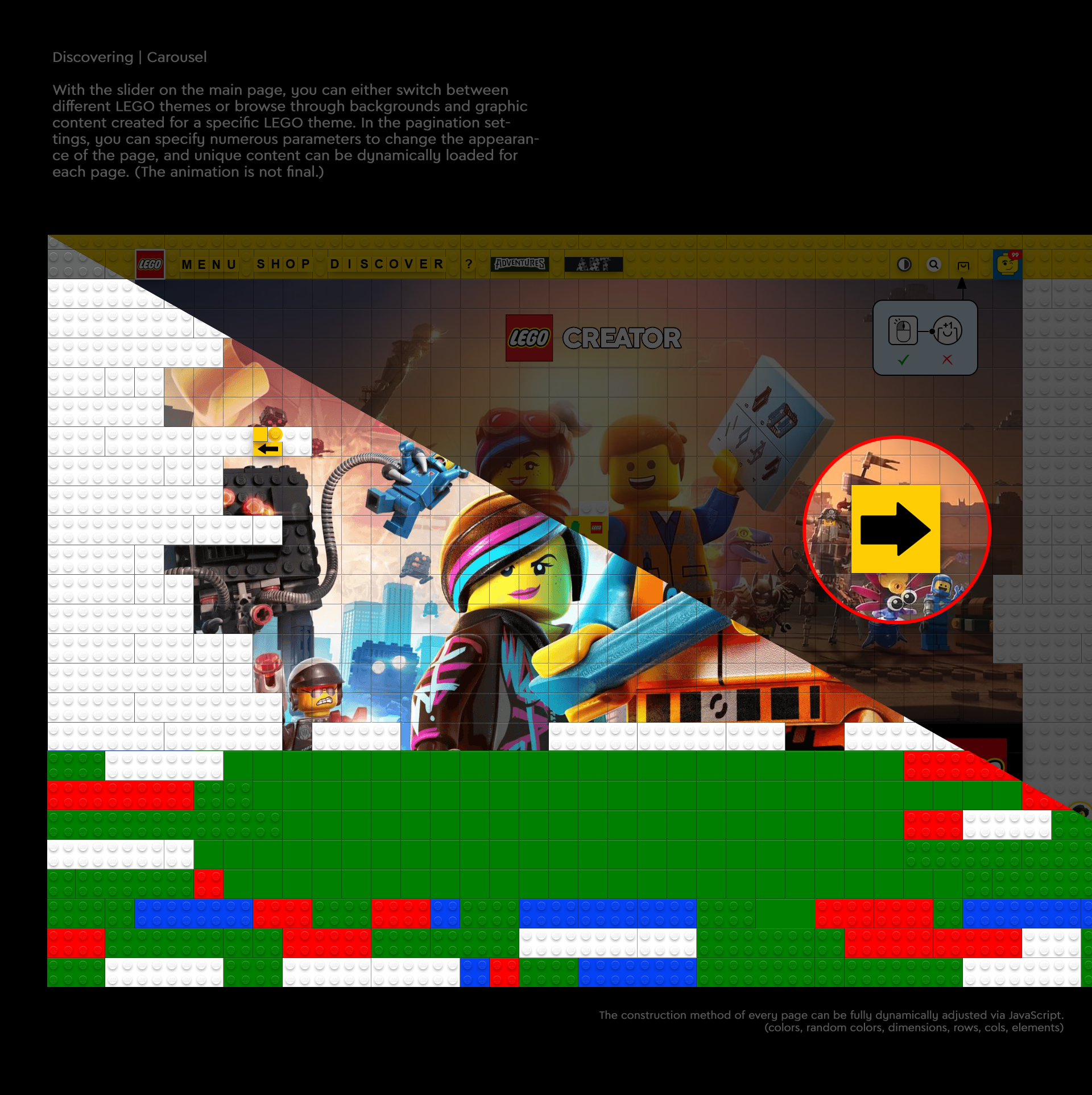
Carousel & Discovering
The main carousel allows:
rapid switching between LEGO themes browsing custom backgrounds loading unique theme-based content dynamic page-level transformations The entire carousel is built from LEGO “blocks,” with fully replaceable elements.
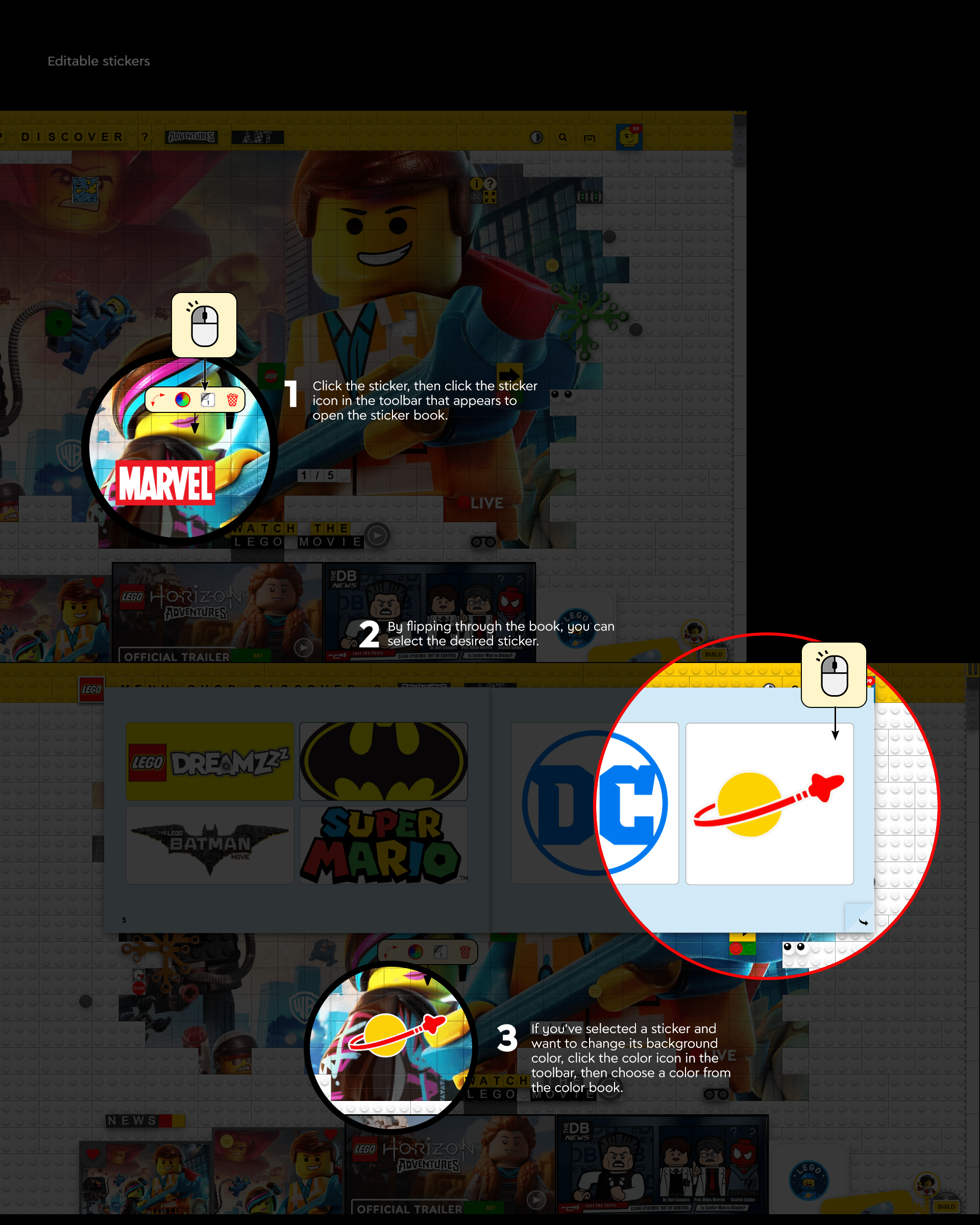
Editable Stickers
The sticker system enables:
selecting any LEGO-based UI element browsing stickers with a book-style interface changing background color and size integrating brand logos and custom graphics This feature brings modular personalization to every LEGO theme.
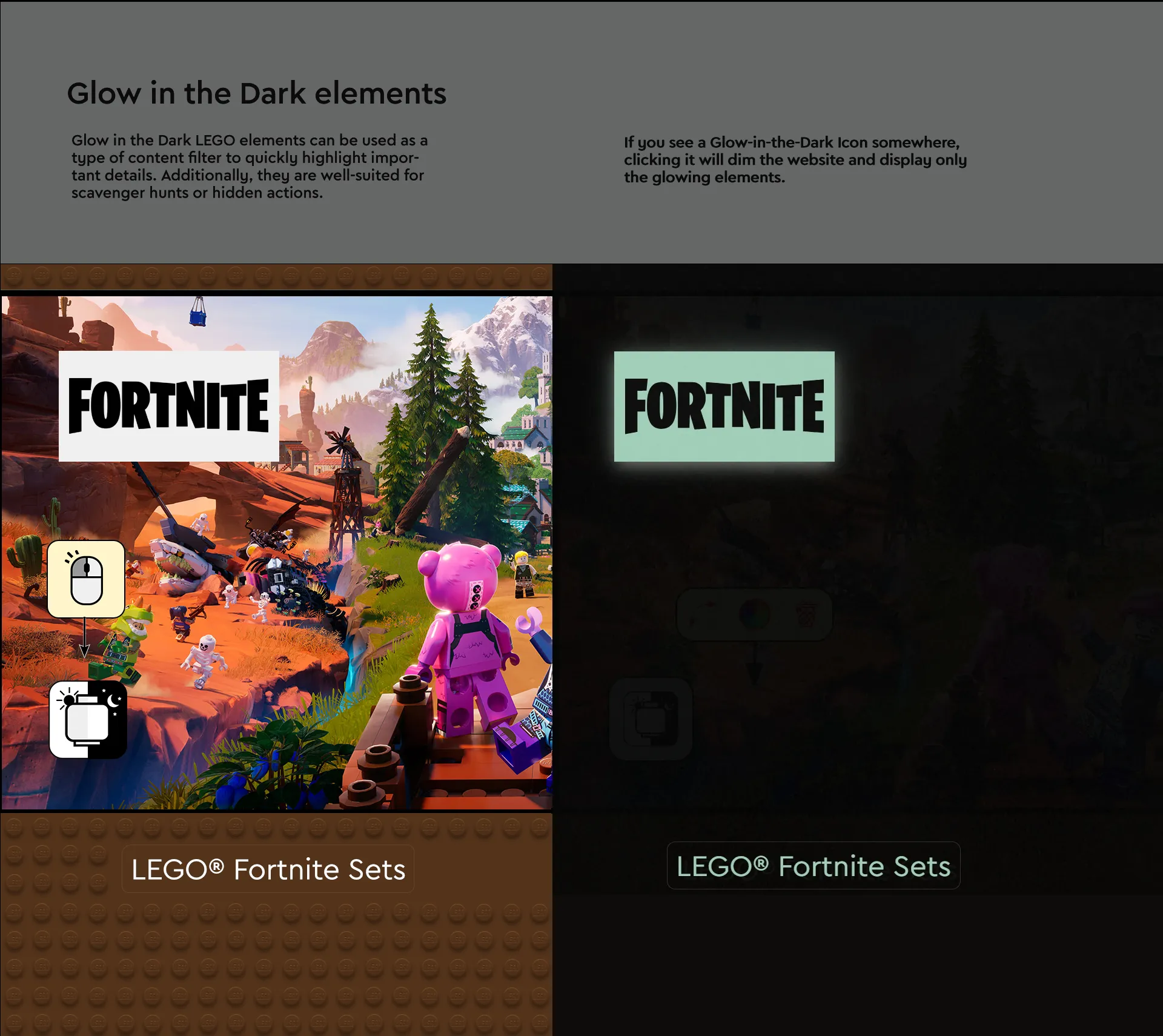
Glow-in-the-Dark Interactions
Glow-in-the-Dark elements function as a content filter: one click dims the entire website and highlights only glowing LEGO parts. Perfect for hidden-object ideas, scavenger hunts, or interactive reveals—while also doubling as a high-contrast accessibility mode that reduces visual noise, improves content focus, and supports WCAG accessibility principles.
Patterns & Customization
Every visual element of the page can be modified:
opacity shadow LEGO stud type color pattern and texture 2D / 3D / Technic style The Pattern Creator enables users to create and save custom LEGO patterns.
Grids & CSS Architecture
To maintain LEGO-like consistency across the entire interface,
I developed a custom sizing and layout system based on a 26×26 pixel LEGO plate unit.
Rather than relying on arbitrary spacing values, layouts, dimensions, and component proportions are generated through predefined utility classes and scalable grid variables. This allows every digital component to behave like a physical LEGO element, following the same structural rules and constraints.
Examples of the modular layout system include:
• grid2x4 / grid4x2 for structural UI blocks
• width6 / height12 for precise component sizing
This grid-native architecture enables pixel-accurate positioning, LEGO-compatible snapping, and consistent scaling across the entire ecosystem while keeping the DOM lightweight and highly performant.
Technology
HTML
CSS (dynamic generation)
JavaScript
Custom LEGO Rendering Engine (2D / 3D / hybrid)
Custom snapping & pattern system
All screens and UI components are generated in real time — no Photoshop compositions.
Technical Goals
- SEO Friendly
- DOM Based
- Accessible
- Lightweight
- Progressive Enhancement
- No External Runtime
For Designers & Creative Directors
Performance & SEO Architecture: 3D Aesthetics Without the Overhead
Most 3D or highly immersive web experiences fall into the same traps: abysmal mobile performance, massive bundle sizes, and zero SEO visibility. I architected the LEGOLIZE Engine to solve this fundamentally.
Instead of forcing a heavy WebGL runtime on the client, I built a custom texture pipeline that programmatically generates dynamic, ultra-optimized sprites and textures. The result? 100% semantic, SEO-friendly HTML/CSS/JS with instantaneous load times, while delivering a rich, tactile 3D visual language. It’s high-fidelity design running on my production-ready, lightweight performance logic.
For Tech Leads & Engineering Managers
The Core Engineering Principles: Speed & SEO First
I reject the trade-off between immersive visuals and performance. Instead of rendering heavy 3D geometry in real-time on the client side, my custom engine handles texture generation programmatically to build modular sprite sheets.
This architecture ensures that the entire layout remains fully indexable by search engines (SEO-native) and requires zero heavy runtime processing. I built it to deliver a 3D-like, highly interactive experience on top of rock-solid web standards that perform flawlessly even on low-end mobile devices.
LEGO SiteEngine
Below is an overview of the custom JavaScript core features powering this LEGO-inspired web system — covering building logic, interaction, and visual behavior.
LEGO SiteEngine

├─ Basement
│   └─ LEGO
│      → global class
│
├─ Site Composition System
│   │─ LEGO SiteBuilder
│   │  → global site composition and assembly logic
│   │
│   └─ LEGO Background Layer
│      → background plate builder & positioner
│
├─ Structural System
│   ├─ Grid Builder
│   │  → modular grid and layout construction
│   │
│   ├─ LEGO Architect
│   │  → responsible for designing and rendering the site's structural layout
│   │
│   ├─ LEGO Plate Builder
│   │  → plate-level structural composition
│   │
│   ├─ LEGO Brick Builder
│   │  → brick-level building and hierarchy logic
│   │
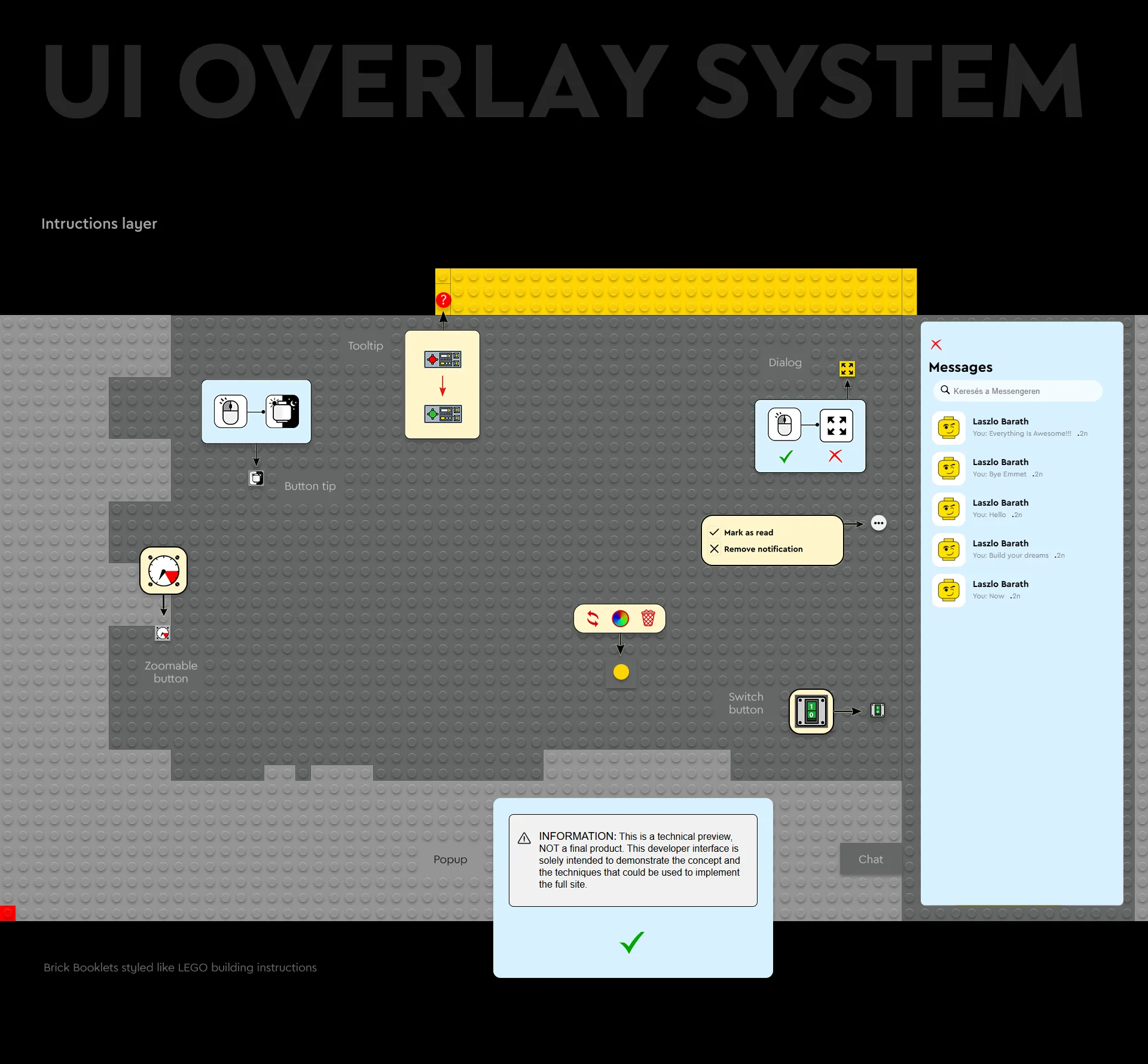
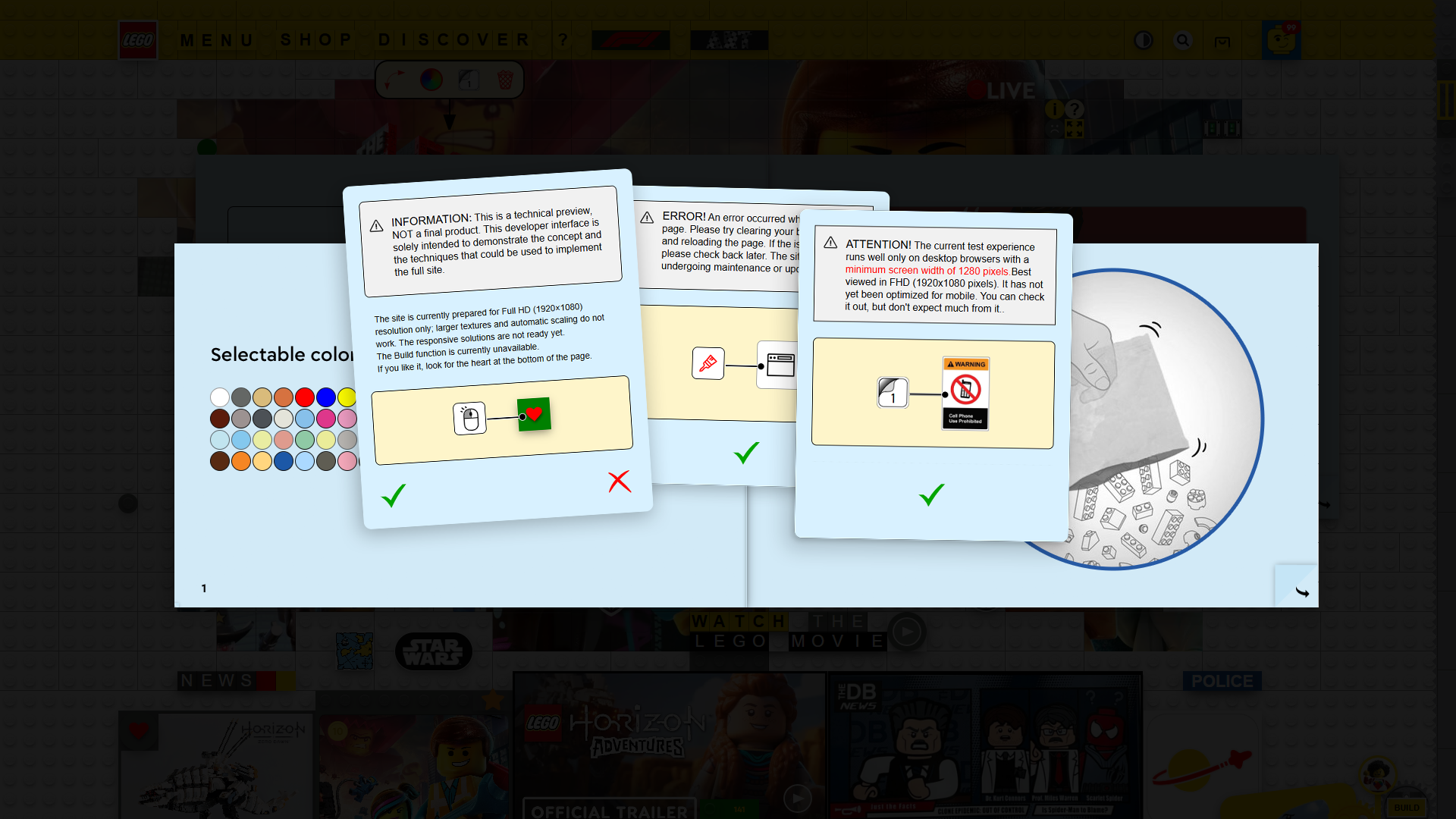
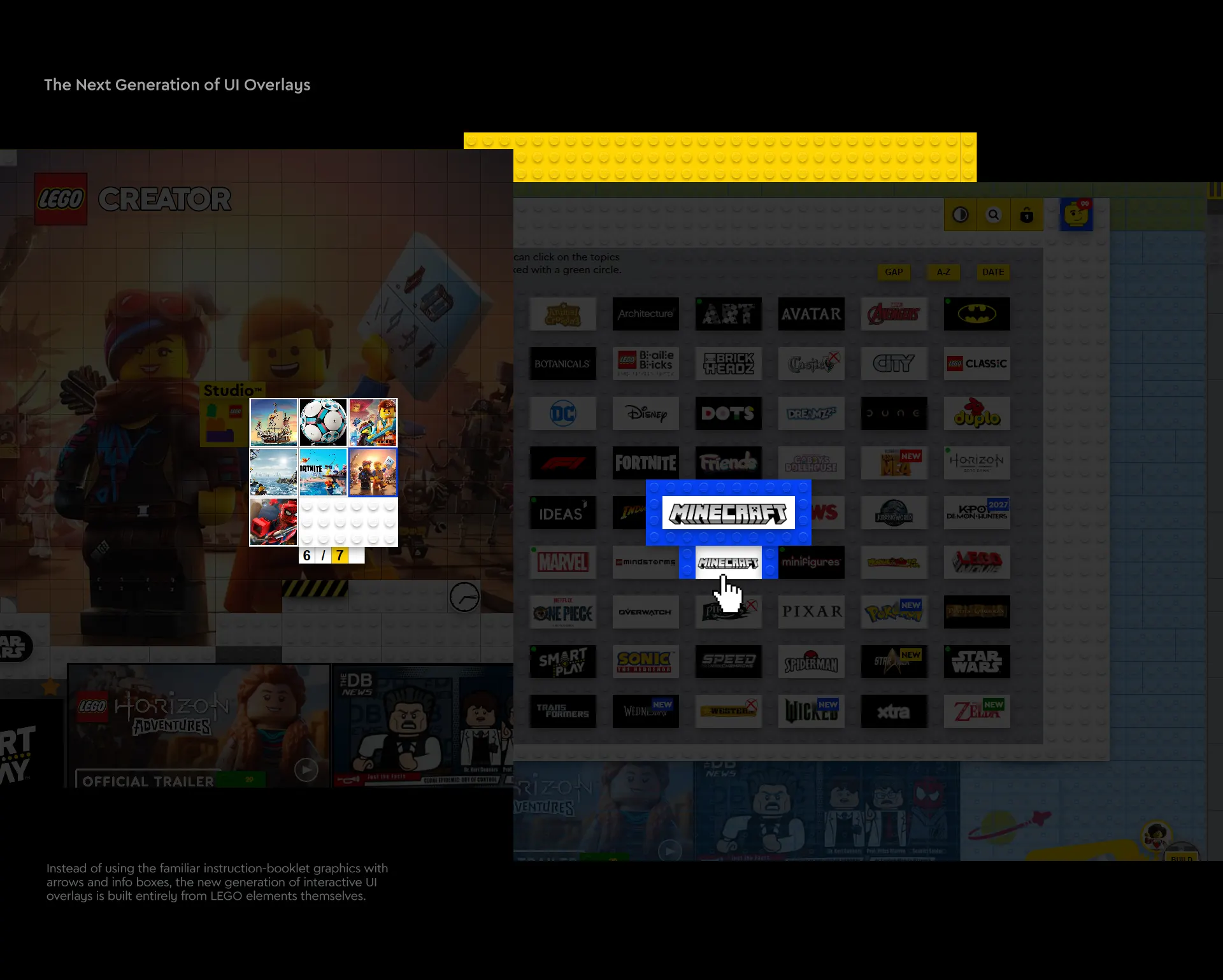
│   ├─ LEGO Overlay
│   │  → manages transparent interface components built from translucent LEGO elements
│   │
│   └─ LEGO Mask
│      → mask creator
│
├─ Layout & Alignment System
│   ├─ LEGO Gap Controller
│   │  → spacing and micro-tolerance management between elements
│   │
│   └─ LEGO Magnet Controller
│      → dynamic snap-to-stud alignment and precision positioning
│
├─ Content System
│   ├─ LEGO Text
│   │  → text layout and typography aligned to the LEGO grid
│   │
│   ├─ LEGO Writer
│   │  → dynamic text rendering and content injection
│   │
│   └─ LEGO Input Maker
│      → custom input creation and interaction handling
│
├─ Interaction System
│   ├─ LEGO Slider Builder
│   │  → modular slider and parametric value control
│   │
│   ├─ LEGO UI Builder
│   │  → tooltip, popup, and overlay UI construction
│   │
│   ├─ LEGO Slider
│   │  → controls navigable page sections
│   │
│   └─ LEGO Figure Controller
│      → figure behavior, positioning, and interaction logic
│
├─ Visual System
│   ├─ LEGO Organic Site
│   │  → enables the site to evolve dynamically based on time, date, and time of day
│   │
│   └─ LEGO Shadow Engine
│      → state-driven shadow and depth rendering
│
├─ Experience System
│   ├─ LEGO Recolor
│   │  → complete real-time recoloring control for LEGO elements
│   │
│   ├─ LEGO Organiser
│   │  → responsible for organizing and arranging LEGO elements
│   │
│   └─ LEGO Builder Engine
│      → core building and construction functionality
│
├─ Rendering System
│   ├─ LEGO Canvas Render
│   │  → maximum performance with lightweight rendering
│   │
│   ├─ LEGO WebGL Render
│   │  → high-fidelity animations and advanced visual effects
│   │
│   └─ LEGO Procedural Render
│      → automatic generation of complex LEGO-based structures
│
└─ Others
    ├─ LEGO AI Bridge
    │  → integration layer connecting AI-driven features with the LEGO-based UI system
    │
    └─ LEGOLIZE
       → core transformation engine that converts traditional UI into a LEGO-based system
What Makes This Different?
Most LEGO digital experiences exist across multiple websites, applications, stores, games, and platforms. This concept explores what happens when all of those experiences become part of a single LEGO-native ecosystem. Rather than treating LEGO as content displayed inside a website, the website itself becomes part of the LEGO system. Every interface, interaction, collectible, reward, and experience follows the same rules, creating a cohesive digital universe built from LEGO logic.
Future Exploration
This project was created as an experimental platform rather than a finished product. Its purpose is to explore the potential of LEGO-inspired digital systems and provide a foundation for future experimentation.
Potential future directions include:
AI-assisted building, procedural geometry generation, and customization tools
Advanced AI-driven minifigure interaction frameworks and real-time behavioral responses
Next-generation WebGPU-powered rendering technologies for real-time 3D LEGO brick simulation
Expansion of ecosystem applications, evolving LEGO Maps and LEGO Art Designer into collaborative creation platforms
Community-driven creation systems
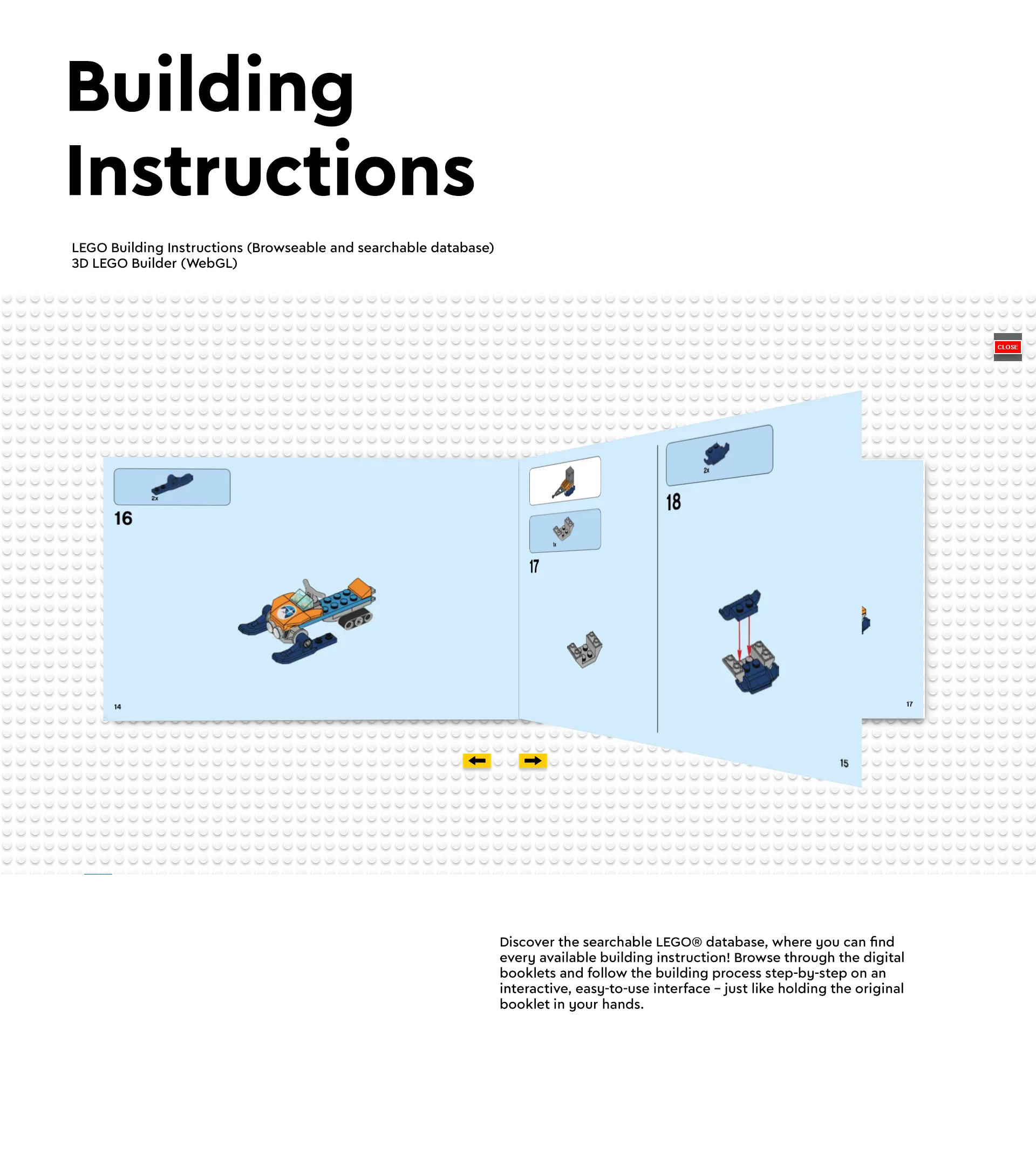
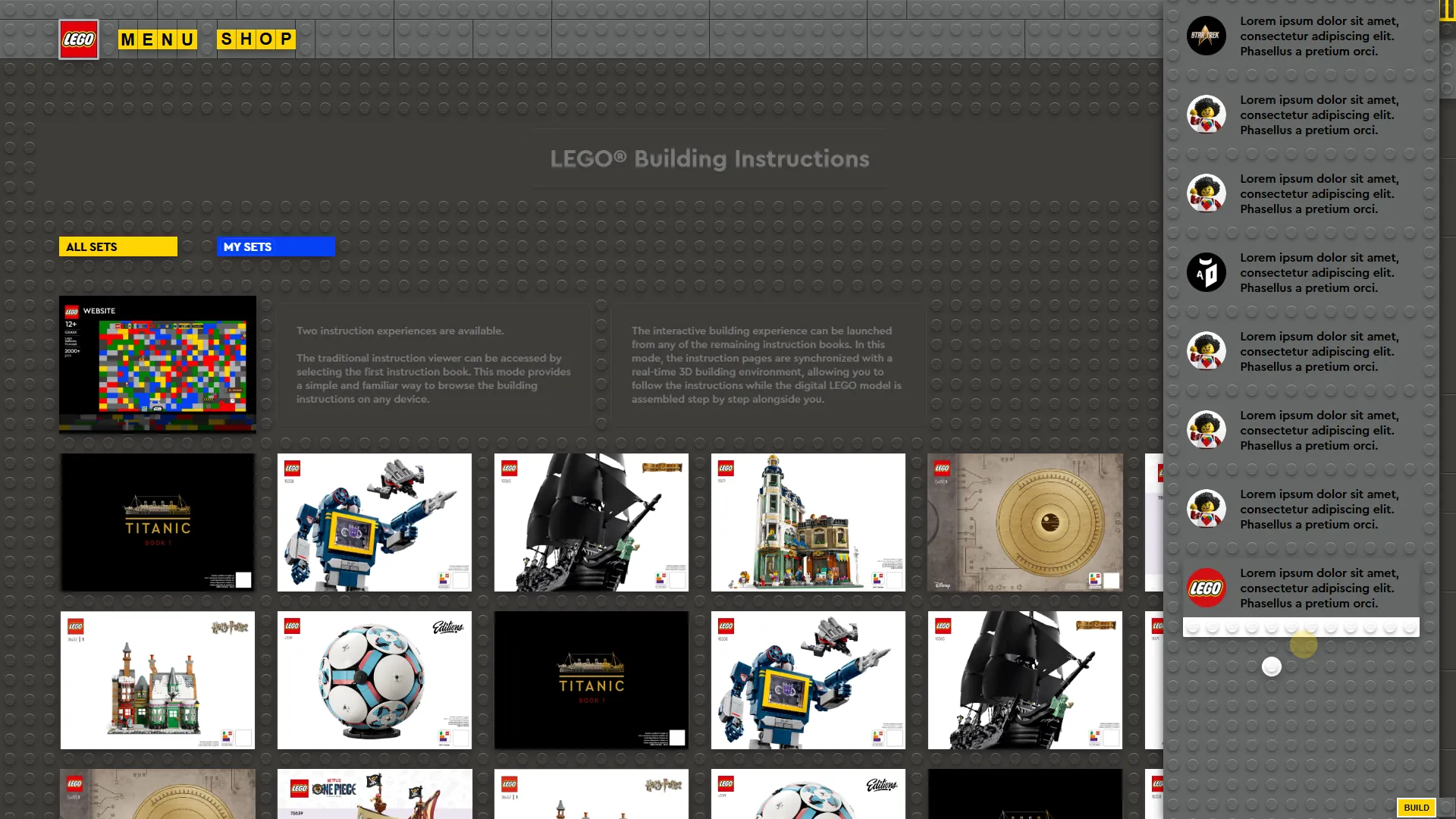
Interactive digital building instructions
Advanced personalization and adaptive layouts
Stronger integration between physical and digital LEGO experiences
The long-term ambition is to continue exploring how LEGO's construction philosophy can inspire new approaches to digital product design, interaction systems, and online experiences.
Conclusion
This project explores what happens when LEGO becomes more than content displayed inside a website, and the website itself becomes part of the LEGO system.
A modular, interactive, and customizable digital experience built around LEGO construction principles.
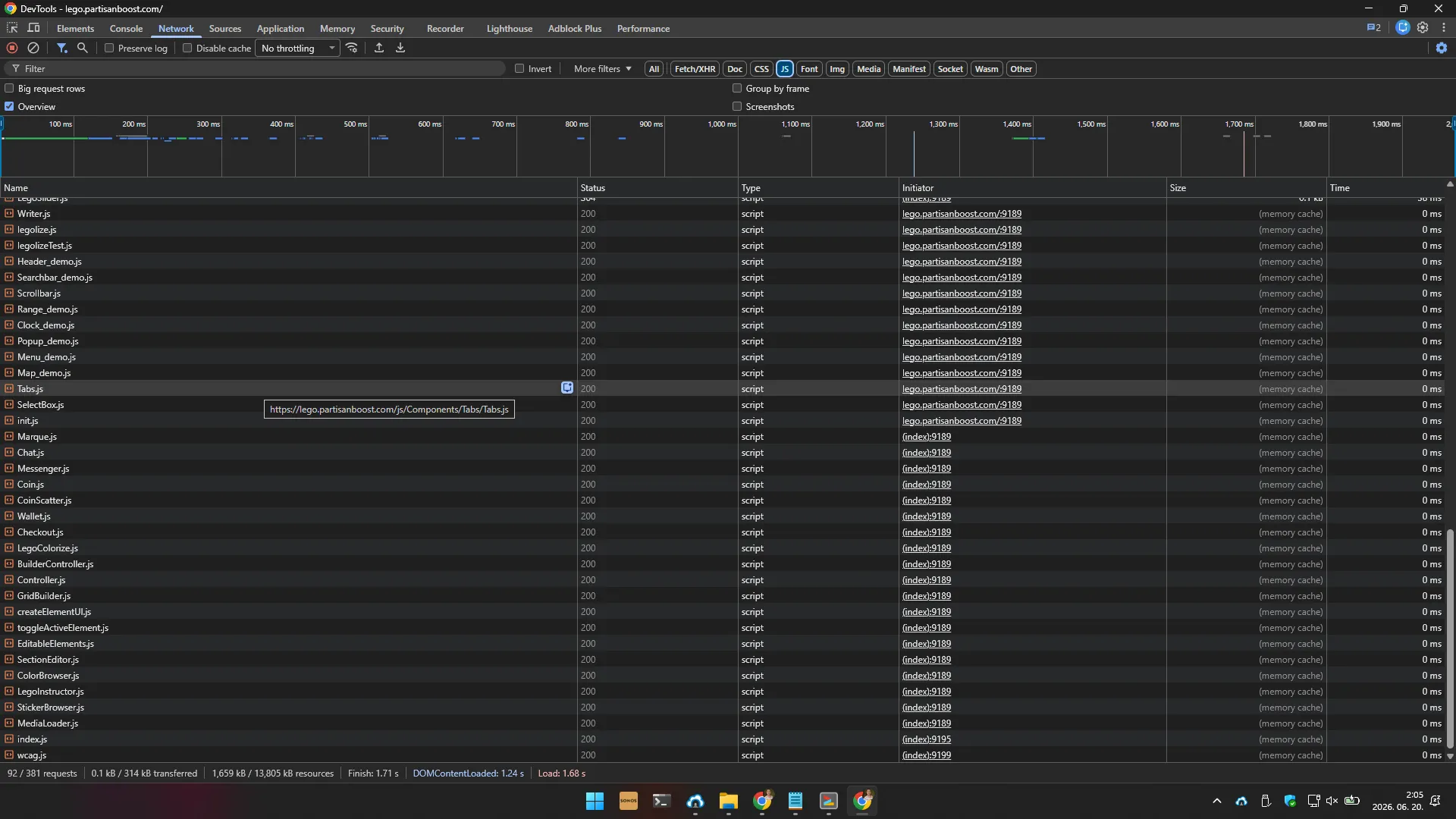
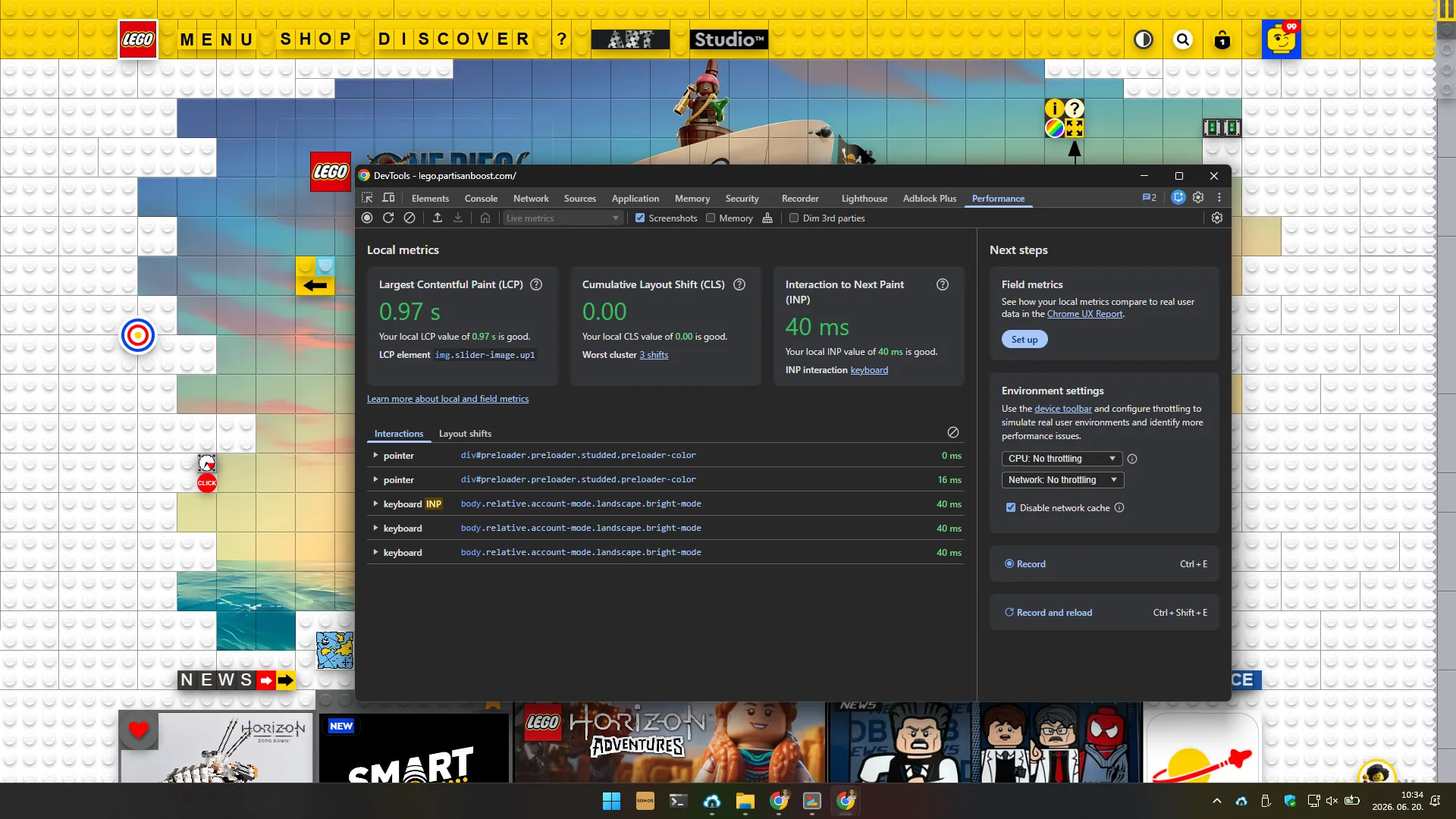
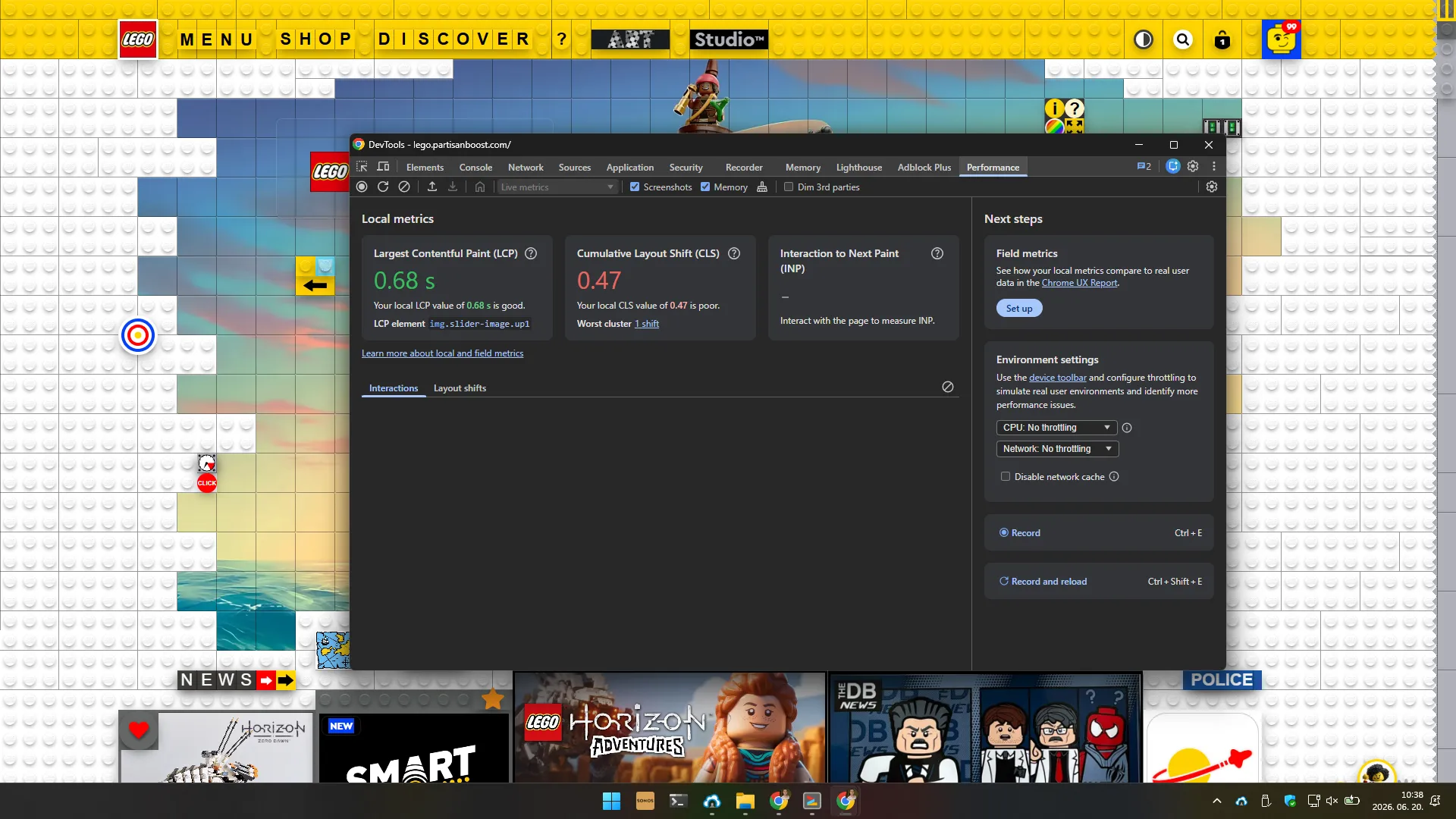
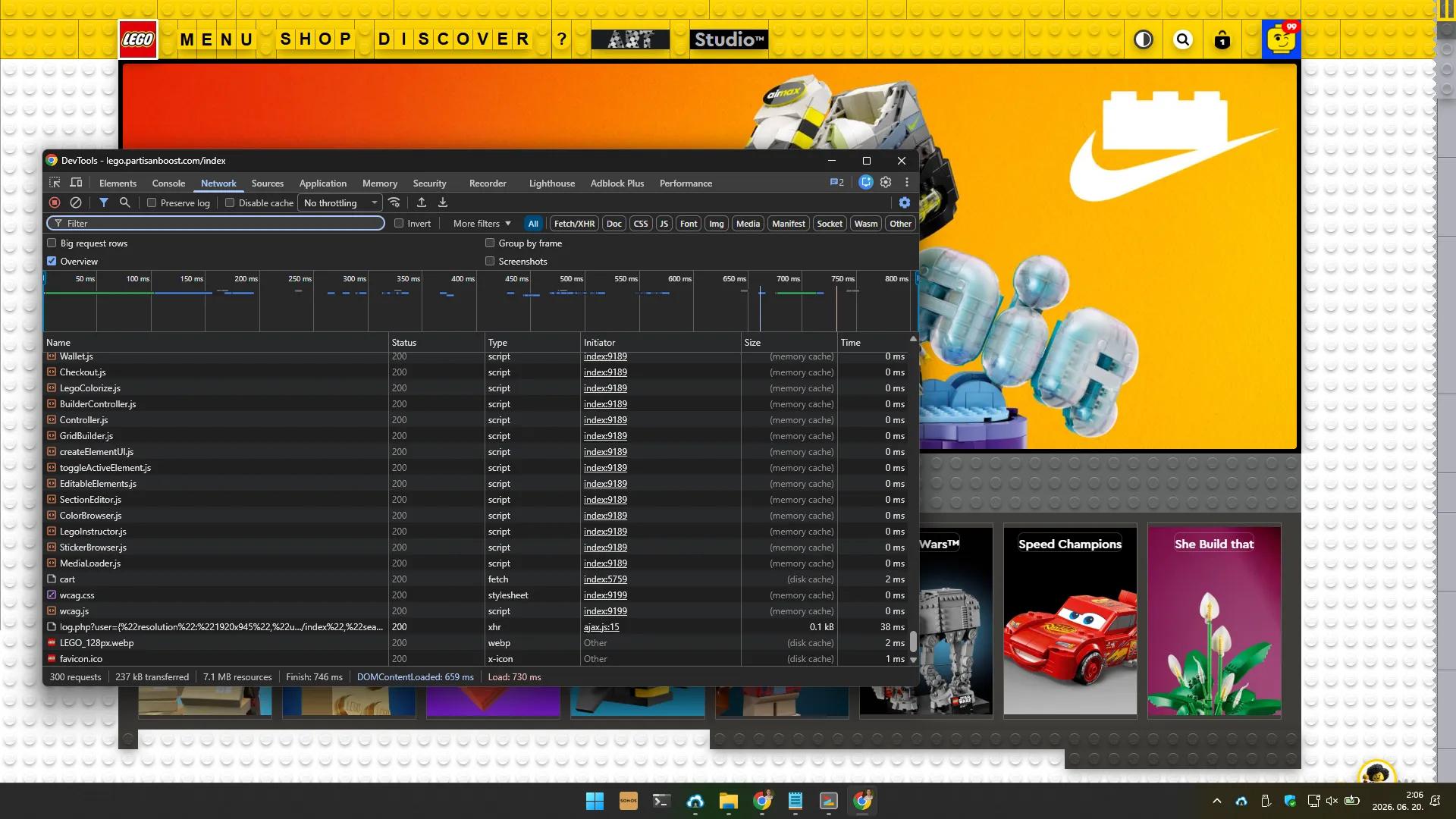
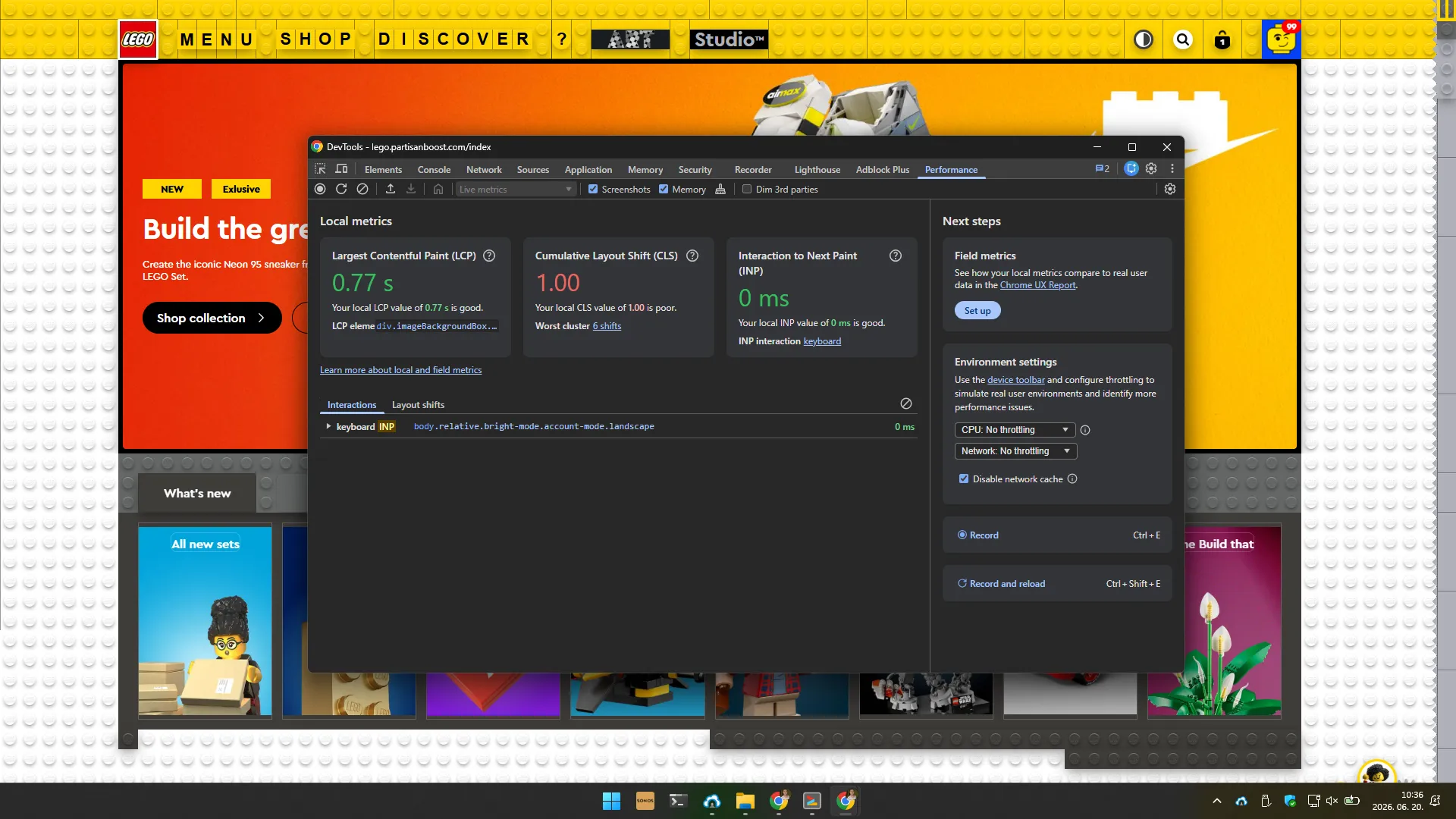
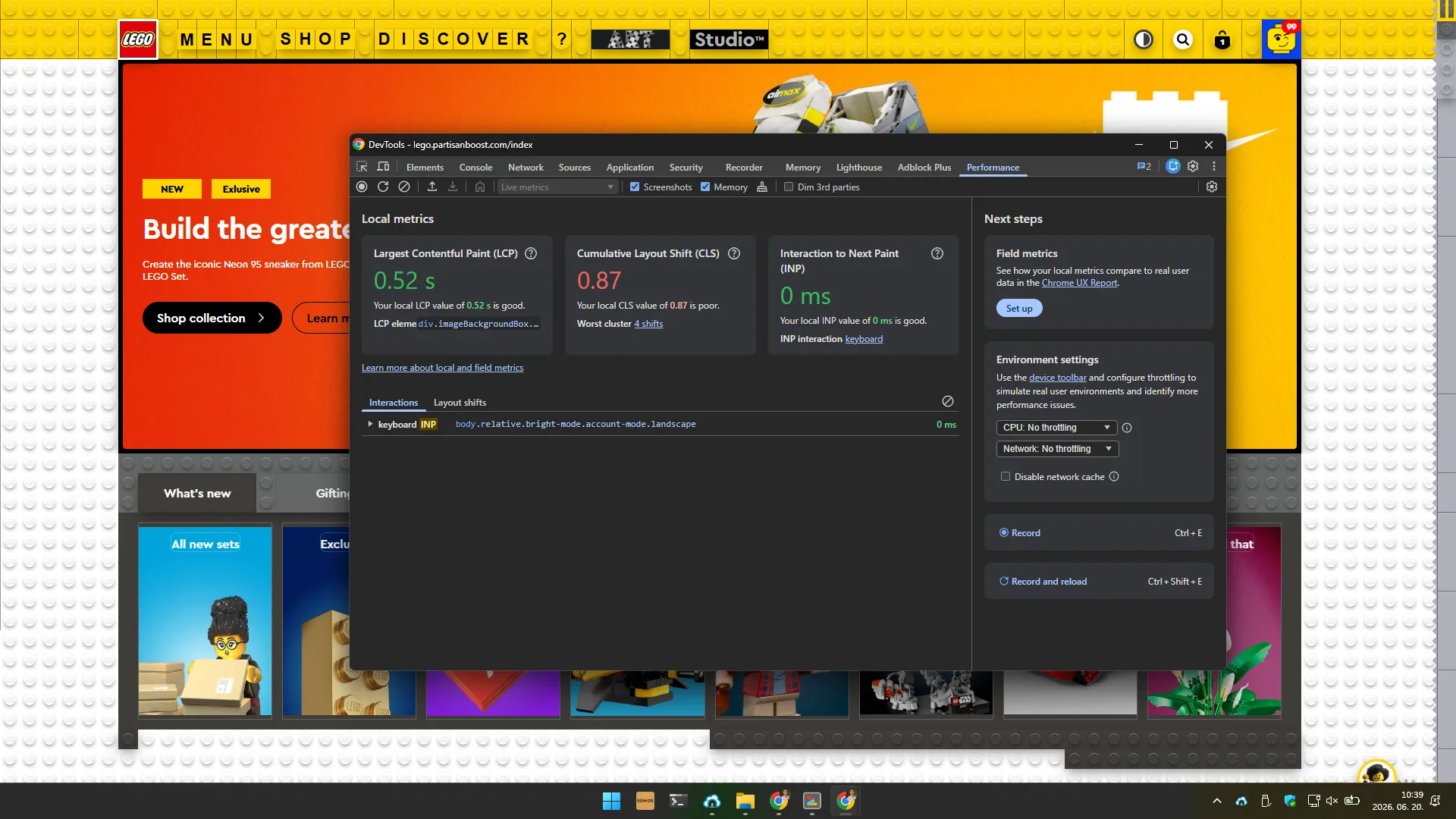
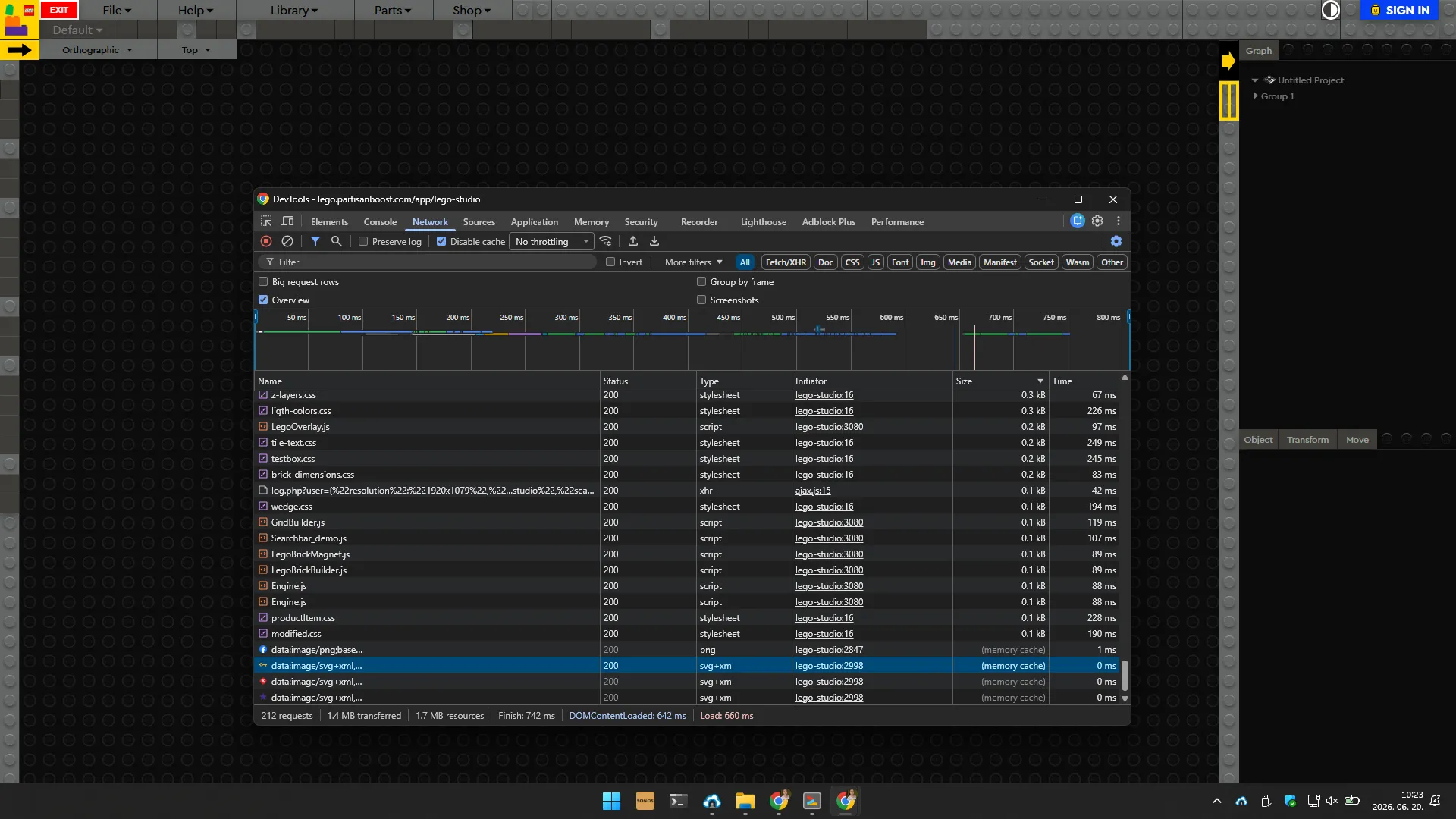
Performance
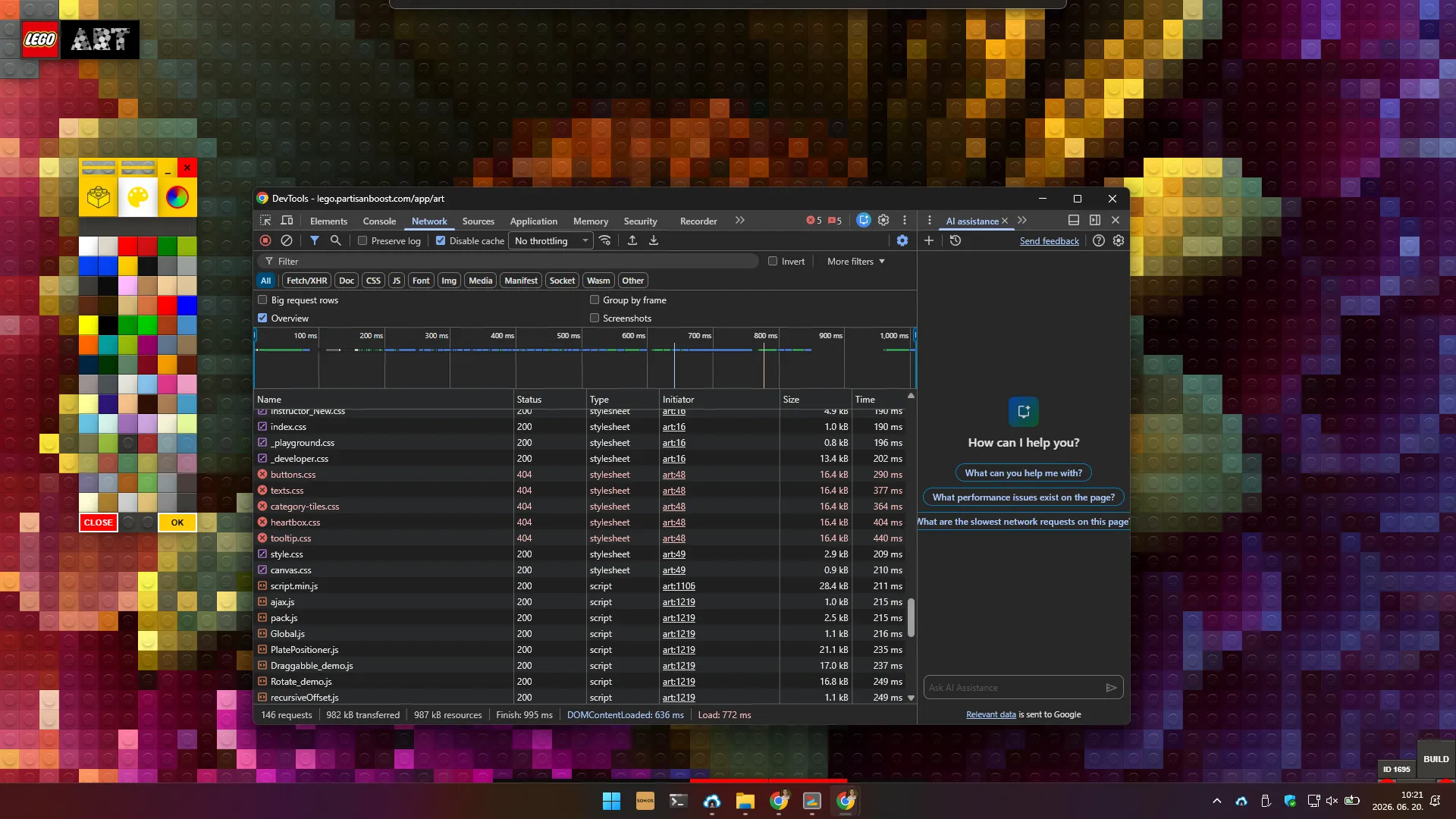
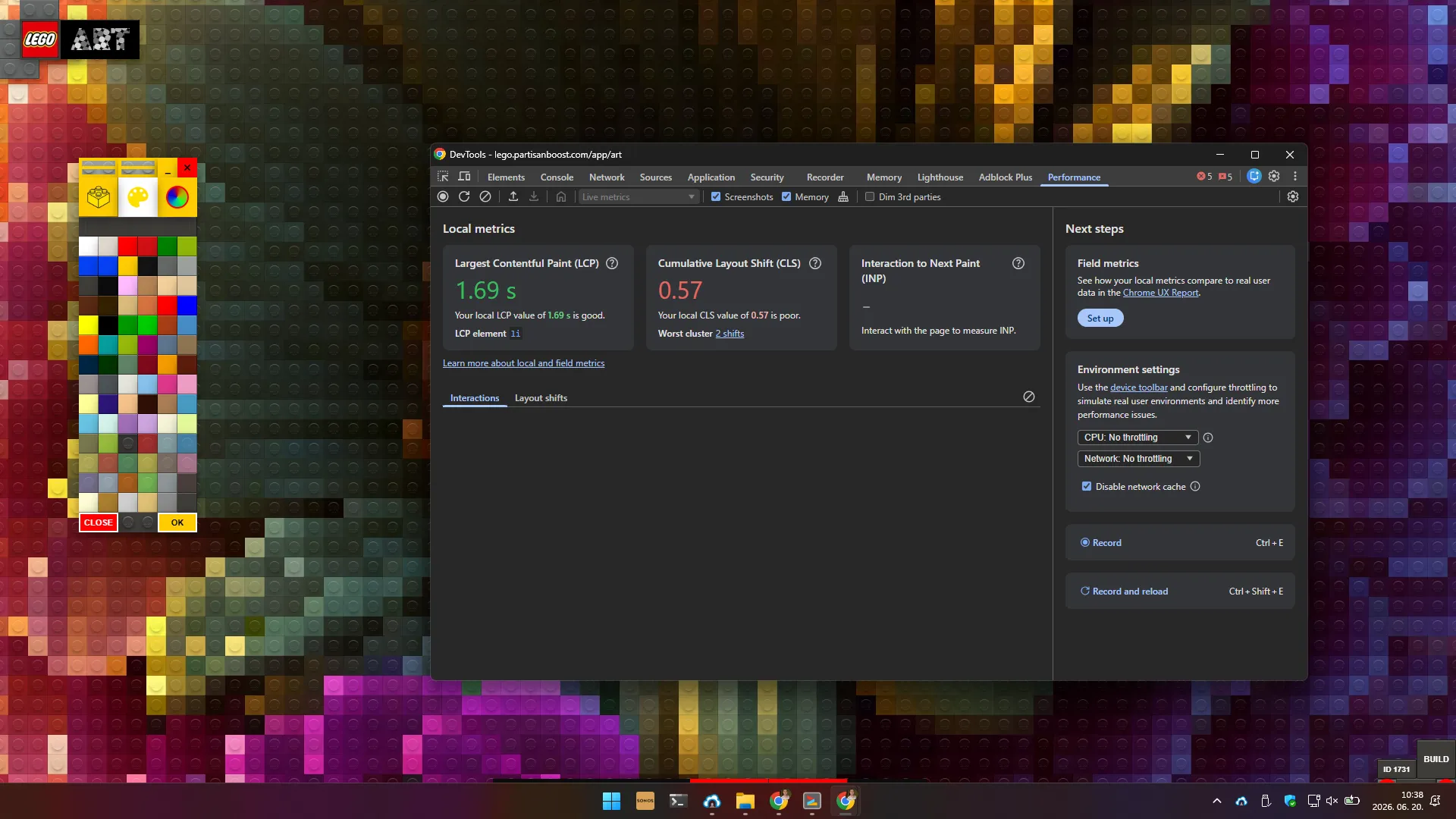
Production-level performance, even in a raw development build.
Performance in Development Mode
The performance metrics shown throughout this case study were recorded using a raw development build, not a production-optimized version.
At this stage, the project intentionally runs with:
- Unminified JavaScript and CSS files
- Separate modules instead of bundled assets
- Source comments and development code left intact
- Unoptimized images and media assets
- A DOM structure that has not yet undergone performance optimization
- All UI components rendered as individual DOM elements
In addition, every page currently loads significantly more modules and features than a production-ready release would require. The focus at this stage is rapid development, testing, and feature completeness rather than final optimization.
The production version is planned to include:
- Approximately 50% fewer DOM elements
- Per-page module loading
- Bundled and minified assets
- Optimized images and media/li>
- Additional architectural optimizations
Despite these intentionally unoptimized conditions, the project already delivers consistently strong loading and interaction metrics, demonstrating that performance is the result of the underlying architecture—not post-processing.
### Infrastructure & Development Environment
The performance results presented in this case study were achieved under intentionally **non-optimized development conditions**, where neither the infrastructure nor the application has been tuned for maximum performance.
The entire project is currently hosted on a **single entry-level Hetzner VPS**. Every JavaScript file, CSS stylesheet, image, video, media asset, and application resource is served directly from this single server.
At the same time, this server is **shared with multiple SaaS applications**, meaning CPU time, memory, disk I/O, and network bandwidth are continuously shared across several independent projects.
No infrastructure-level performance optimizations have been applied, including:
- * No CDN (e.g. Cloudflare)
- * No edge caching
- * No distributed asset delivery
- * No dedicated asset server
- * No static site generation (SSG)
- * No server-side page caching
- * No production asset bundling or minification
From the application side, the project is equally unoptimized:
- * Unminified JavaScript and CSS
- * Separate source modules
- * Development comments preserved
- * Unoptimized images and media
- * A DOM structure that has not yet been optimized
- * Significantly more modules loaded than a production release would require
- ✓ Custom Rendering Engine
Despite these intentionally raw conditions, the application consistently delivers excellent loading and interaction metrics, including sub-second Largest Contentful Paint (LCP) on several pages.
These results demonstrate that performance is primarily driven by the application's architecture rather than by expensive infrastructure or aggressive post-processing optimizations.
In the production version, additional optimizations are planned, including reducing the DOM size by approximately 50%, per-page module loading, bundled and minified assets, optimized media, and further infrastructure improvements.
Performance starts with architecture, not optimization.
These results were achieved using a raw development build with unminified assets, unoptimized media, and significantly more modules than a production release would require.
Performance Examples
LEGO® Art App (2 picture)
LEGO® Redesign Index (10+ module - 3 picture)
LEGO® Home Recreated (3 picture)
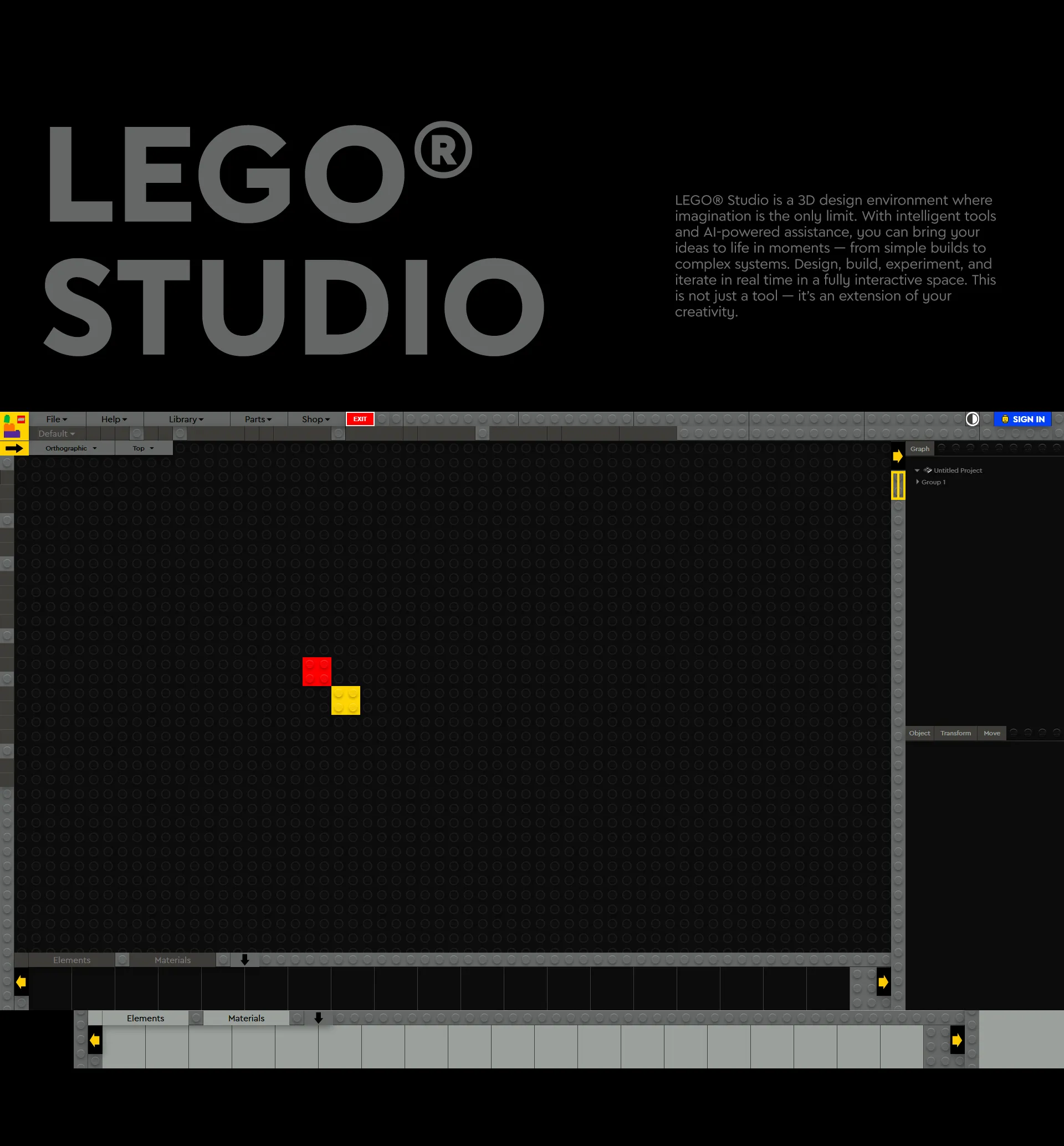
LEGO® Studio App (1 picture)
An Anti-AI Project
This project is also, in a sense, an anti-AI project — not because it is against AI, but because it is intended to demonstrate that human creativity, visual thinking and engineering precision have not yet become replaceable.
Today’s AI systems are remarkably capable of generating code, creating components and assembling functional websites. A project like this, however, presents an entirely different level of challenge. It is not enough for the code to simply work. The entire system must be technically, visually and structurally consistent.
Pixel-level precision, a complex DOM and rendering architecture, a custom build system, WebGL, dynamic LEGO structures, responsive reconstruction, animation, interaction and hundreds of small visual decisions all have to function as parts of one coherent system.
And that is precisely the point of this project: to demonstrate that AI has not yet surpassed the human.
An AI can generate individual components. It can solve individual problems. It can write functional code. But it is still far from being able to independently create a system of this complexity from beginning to end, with the same level of technical execution, pixel-level precision, visual consistency and creative coherence.
That is why, for me, this project is more than just a website or a technological demonstration.
It is evidence that in complex digital creation, human reasoning, creativity and system-level design still provide an advantage that AI has not yet been able to fully reproduce.
And perhaps that is what will make this project even more interesting a few years from now: when an AI is genuinely capable of independently reproducing this same level of complexity, precision and creative consistency, that will be the moment when it becomes meaningful to say that this boundary has truly been crossed.